A bombshell development shakes the nation: official claim emerges that the International Criminal Court
What We Know So Far: Claims, Context, and Questions Surrounding ICC’s Alleged Warrant Against a Philippine Senator
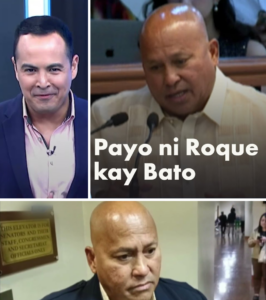
Rumors of an International Criminal Court (ICC) arrest warrant linked to a sitting Philippine senator have sparked nationwide attention, debate, and confusion. The claim, first raised in local political commentary and media discussions, centers on Senator Ronald “Bato” dela Rosa — a key figure in the country’s controversial anti-drug campaign under the Duterte administration. Yet, despite the intense noise surrounding the issue, one critical question remains: how much of this has been officially confirmed?
At the heart of the story lies the ICC’s ongoing investigation into alleged human rights abuses tied to the Philippines’ war on drugs. The operation, launched in 2016, resulted in thousands of casualties and became one of the most scrutinized government policies of the decade. Senator dela Rosa, the former chief of the Philippine National Police, played a central role in enforcing that policy. It is this connection that places him directly within the scope of the ICC’s review.
When the ICC authorized a full investigation in 2021, the Philippine government quickly withdrew cooperation and insisted that its legal system was capable of handling any accountability concerns domestically. Nonetheless, the ICC continued its review, emphasizing that jurisdiction applies when local mechanisms are either unwilling or unable to prosecute alleged abuses. Since then, every development has drawn polarized reactions from Filipino communities worldwide.
The latest wave of attention erupted after a public figure asserted that an arrest warrant had already been issued by the ICC against dela Rosa. The statement ignited anticipation and anxiety, especially on social media, where the possibility of high-level legal consequences became a hot topic. Some audiences interpreted the report as a sign of progress toward accountability. Others worried the claim could further divide the political landscape.
However, based on publicly accessible information, there has yet to be an official ICC announcement confirming that a warrant exists. International courts typically release such details through carefully documented procedures — including notifications, publication of legal actions, or formal communication with relevant states. None of these indicators have been clearly verified in this case.
Legal experts note that ICC warrants are often confidential during preliminary stages to prevent individuals from fleeing or obstructing justice. This means that even the absence of confirmation does not necessarily dismiss the possibility. Still, caution is essential. Publishing unverified claims can distort public perception and escalate political conflict.
The senator himself has acknowledged the existence of an ICC investigation but has also consistently rejected the court’s authority, insisting that Philippine sovereignty must prevail. In previous remarks, he stated that he is prepared to face whatever consequences may come, including a potential warrant — though he maintains that his actions were performed in service of national security and crime prevention.
Officials aligned with the former administration likewise argue that the anti-drug campaign saved lives by combating entrenched narcotics networks. Meanwhile, human rights organizations insist that thousands of families still seek justice for victims. This divide underscores why the ICC investigation remains one of the most emotionally charged issues in the country.
The broader context also includes the Philippines’ withdrawal from the ICC in 2019, which complicates legal jurisdiction. The ICC stresses that alleged crimes committed while the country was still a member fall within its authority, but the Philippine government disputes this interpretation. The tension leaves the public wondering how any potential warrant — if it exists — could be enforced.
Diplomatic relationships could also play a role. If a warrant were confirmed, it would depend heavily on foreign governments’ willingness to cooperate. Travel restrictions or international intervention might become factors shaping the senator’s future — though again, all of this remains speculative until clear documentation emerges.
What is undeniable is that the situation reflects a larger struggle between national governance and global oversight. Supporters of the ICC view the investigation as a necessary path toward truth and accountability. Critics describe it as an intrusion that disrespects the country’s sovereignty and legal independence. No matter the outcome, the political and social implications are profound.
For now, the most responsible approach is to distinguish between claims and verified facts. The allegation of an arrest warrant has not been validated by official records nor acknowledged formally by the ICC. The public deserves transparency, but also accuracy, especially when a person’s reputation and national stability are involved.
Ultimately, the story remains open. More information may yet be revealed — either confirming the claim or disproving it entirely. Until reliable evidence is made available, caution and critical thinking are vital. This moment calls for reflection on justice, truth, and the real-world consequences of information shared too soon.
As the country waits, one reality becomes increasingly clear: the path to accountability is as complex as the issues that led to this investigation. And the final judgment — whether in local courts, international tribunals, or the court of public opinion — is still far from complete.