
In the midst of the chaotic noise that often characterizes Philippine politics, a significant legal development has emerged from the Supreme Court—one that threatens to alter the balance of power and send ripples of anxiety through the camps of Vice President Sara Duterte and her allies in the Senate. While it may not have dominated the immediate headlines with the same ferocity as a political scandal, the High Court’s recent ruling regarding the impeachment process is being hailed by critics and legal observers as a potential game-changer. It is a decision that asserts a fundamental principle: power is not absolute, and procedural shortcuts will no longer be tolerated in the pursuit of accountability.
The ruling in question addresses the mechanics of the impeachment process, specifically how a complaint is handled within the House of Representatives. Previously, there was a belief among some political operators that an impeachment complaint could be “fast-tracked”—bypassing rigorous committee hearings if a sufficient number of signatures (one-third of the House membership) were gathered, allowing for an immediate transmission to the Senate. However, the Supreme Court has reportedly clarified that the process must pass through the crucible of the House Committee on Justice. This interpretation completely changes the strategic landscape for both the Vice President’s detractors and her defenders.
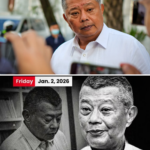
Former Senator Antonio Trillanes IV, a vocal critic of the Duterte administration, has weighed in on the significance of this ruling. He argues that this procedural requirement is actually an advantage for those seeking accountability. Instead of a rapid transmission to the Senate—where allies like Senators Bato dela Rosa, Bong Go, and others could potentially control the narrative or influence the proceedings early on—the complaint would now be subjected to a thorough, public investigation in the Lower House. Trillanes likens this to the “Quad Comm” environment, where evidence can be presented, witnesses can testify, and the public can see the case unfold day by day, without the immediate interference of friendly senators.
This mandatory investigation period, which could last for up to 60 days, presents a dangerous scenario for Vice President Duterte. It means that any allegations regarding the misuse of confidential funds or other impeachable offenses would be aired in a public forum for two months. The Filipino people would have a front-row seat to the evidence, potentially shifting public sentiment long before the case ever reaches the Senate for trial. As Trillanes pointed out, this prevents the defense from simply harassing witnesses or suppressing evidence in a rushed Senate trial. It ensures that the “trial by publicity” happens in a structured environment where facts can be laid bare.
The reaction—or rather, the silence—from certain quarters of the Senate is telling. Senators who are usually quick to defend the Vice President have been notably quieter regarding this specific legal development. The ruling implies that political protection is not absolute. The logic of the decision hits directly at the issues that have been avoided for so long. It suggests that if the proper constitutional processes are followed, no official, regardless of their popularity or position, is safe from scrutiny. The confidence that once permeated the “DDS” faction seems to be wavering as they realize that the legal ground beneath them has shifted.
The implications extend beyond just the mechanics of impeachment. This ruling reinforces the power of the purse and the oversight functions of the legislative branch, specifically the House of Representatives. It acts as a check on the Executive, reminding officials that the allocation and use of public funds—such as the controversial confidential and intelligence funds—are subject to strict rules. The transfer of funds that has been the subject of much debate is now under a harsher spotlight. If the Supreme Court’s principles are applied consistently, the arguments used to defend these transfers may no longer hold water.
Furthermore, the ruling serves as a warning that the “numbers game” in Congress is not the only factor. While securing votes is crucial, the process itself must be unimpeachable. A fast-tracked impeachment that bypasses the Committee on Justice could be seen as constitutionally infirm. By enforcing the committee hearings, the Supreme Court is ensuring that if an impeachment were to happen, it would be robust, evidence-based, and difficult to dismiss on mere technicalities. This strips away a layer of defense for the Vice President, forcing her team to answer the allegations on their merits rather than relying on procedural maneuvering.
The political landscape is now bracing for impact. The “assurance” of protection that many allies of the Vice President relied upon is eroding. The House of Representatives, emboldened by this clarification, may feel more confident in exercising its oversight powers. For the public, this is a development to watch closely. It is not just about one politician; it is about the system correcting itself. It is a reminder that in a democracy, the true sovereign is the people, and the mechanisms of government are designed to serve the truth, not the powerful.
As the dust settles on this ruling, the question remains: Is Vice President Sara Duterte ready for a prolonged, public scrutiny of her office’s actions? The Supreme Court has set the stage. The House Committee on Justice is the theater. And the Filipino people are the audience waiting for the truth to be unveiled. The silence from the Senate may soon be broken by the gavel of accountability.
News

Trahedya sa Canada: Mag-ina, Walang Awang Kinitilan ng Buhay ng Sariling Kadugo na Kanilang Tinulungan
Sa loob ng mahabang panahon, ang Canada ay naging simbolo ng pag-asa at bagong simula para sa milyon-milyong Pilipino na…

YARE si JR at BOY1NG sa WORLD BANK Nagpasa B0G saPALASY0? NIYARE si B0NGIT BOY/NG RECT0 CABRAL FILES
Sa kasalukuyang takbo ng pulitika sa Pilipinas, tila hindi na matapus-tapos ang mga rebelasyong gumugulantang sa sambayanang Pilipino. Ngunit ang…

MISSING BRIDE IBINAHAGI ANG NAKAKATAKOT NA SINAPIT NITO POSIBLENG MAY FOUL PLAY!STATEMENT NI SHERRA
Ang bawat kasalan ay inaasahang magiging simula ng isang masaya at bagong kabanata sa buhay ng dalawang taong nagmamahalan, subalit…

Luha o Laro? Tunay na Kulay ni Congressman Fernandez, Nabunyag sa Matapang na Rebelasyon ng Staff ni Cabral
Sa mundo ng pulitika at mga pampublikong pagdinig sa Pilipinas, hindi na bago ang makakita ng matitinding emosyon, sigawan, at…

HUWAG KANG SASAKAY DIYAN! MAMAMATAY KA! PUUPTOK ANG BARKO!
Matingkad ang sikat ng araw sa Manila Yacht Club. Ang hangin ay amoy dagat at mamahaling champagne. Ito ang araw…

Bilyunaryang Matanda Nagpanggap na Garbage Collector para Subukin ang Mapapangasawa ng Anak, Pero…
Matingkad ang sikat ng araw sa siyudad ng Makati, ngunit sa loob ng air-conditioned na opisina ng “Velasco Group of…
End of content
No more pages to load