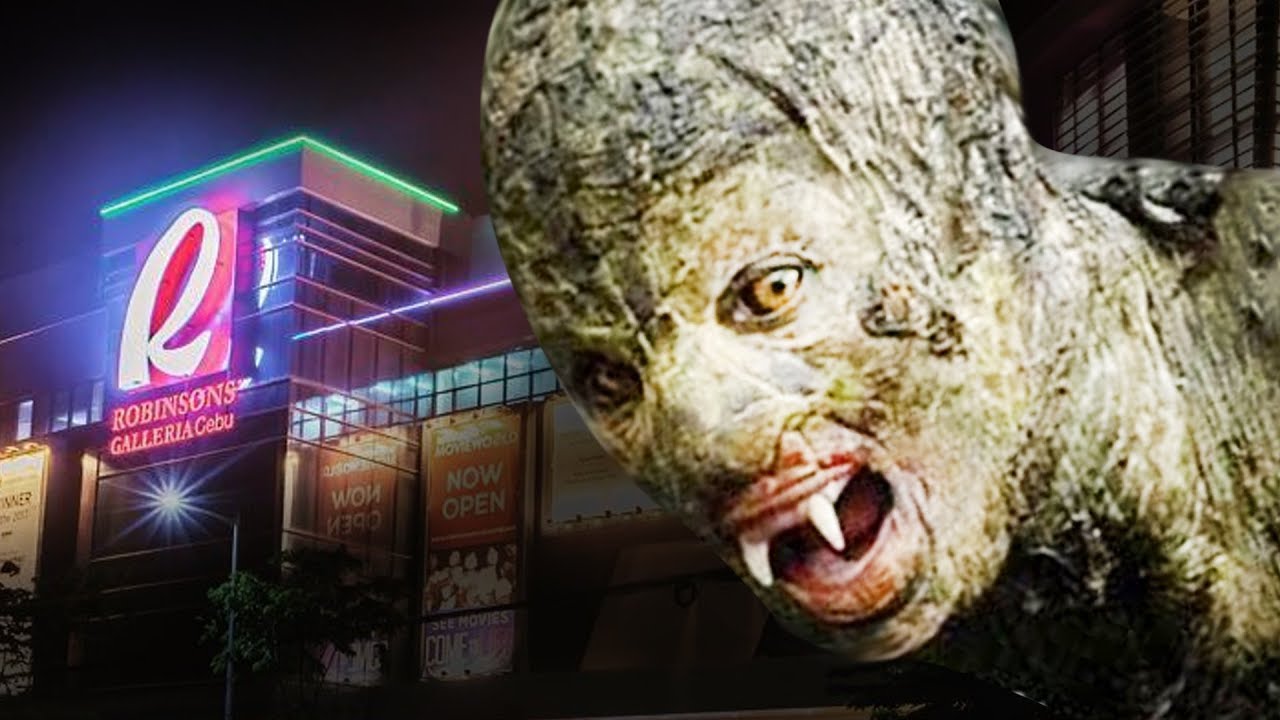
In the pantheon of urban legends that have gripped the public imagination, few are as bizarre, terrifying, and enduring as the tale of the “Snake Man” of Robinson’s Galleria. It is a story that dominated the 1990s, a time before the internet could instantly debunk rumors, allowing fear to spread through word of mouth until it became a widely accepted “truth” among the populace. The legend paints a picture of immense wealth built on a dark secret, centering on one of the country’s most prominent tycoon families. According to the conspiracy theory, the patriarch of the Gokongwei family did not just have a daughter named Robina; he allegedly had a twin son born with her. However, this was no ordinary child. The whispers claimed that the twin was a human-snake hybrid, a creature attached to the family’s fortune, said to lay golden eggs that fueled their business empire, but at a terrible price that required a steady supply of unsuspecting victims.
The mechanics of the legend were specific and fueled a generation’s phobia of shopping alone. The story went that this creature was not kept in a hospital or a remote island, but rather in the deep, labyrinthine basements and dungeons of the family’s flagship mall. The narrative suggested that the creature had a voracious appetite, specifically for beautiful women. To satisfy this hunger, the mall’s dressing rooms were allegedly rigged with high-tech trapdoors disguised as floors or mirrors. As the conspiracy goes, when a woman who fit the creature’s preference entered the fitting room to try on clothes, the floor would suddenly give way, sending her sliding down a chute directly into the creature’s lair beneath the mall. It was a scenario ripped straight from a horror movie, yet it was discussed with hushed seriousness in schools, offices, and households across the nation.
The legend reached a fever pitch with the involvement of a specific celebrity name: Alice Dixson. At the height of the rumor’s popularity, Dixson was one of the most stunning and sought-after actresses in the industry. The story alleges that she visited the mall one fateful day and became the Snake Man’s intended target. According to the lore, she fell through the trapdoor but, unlike the nameless others, managed to escape the creature’s clutches. The conspiracy theorists claimed that she made it out alive but was swiftly silenced by the powerful family. Rumors swirled that she was paid a massive settlement to keep her mouth shut and was subsequently sent out of the country to let the heat die down. Her temporary absence from the limelight during that period was cited by believers as undeniable proof that the encounter had actually taken place.
For years, this story had a tangible impact on the business. Shoppers, particularly women, would reportedly avoid the mall’s fitting rooms, or they would bring friends to hold the doors open, terrified that the floor would swallow them whole. The family at the center of the rumor, the Gokongweis, largely remained silent during the pre-social media era, likely adhering to the philosophy that dignifying such an absurd story with a response would only give it more oxygen. However, the persistence of the rumor was extraordinary. It combined elements of traditional folklore—snakes bringing wealth—with modern anxieties about safety in public spaces and the mysterious lives of the ultra-rich. It became a cultural touchstone, a story passed down from parents to children, warning them to be vigilant in dressing rooms.
Decades later, the truth—or the debunking—finally began to emerge as the main characters in this urban legend decided to address the elephant, or rather the snake, in the room. Robina Gokongwei-Pe, the supposed twin sister of the creature, eventually embraced the absurdity of the rumor. In a brilliant marketing move years later, the mall released advertisements playfully referencing the “snake,” turning the source of fear into a source of humor. Robina herself has spoken in interviews, laughing off the idea that she had a reptile for a brother, explaining that the legend likely started from competitive business sabotage meant to scare customers away from their establishment. She noted that if her family truly had a creature laying golden eggs, they wouldn’t need to work so hard running malls and airlines.
The final nail in the coffin of the conspiracy came from Alice Dixson herself. After years of silence which fueled the fire, the actress released a video vlog where she revisited the mall. She recreated the alleged scenario, entering a fitting room and checking the mirrors and floors. She clarified that she never fell through a trapdoor, never saw a snake man, and that her departure from the country at that time was for personal and professional reasons unrelated to any mall monster. She explained that she had remained silent for so long because she was advised not to validate the ridiculous claims, not realizing that her silence would be misinterpreted as a cover-up. Despite the clarifications, the legend of the Snake Man remains a fascinating piece of modern folklore, a testament to how fear and fascination can create monsters out of thin air, turning a simple shopping trip into a tale of survival.
News

Trahedya sa Canada: Mag-ina, Walang Awang Kinitilan ng Buhay ng Sariling Kadugo na Kanilang Tinulungan
Sa loob ng mahabang panahon, ang Canada ay naging simbolo ng pag-asa at bagong simula para sa milyon-milyong Pilipino na…

YARE si JR at BOY1NG sa WORLD BANK Nagpasa B0G saPALASY0? NIYARE si B0NGIT BOY/NG RECT0 CABRAL FILES
Sa kasalukuyang takbo ng pulitika sa Pilipinas, tila hindi na matapus-tapos ang mga rebelasyong gumugulantang sa sambayanang Pilipino. Ngunit ang…

MISSING BRIDE IBINAHAGI ANG NAKAKATAKOT NA SINAPIT NITO POSIBLENG MAY FOUL PLAY!STATEMENT NI SHERRA
Ang bawat kasalan ay inaasahang magiging simula ng isang masaya at bagong kabanata sa buhay ng dalawang taong nagmamahalan, subalit…

Luha o Laro? Tunay na Kulay ni Congressman Fernandez, Nabunyag sa Matapang na Rebelasyon ng Staff ni Cabral
Sa mundo ng pulitika at mga pampublikong pagdinig sa Pilipinas, hindi na bago ang makakita ng matitinding emosyon, sigawan, at…

HUWAG KANG SASAKAY DIYAN! MAMAMATAY KA! PUUPTOK ANG BARKO!
Matingkad ang sikat ng araw sa Manila Yacht Club. Ang hangin ay amoy dagat at mamahaling champagne. Ito ang araw…

Bilyunaryang Matanda Nagpanggap na Garbage Collector para Subukin ang Mapapangasawa ng Anak, Pero…
Matingkad ang sikat ng araw sa siyudad ng Makati, ngunit sa loob ng air-conditioned na opisina ng “Velasco Group of…
End of content
No more pages to load