The political landscape recently received a profound jolt with the disclosure of a massive, long-running fraudulent scheme operating at the highest levels of infrastructure allocation. This is not merely a tale of inefficiency; it is a chilling chronicle of systemic corruption—a network that allegedly manipulated official documentation, swallowed hundreds of millions in public funds, and left behind haunting, abandoned structures across the nation. The revelation, centering on projects greenlit during a previous presidential tenure, has sparked widespread public outrage and exposed the shocking vulnerability of public coffers to internal, organized malfeasance. The scale of the deceit is such that “ghost projects” have become the only fitting term for these structures—developments declared 100 percent complete, yet existing in a desolate, unusable state.
The investigative spotlight first focused on an appalling example of waste and negligence: a school building purportedly constructed under a contract valued at over P18.5 million. Public documents from the time, reportedly sourced from the national transparency portal, brazenly claimed the project, which commenced in August, reached full completion by November 27 of the same year—a suspiciously swift turnaround of barely three months for a structure of that price and scope. However, physical inspection revealed a shocking reality: the edifice now stands as a desolate skeleton, an empty shell surrounded by neglect. It is a “ghost school,” lacking students, teachers, and functionality, resembling little more than a hastily coated concrete frame. This facility, meant to serve the crucial educational needs of a community, has instead become a silent, eerie monument to a fraudulent paper trail, where institutional sign-offs contradicted all physical evidence.
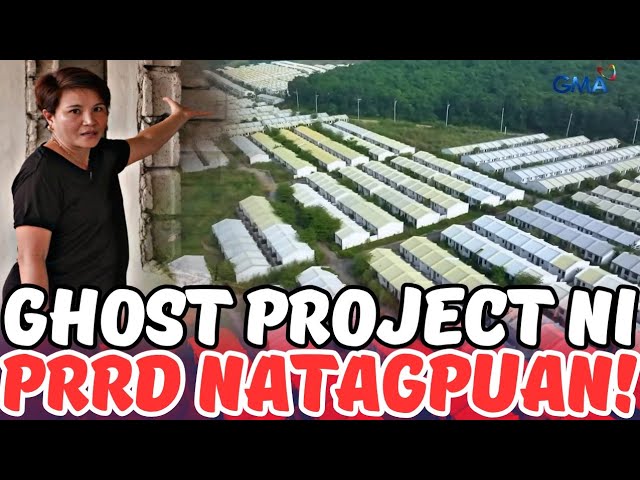
The scandal is not confined to educational facilities. Further investigation uncovered the tragic fate of a large-scale housing development in Barangay Pinugay, Baras, Rizal. Initiated during the same prior administration, this was planned as a community of over 1,500 residential units—a promised haven for thousands of families seeking dignified, permanent shelter. Today, this development is a literal “ghost town.” The units are severely incomplete, missing fundamental necessities like doors and windows, lacking functional comfort facilities, and are increasingly being reclaimed by the wilderness, overgrown with tall, thick grass. The original completion deadline was allegedly set for March 2021, later shifted to a more realistic date, but the development remains stalled and uninhabitable. The contrast between the officially documented completion status and the tangible, tragic reality of this abandoned community underscores the depth of the systemic deceit that allowed millions to be expended with nothing but desolation left in return.
The shock permeating the public sphere is rooted in the realization that this vast system of infrastructure irregularity is neither new nor isolated. Commentators emphasize that fraudulent project claims have plagued national governance for decades, a continuous blight across multiple presidential administrations. The true surprise, therefore, is not the existence of the “ghost projects,” but the alleged institutional silence that allowed them to proliferate unchecked. For years, the entrenched corruption networks—comprising powerful contractors, highly placed local officials, and possibly high-ranking national legislators—operated with seeming impunity, creating an environment of fear that paralyzed corrective action.
The prevailing narrative suggests that while a prior administration may have been aware of the existence of widespread irregularities—publicly acknowledging the “rampant” nature of such schemes—it allegedly failed to summon the necessary political courage to dismantle the network. According to commentators, there is little public record of the former leadership directly confronting or visiting these fraudulent sites to gather tangible evidence for prosecution. The widespread fear of these entrenched organizations—often referred to as a powerful “syndicate”—was so immense that even the most determined figures allegedly hesitated to move against them, leading to years of inaction that compounded the waste and betrayal of public trust.
The pivotal shift in this narrative of impunity is attributed to the current presidential tenure. The key element sparking public astonishment is the sudden emergence of a courageous political will to confront and dismantle this deeply embedded system of fraud. Unlike the alleged reticence of previous leaders, the current administration has reportedly taken unprecedented steps: actively visiting the abandoned sites, gathering irrefutable physical and documentary evidence, and initiating formal legal proceedings against high-ranking officials—the so-called “crocodiles” of corruption. This marked contrast—the transition from mere acknowledgement of the problem to aggressive, direct confrontation—is viewed by supporters as a defining moral stand for fiscal integrity and accountability to the populace.
The demand for transparency now rings louder than ever. The public is rightfully asking how countless officials could have signed off on documents certifying “100 percent completion” for projects that were visibly abandoned, incomplete, or fraudulently constructed. The documents themselves serve as damning evidence of the vast conspiracy: the fabrication of construction timelines, the quick approvals, and the release of funds based on false reports. The abandoned school and the overgrown housing complex stand as twin, undeniable testaments to the paper trails of deceit—a collective betrayal where integrity was allegedly exchanged for illicit gain.
This ongoing political and investigative firestorm highlights a critical juncture in the nation’s governance. The systematic exposure of these projects, which represent the theft of valuable public resources and the derailment of vital services like education and housing, underscores the urgency of profound institutional cleansing. For the citizens, the shocking discoveries serve as a painful reminder of the price of systemic corruption. But the courageous actions taken by the current leadership to unearth these buried truths and pursue accountability against entrenched networks—actions allegedly avoided by those who came before—have instilled a renewed, albeit fragile, hope that the era of impunity for grand-scale fraudulent schemes may finally be drawing to a close. The nation watches closely, demanding that every cent stolen and every fraudulent document signed be brought into the harsh, clear light of justice.
News

Trahedya sa Canada: Mag-ina, Walang Awang Kinitilan ng Buhay ng Sariling Kadugo na Kanilang Tinulungan
Sa loob ng mahabang panahon, ang Canada ay naging simbolo ng pag-asa at bagong simula para sa milyon-milyong Pilipino na…

YARE si JR at BOY1NG sa WORLD BANK Nagpasa B0G saPALASY0? NIYARE si B0NGIT BOY/NG RECT0 CABRAL FILES
Sa kasalukuyang takbo ng pulitika sa Pilipinas, tila hindi na matapus-tapos ang mga rebelasyong gumugulantang sa sambayanang Pilipino. Ngunit ang…

MISSING BRIDE IBINAHAGI ANG NAKAKATAKOT NA SINAPIT NITO POSIBLENG MAY FOUL PLAY!STATEMENT NI SHERRA
Ang bawat kasalan ay inaasahang magiging simula ng isang masaya at bagong kabanata sa buhay ng dalawang taong nagmamahalan, subalit…

Luha o Laro? Tunay na Kulay ni Congressman Fernandez, Nabunyag sa Matapang na Rebelasyon ng Staff ni Cabral
Sa mundo ng pulitika at mga pampublikong pagdinig sa Pilipinas, hindi na bago ang makakita ng matitinding emosyon, sigawan, at…

HUWAG KANG SASAKAY DIYAN! MAMAMATAY KA! PUUPTOK ANG BARKO!
Matingkad ang sikat ng araw sa Manila Yacht Club. Ang hangin ay amoy dagat at mamahaling champagne. Ito ang araw…

Bilyunaryang Matanda Nagpanggap na Garbage Collector para Subukin ang Mapapangasawa ng Anak, Pero…
Matingkad ang sikat ng araw sa siyudad ng Makati, ngunit sa loob ng air-conditioned na opisina ng “Velasco Group of…
End of content
No more pages to load