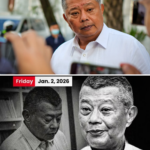
The Legal Crossroads: Senator Dela Rosa’s Retreat to Pampanga Amid ICC Warrant Rumors and the Devastating New Fugitive Ruling
The climate in the Senate, the Department of Justice (DOJ), and the political community at large has been thick with tension, focusing on the legal jeopardy surrounding one of the country’s most prominent figures: Senator Ronald “Bato” dela Rosa. For weeks, the subject of an alleged International Criminal Court (ICC) arrest document has dominated headlines, not just as a legal threat, but as a severe test of the current administration’s commitment to international law and its own domestic mandates. The situation escalated dramatically with reports that the Senator, upon hearing the initial rumors, swiftly took preemptive action—a move that has been interpreted by many as an admission of the seriousness of the looming legal challenge.
This saga is more than a high-profile court case; it is a complex legal and political firestorm. It involves heated disputes over jurisdictional sovereignty, conflicting public statements by key government figures, and the immediate, visible impact of legal uncertainty on the day-to-day operations of the Philippine legislature. The legal challenges now facing Senator Dela Rosa are multi-faceted, ranging from the external threat of an international judicial body to internal impediments created by the Philippines’ own laws and, most recently, by an unforeseen judicial barrier erected by the Supreme Court. The Senator’s current legal tight spot is arguably the most severe a political figure has faced in recent memory, placing him at a dangerous crossroads where every political move is measured against a backdrop of potential judicial action.
The Legal Sword of Damocles: Warrant Rumors and Official Disclosures
The entire crisis is predicated on the widely reported yet officially unconfirmed existence of an ICC arrest document against Senator Dela Rosa, tied to his role in the previous administration’s controversial anti-narcotics campaign. The rumors were given immediate and alarming credence by pronouncements from former Presidential Spokesperson Harry Roque, a known associate of the previous administration.
Roque, in a series of public statements, claimed that the arrest document was not only active but had been formally received by local implementing agencies. Roque went so far as to claim that the document was officially received by the DOJ and the Department of the Interior and Local Government (DILG), and he dramatically advised the Senator to “surrender” to a local court rather than risk an unsanctioned apprehension. This was a direct, explosive claim that suggested a full-scale legal process was already in motion behind the scenes.
Official Denial vs. Unofficial Confirmation
Roque’s claims immediately generated a firestorm, compelling the very agencies he named to issue swift and categorical denials. The DOJ and DILG publicly stated that they had received no official document from the ICC. They maintained that any action would only be taken upon receipt of a formal and verifiable legal instrument. This official stance is crucial for maintaining the government’s procedural integrity, but it created an atmosphere of profound public confusion—a deliberate contrast of official protocol versus political rumor.
However, the picture was further complicated by the alleged statement of Ombudsman Samuel Martires (Boying Remulla is the DOJ Secretary, but the transcript mentions Boying Remulla stating he saw an unofficial copy while discussing the Ombudsman). The transcript mentions Ombudsman Remulla (likely a mix-up in names, but the content refers to Remulla seeing the paper) suggesting that he had been shown an unofficial copy of the warrant’s first page by an ICC contact and later the full document. While the Ombudsman’s statement cannot be treated as a formal disclosure, the mere claim by a high-ranking official that such a document exists and that he had privately viewed it provided compelling, unofficial confirmation that the legal instrument is, at the very least, active in the diplomatic or international sphere.
This duality—the official denial by the enforcement agencies versus the unofficial admission by high-level observers—highlights the deep discomfort within the Philippine government regarding the ICC’s jurisdiction and the political pressure involved in implementing such a highly sensitive order.
The Sudden Retreat: A Preemptive Move to Pampanga
The gravity of the threat was arguably best illustrated by Senator Dela Rosa’s own alleged actions. Reports circulated immediately following the initial rumors, indicating that the Senator had suddenly gone into hiding, effectively making himself unavailable for public duties, including skipping sessions in the Senate.
The location of his alleged refuge was pinpointed by some reports, including a statement attributed to the Ombudsman, as Arayat, Pampanga. While the reasons for this specific location were complex—with suggestions pointing to long-standing political connections and frequent prior visits to the area—the fact of his immediate retreat speaks volumes. It demonstrated a profound lack of faith in the process and a clear fear of pre-emptive action.
This move from public view represents an extraordinary decision for a sitting Senator, signaling that the legal peril was perceived as overwhelming and immediate. By withdrawing from the capital and the protection afforded by his public office, he effectively conceded the seriousness of the rumors. This preemptive hiding, even before the official confirmation of the warrant’s local receipt, instantly rendered him a figure outside the immediate reach of legal jurisdiction, albeit at a massive political and legal cost.
The Core Legal Battle: Surrender Versus Extradition
At the heart of the legal maneuvering lies a fierce debate over the lawful mode of transfer should the arrest document be authenticated. Senator Dela Rosa’s camp, led by his legal counsel, Atty. Israelito Torion, has raised legal arguments attempting to block the enforcement of the warrant.
A primary argument put forth by the Senator’s lawyer is that the warrant is unenforceable because the Philippines is no longer a member of the Rome Statute, and that any transfer would require adherence to complex extradition procedures. Furthermore, Atty. Torion has controversially suggested that the law, RA 9851, which local legal experts cite as the basis for transfer, is non-enforceable due to a purported lack of Implementing Rules and Regulations (IRR). Legal experts dismiss this latter argument, asserting that a law’s validity and enforceability are not dependent on the existence of an IRR under the Constitution, particularly when the law’s provisions are clear and executable.
RA 9851: The Legal Basis for Transfer
The counter-argument, favored by ICC-accredited lawyers and independent legal counsel, rests on Republic Act No. 9851, known as the International Humanitarian Law Act. This law, passed in 2009—before the Philippines ratified the Rome Statute—explicitly addresses crimes against international humanitarian law, genocide, and other crimes against humanity.
Crucially, Section 17 of RA 9851 contains clear provisions that directly contradict the claims that a transfer would be illegal. It states that Philippine authorities may dispense with local investigation and prosecution if an international court is already conducting the investigation or prosecution. Furthermore, the law explicitly allows the authorities to surrender or extradite suspected or accused persons in the Philippines to the appropriate international court.
This provision is a critical legal firewall. It means the Philippines already has a domestic legal framework that allows for the transfer of an accused to an international court, making the claim that any such transfer is a “kidnapping” legally unfounded. The mode of transfer available under RA 9851 is “surrender,” a legal act of state compliance that does not require the lengthy and complex procedures of a traditional extradition treaty, particularly since the ICC is not a nation-state. This provision renders the legal argument for non-compliance significantly weaker.
The New Judicial Barrier: The Fugitive Status
Adding unprecedented difficulty to the Senator’s legal strategy is a recent, powerful decision from the Supreme Court of the Philippines. The Court issued a ruling clarifying the rules on fugitive status and, more importantly, barring them from seeking judicial relief.
The ruling redefined a fugitive as someone who not only flees after conviction but also flees after being charged to avoid prosecution. This definition directly applies to an official who avoids the court’s jurisdiction upon the issuance of a formal charge or warrant. The Court explicitly stated that an individual who has not submitted to the court’s jurisdiction has no right to invoke its processes—meaning they cannot file motions, challenge warrants, or seek other legal remedies while remaining outside the court’s territorial control.
This decision represents a devastating new legal impediment for Senator Dela Rosa. The legal strategy used by figures in the past—such as filing motions from abroad while remaining outside the country’s jurisdiction—is now void. Should the Senator maintain his current position in isolation and be legally declared a fugitive, his entire defense team would be severely limited in their ability to fight the case in Philippine courts. This judicial declaration effectively closes the door on his primary legal recourse, forcing a critical choice: either maintain isolation and lose all access to domestic legal protections, or surrender to the court’s jurisdiction and face the ICC issue head-on.
The Political Contagion and Institutional Weakening
Beyond the personal legal peril, the situation has created significant political contagion that is weakening the operational capacity of the Senate and the political bloc to which Senator Dela Rosa belongs.
As one of the most vocal and aggressive figures within his political group, his self-imposed isolation has created a massive vacuum. His inability to participate in Senate sessions and key political maneuvers due to the need to avoid apprehension has effectively rendered his vote and voice useless at a critical time. This distraction is compounded by the fact that several of his political allies are also facing intense scrutiny, with some already facing or anticipating their own legal complaints and warrants for issues like financial misconduct.
The collective impact of these legal pressures has resulted in a distracted and diminished minority bloc. With key members preoccupied with legal defense, public image repair, or simply avoiding physical presence in the capital, their ability to organize, push legislation, or strategically challenge the majority is severely compromised. The legal crisis facing Senator Dela Rosa has, therefore, become a powerful, systemic tool that disrupts the balance of power, demonstrating how individual legal peril can translate directly into institutional and political weakening.
The situation leaves Senator Dela Rosa at a decisive juncture. The legal arguments for the transfer are robust, a new Supreme Court decision has severely curtailed his ability to fight the case while in hiding, and the political cost of his retreat is mounting daily. The focus has unequivocally shifted from if the warrant is enforceable to when and how the inevitable transfer or surrender will be handled, marking a profound new phase in the battle for accountability in the Philippines.
News

Trahedya sa Canada: Mag-ina, Walang Awang Kinitilan ng Buhay ng Sariling Kadugo na Kanilang Tinulungan
Sa loob ng mahabang panahon, ang Canada ay naging simbolo ng pag-asa at bagong simula para sa milyon-milyong Pilipino na…

YARE si JR at BOY1NG sa WORLD BANK Nagpasa B0G saPALASY0? NIYARE si B0NGIT BOY/NG RECT0 CABRAL FILES
Sa kasalukuyang takbo ng pulitika sa Pilipinas, tila hindi na matapus-tapos ang mga rebelasyong gumugulantang sa sambayanang Pilipino. Ngunit ang…

MISSING BRIDE IBINAHAGI ANG NAKAKATAKOT NA SINAPIT NITO POSIBLENG MAY FOUL PLAY!STATEMENT NI SHERRA
Ang bawat kasalan ay inaasahang magiging simula ng isang masaya at bagong kabanata sa buhay ng dalawang taong nagmamahalan, subalit…

Luha o Laro? Tunay na Kulay ni Congressman Fernandez, Nabunyag sa Matapang na Rebelasyon ng Staff ni Cabral
Sa mundo ng pulitika at mga pampublikong pagdinig sa Pilipinas, hindi na bago ang makakita ng matitinding emosyon, sigawan, at…

HUWAG KANG SASAKAY DIYAN! MAMAMATAY KA! PUUPTOK ANG BARKO!
Matingkad ang sikat ng araw sa Manila Yacht Club. Ang hangin ay amoy dagat at mamahaling champagne. Ito ang araw…

Bilyunaryang Matanda Nagpanggap na Garbage Collector para Subukin ang Mapapangasawa ng Anak, Pero…
Matingkad ang sikat ng araw sa siyudad ng Makati, ngunit sa loob ng air-conditioned na opisina ng “Velasco Group of…
End of content
No more pages to load