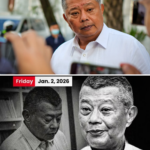

The political landscape is currently gripped by a sensational and high-stakes conflict, centered entirely on the future aspirations of Vice President Sara Duterte. Amidst her consistently high trust and popularity ratings, political rivals and detractors are reportedly engaged in a coordinated, relentless, and increasingly desperate campaign designed not merely to criticize her performance, but to permanently disqualify her from the 2028 presidential election. This campaign, marked by a succession of aggressive legal maneuvers and the strategic deployment of controversial witnesses, is seen by many as a calculated effort to erode her public image and politically cripple her office, regardless of the factual outcome in the courts.
This sustained campaign of political sabotage is not new; it is merely escalating. Opponents have already exhausted several avenues, including the highly controversial People’s Initiative (PI) to amend the Constitution—a move widely seen as an attempt to consolidate power and thwart the Vice President’s path. When the PI failed to gain traction, the strategy shifted to an impeachment attempt, which also proved ineffective. Now, the final, most aggressive phase is underway: the systematic filing of severe criminal charges, primarily Plunder and Malversation, leveraged by the explosive, yet questionable, affidavit of a self-proclaimed former insider.
The linchpin of this phase is the sworn testimony of Ramil Madriaga, a former intelligence operative who claims to have acted as the political family’s “bagman.” His affidavit is a document filled with extraordinary and specific allegations, asserting that he personally delivered massive sums of cash, including duffle bags containing millions of pesos, allegedly sourced from controversial operators like POGO and those involved in illegal commerce. Madriaga’s narrative claims that he delivered funds intended for political operations, including monthly payments for the “EIP Pilipinas” political group, which he helped establish. The scale of the financial claims is massive, involving sums that collectively reach the billions.
However, the testimony’s credibility has been severely compromised by a multitude of inconsistencies and highly dubious claims that critics are quick to expose as being “pambobo” (for the simple-minded). For instance, Madriaga claims to have delivered millions of pesos in cash to locations like a comedy bar or the parking lot of the Ombudsman’s office—venues that critics argue are implausibly reckless for ultra-high-stakes transactions. He further alleges that the former President himself would call him directly to confirm the receipt of money, a scenario ridiculed by commentators as being ridiculously out of character for a high-ranking official who would naturally use layers of subordinates for such sensitive communications. Furthermore, his claims of having once been an intelligence officer for the Armed Forces of the Philippines (AFP) were categorically rejected by AFP officials, who stated that an individual with his criminal history—including a past kidnapping conviction that was later overturned—would never pass the strict security screening required for such a position. The official denial by the AFP of any professional relationship with Madriaga fundamentally undermines his entire credibility, leading analysts to suggest the affidavit is a fabricated component of the larger political attack.
The strategy behind the relentless filing of criminal cases—including Plunder, Bribery, and Malversation—is multi-layered, serving tactical goals that extend beyond a simple conviction. The first goal is financial and psychological exhaustion. Defending against a battery of severe legal cases requires immense legal resources and time. By filing multiple, non-bailable cases, rivals aim to tie up the Vice President’s staff, lawyers, and financial resources, paralyzing her ability to govern and, more importantly, to campaign effectively for 2028. The second goal is image tarnishing. Political strategists understand that even if the charges are eventually dismissed due to lack of evidence, the public perception of corruption will linger. The continuous media coverage of alleged financial misconduct, illicit cash transfers, and POGO funding is intended to “tint” the Vice President’s image, creating enough public doubt to reduce her overwhelming popularity and trust ratings. This is not a legal battle; it is a political war being fought in the court of public opinion.
The opposition’s desperation is palpable, as they recognize the Vice President’s formidable political strength. Her high approval ratings, even amidst continuous attacks, signal that she remains the favorite for the 2028 election. For the current rivals, the only viable path to victory is to remove her from the race entirely through legal means. A conviction for Plunder or Malversation carries the mandatory penalty of perpetual disqualification from holding any public office, which would achieve the opposition’s ultimate goal. The filing of the non-bailable Plunder charge is, therefore, the most aggressive and high-stakes maneuver possible to force a legal end to her political career.
The broader political landscape shows this attack is a complex coalition of interests. The operation is allegedly spearheaded by political rivals who lost influence during the previous administration and are now determined to regain full power. They are joined by certain political factions who prioritize self-interest and are fearful of the Vice President’s potential ascent. This alliance, which critics claim involves using a compromised whistleblower and coordinated media messaging, is working in full throttle to destabilize the political environment. Adding to the tension is the alleged involvement of a prominent lawyer who previously represented POGO interests and is now linked to assisting the accuser, further muddying the ethical waters and reinforcing the claim that the entire operation is a well-funded, coordinated political hit job.
Despite the obvious inconsistencies in the whistleblower’s story, the legal process has been set in motion. The Ombudsman has received the complaints, and the cases are being advanced. Critics note the stark contrast between the intense speed and media attention given to these politically motivated cases and the slow progress of other serious corruption investigations. This differential treatment only strengthens the perception that the legal system is being weaponized for political gain. The challenge now for the Vice President’s camp is to quickly and decisively expose the fabrications in the affidavit and dismantle the political motive behind the coordinated attacks, thereby protecting her public image and her path to the 2028 elections. The political future of the Vice President is currently under siege, and the outcome of this extraordinary struggle will define the future political direction of the nation.
News

Trahedya sa Canada: Mag-ina, Walang Awang Kinitilan ng Buhay ng Sariling Kadugo na Kanilang Tinulungan
Sa loob ng mahabang panahon, ang Canada ay naging simbolo ng pag-asa at bagong simula para sa milyon-milyong Pilipino na…

YARE si JR at BOY1NG sa WORLD BANK Nagpasa B0G saPALASY0? NIYARE si B0NGIT BOY/NG RECT0 CABRAL FILES
Sa kasalukuyang takbo ng pulitika sa Pilipinas, tila hindi na matapus-tapos ang mga rebelasyong gumugulantang sa sambayanang Pilipino. Ngunit ang…

MISSING BRIDE IBINAHAGI ANG NAKAKATAKOT NA SINAPIT NITO POSIBLENG MAY FOUL PLAY!STATEMENT NI SHERRA
Ang bawat kasalan ay inaasahang magiging simula ng isang masaya at bagong kabanata sa buhay ng dalawang taong nagmamahalan, subalit…

Luha o Laro? Tunay na Kulay ni Congressman Fernandez, Nabunyag sa Matapang na Rebelasyon ng Staff ni Cabral
Sa mundo ng pulitika at mga pampublikong pagdinig sa Pilipinas, hindi na bago ang makakita ng matitinding emosyon, sigawan, at…

HUWAG KANG SASAKAY DIYAN! MAMAMATAY KA! PUUPTOK ANG BARKO!
Matingkad ang sikat ng araw sa Manila Yacht Club. Ang hangin ay amoy dagat at mamahaling champagne. Ito ang araw…

Bilyunaryang Matanda Nagpanggap na Garbage Collector para Subukin ang Mapapangasawa ng Anak, Pero…
Matingkad ang sikat ng araw sa siyudad ng Makati, ngunit sa loob ng air-conditioned na opisina ng “Velasco Group of…
End of content
No more pages to load