The political establishment is facing a profound crisis of confidence following the emergence of an astonishing sworn testimony from a former intelligence operative who claims he served as a central figure in the covert financial network of high-ranking political figures. Ramil Madriaga, who previously identified himself as a former intelligence officer and a key aide, has publicly broken his silence, delivering an affidavit that lays bare a narrative of immense cash movements, unauthorized financial sources, and a chilling breakdown of trust that now threatens to unravel the entire political machinery he once served.
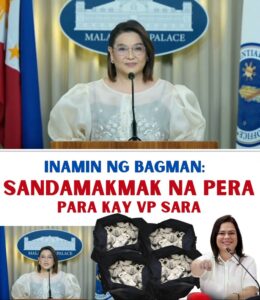
Madriaga’s testimony centers on what he describes as his role as the “bagman,” a facilitator responsible for the physical delivery of colossal sums of money to both Vice President Sara Duterte and the former President, Rodrigo Duterte. The figures cited in his account are staggering, transforming the issue from a simple political spat into a full-scale national financial scandal. He asserts that he personally handled and delivered cash sums that collectively reached the billions of pesos over a period of years, with transactions allegedly taking place between 2017 and 2019. Among the specific cash movements he details are a reported P300 Million delivered within the Davao Region and a monumental P900 Million allegedly destined for the Office of the President. Beyond these massive, one-time transactions, Madriaga claims to have been the conduit for a regular, substantial flow of money, including monthly payments of P5 Million dedicated to funding the operations of a specific political support group, known as “EIP Pilipinas” (Inday Sara is our President), which he himself helped establish.
The sheer scale of these cash deliveries raises immediate and profound questions about the source, legality, and ultimate purpose of the funds. Madriaga’s allegations directly address this, making the most politically damaging claims of his entire testimony. He asserts that the massive amounts of cash were derived from controversial and illicit sources, specifically naming Philippine Offshore Gaming Operators (POGO) and operators involved in illegal commerce and smuggling syndicates. This claim is catastrophic for the political figures involved, as it fundamentally contradicts the former administration’s public, non-negotiable stance against corruption and unauthorized financial activities. The testimony suggests that the campaign and political operations were allegedly subsidized by the very activities the government claimed to be fighting, creating a dramatic, deep-seated conflict between public policy and alleged private financial practice.
The core message of the whistleblower is one of extreme betrayal and self-preservation. Madriaga claims he initiated the rupture with his former principals not out of malice, but because he felt profoundly abandoned and his personal safety was recklessly compromised after he fulfilled sensitive, risky assignments. He details an instance where he intervened on behalf of local farmers in Bataan who were protesting the encroachment of a POGO complex onto their land. This intervention, which put him in direct conflict with interests allegedly connected to a prominent political figure, exposed him to severe legal consequences and heightened concerns for his personal safety. He argues that after risking his safety to serve the political family, his intervention on an unrelated ethical matter resulted in his being ignored and left vulnerable to legal repercussions, including an unrelated high-profile legal challenge that led to his current confinement. The feeling of being discarded, according to him, was the final straw that prompted his decision to expose the financial architecture of the political machinery.
The credibility of the administration’s response has been severely damaged by the public circulation of undeniable photographic evidence. Following Madriaga’s explosive testimony, allies of the high-ranking official immediately attempted to contain the fallout by issuing blanket denials, arguing that the Vice President never personally knew the accuser and that any claims of a close operational relationship were fabricated. However, these denials were quickly and comprehensively shattered by the emergence of multiple photographs and screenshots of video calls showing the Vice President and Madriaga in direct, close communication. These images, which verify his role in spearheading the “EIP Pilipinas” group and collaborating on political initiatives, starkly contradict the official narrative of non-acquaintance. The failure to acknowledge this relationship has transformed the situation from a mere allegation into a major crisis of credibility, suggesting a deliberate attempt to conceal the operational closeness of the two figures.
The saga surrounding the whistleblower continues to escalate even during his confinement. Madriaga, currently detained due to a separate, high-profile legal challenge, alleges that the efforts to silence him have been intense. He claims that the Vice President herself made a discreet, night-time visit to the facility where he is being held, allegedly in a desperate plea for him to maintain his silence regarding the controversial financial sources and the inner workings of their alliance. This alleged act of personal intervention highlights the extreme pressure surrounding this political crisis and confirms the importance of Madriaga’s testimony to the political family. He claims that he is speaking out now due to the immense risk he faces, stating that his life and the safety of his family were being jeopardized by the very people he sought to protect, leaving him with no choice but to reveal the full truth.
The political consequences of this sworn testimony are vast and far-reaching. The allegations about the illicit source of funds—POGO and smuggling syndicates—strike at the very legitimacy of the administration’s anti-corruption claims and provide formidable ammunition for the political opposition. The detailed nature of the affidavit, including specific amounts, dates, and alleged delivery locations, gives legal and political critics a concrete roadmap for further investigation. The testimony will inevitably fuel renewed calls for accountability, including the expected filing of additional legal complaints or political maneuvers once existing legal bars are lifted. For the political family at the center of the storm, the immediate challenge is not just defending against the corruption claims, but managing the catastrophic political damage caused by the exposed contradiction and the perceived betrayal of a once-trusted insider. The sheer volume of money, the illicit source, and the personal nature of the accusations have created a political and legal firestorm that will require an unprecedented effort to contain, as the secret financial architecture of their power is now permanently in the public domain.
News

Trahedya sa Canada: Mag-ina, Walang Awang Kinitilan ng Buhay ng Sariling Kadugo na Kanilang Tinulungan
Sa loob ng mahabang panahon, ang Canada ay naging simbolo ng pag-asa at bagong simula para sa milyon-milyong Pilipino na…

YARE si JR at BOY1NG sa WORLD BANK Nagpasa B0G saPALASY0? NIYARE si B0NGIT BOY/NG RECT0 CABRAL FILES
Sa kasalukuyang takbo ng pulitika sa Pilipinas, tila hindi na matapus-tapos ang mga rebelasyong gumugulantang sa sambayanang Pilipino. Ngunit ang…

MISSING BRIDE IBINAHAGI ANG NAKAKATAKOT NA SINAPIT NITO POSIBLENG MAY FOUL PLAY!STATEMENT NI SHERRA
Ang bawat kasalan ay inaasahang magiging simula ng isang masaya at bagong kabanata sa buhay ng dalawang taong nagmamahalan, subalit…

Luha o Laro? Tunay na Kulay ni Congressman Fernandez, Nabunyag sa Matapang na Rebelasyon ng Staff ni Cabral
Sa mundo ng pulitika at mga pampublikong pagdinig sa Pilipinas, hindi na bago ang makakita ng matitinding emosyon, sigawan, at…

HUWAG KANG SASAKAY DIYAN! MAMAMATAY KA! PUUPTOK ANG BARKO!
Matingkad ang sikat ng araw sa Manila Yacht Club. Ang hangin ay amoy dagat at mamahaling champagne. Ito ang araw…

Bilyunaryang Matanda Nagpanggap na Garbage Collector para Subukin ang Mapapangasawa ng Anak, Pero…
Matingkad ang sikat ng araw sa siyudad ng Makati, ngunit sa loob ng air-conditioned na opisina ng “Velasco Group of…
End of content
No more pages to load