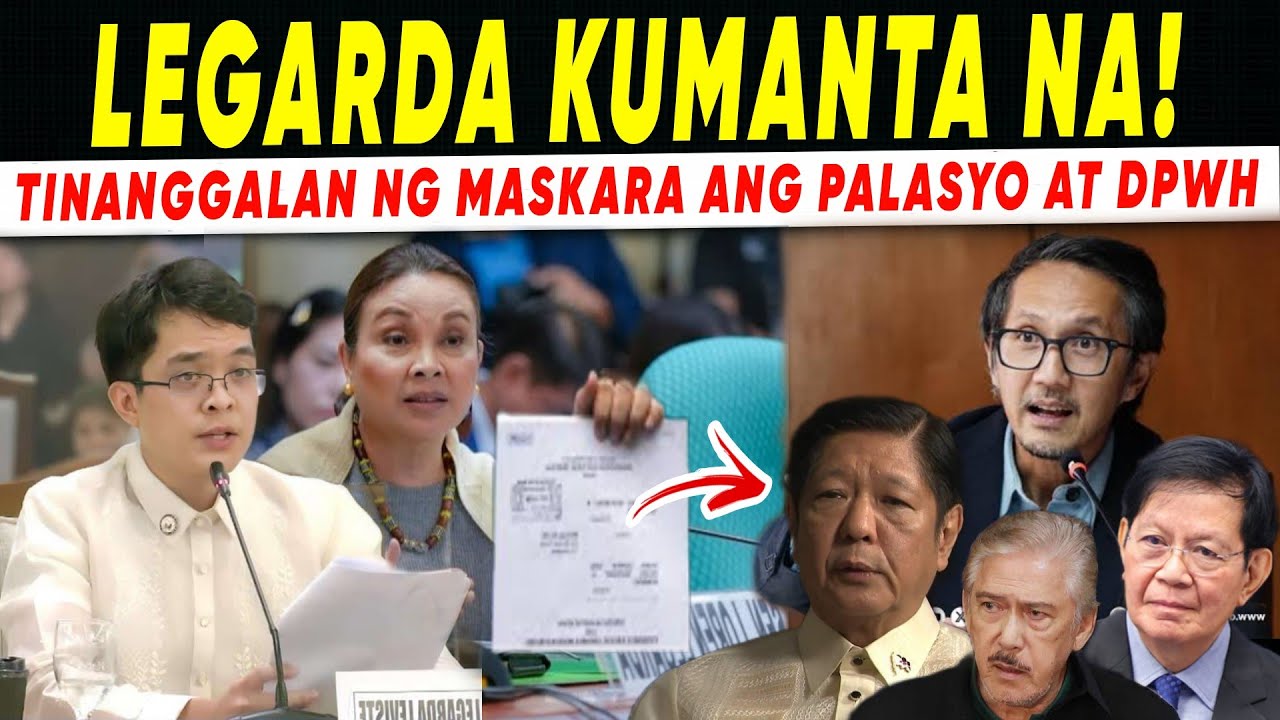
In a political earthquake that threatens to shake the very foundations of the current administration, Batangas First District Representative Leandro Antonio Legarda Leviste has dropped a bombshell allegation regarding the national budget. In a fearless move that has sent shockwaves through the House of Representatives and the Palace, Leviste exposed a staggering 1.2 trillion peso “insertion” in the Department of Public Works and Highways (DPWH) budget for the years 2025 and 2026. This revelation comes amidst a climate of secrecy, with the agency allegedly refusing to release the complete database of proponents for these massive funds.
According to Leviste, the opacity of the DPWH is alarming. He asserts that transparency demands the release of the names behind these projects—specifically, who inserted projects worth 722 billion pesos for 2025 and nearly 497 billion for 2026. The young congressman didn’t just point fingers at his colleagues; he implicated the highest levels of the executive branch, suggesting that cabinet secretaries, undersecretaries, and other officials are also involved in these insertions. This, he argues, is the reason behind the fierce resistance to releasing the list. The internal files of the DPWH reportedly show projects that are “politically pushed” by contractors rather than planning engineers, a classic hallmark of corruption and patronage politics.
But Leviste’s exposé is just the tip of the iceberg. A separate report by the Philippine Center for Investigative Journalism (PCIJ) has poured fuel on the fire by identifying the top beneficiaries of these questionable allocations. Dubbed the “Pork Barrel Kings,” the list is topped by none other than the President’s son, Ilocos Norte Representative Sandro Marcos, and the President’s cousin, Speaker Martin Romualdez. The data is damning: over three years, Sandro Marcos’s district allegedly received a whopping 15.8 billion pesos in allocable funds. To put this in perspective, his district has a population of only around 320,000. In stark contrast, the First District of Rizal, with a population four times larger at 1.2 million, received significantly less funding.
The disparity has ignited public outrage. Critics argue that this is not just a coincidence but a blatant display of nepotism and abuse of power. The narrative that these funds are for development crumbles when compared to the needs of vastly more populated areas that receive a fraction of the budget. Martin Romualdez, representing the First District of Leyte, came in second with 14.4 billion pesos allocated to his similarly small district. The concentration of such immense financial resources in the hands of the President’s closest relatives has led many to question the integrity of the entire budget process.
The Palace’s response has been dismissed by many as dismissive and disconnected. When asked about the PCIJ report, the administration’s statement was that the President “knows that Congressman Sandro knows what he is doing.” This non-answer has only fueled suspicions that the executive branch is shielding its own. The challenge for a lifestyle check remains unanswered, with critics noting that true transparency would require a full audit of these billions in infrastructure projects—many of which are suspected to be “ghost projects” or riddled with kickbacks.
Adding to the chaos is the recent NBI raid on a condominium unit linked to former Congressman Zaldy Co, another figure embroiled in corruption allegations. However, the raid has been viewed with skepticism by observers. Reports indicate that lawyers were already waiting for the NBI agents, leading to speculation that the operation was “staged” or that evidence had already been sanitized. There is a growing fear among the public that these investigations are merely theatrical distractions, designed to find scapegoats while the true architects of corruption remain untouched.
As the dust settles, the silence of usually vocal political figures like Sotto and Lacson is palpable. Have they “folded” under the pressure of these revelations? The exposure of the “Leviste List” and the PCIJ report has drawn a clear line in the sand. The public is now seeing a picture of a government where billions are moved in the shadows, and where the “Golden Age” seems to apply only to the fortunes of a select few. With the 2025 elections looming, the question remains: will there be accountability for the 1.2 trillion pesos, or will it be business as usual for the “Pork Barrel Kings”?
Image Search Keywords
News

Trahedya sa Canada: Mag-ina, Walang Awang Kinitilan ng Buhay ng Sariling Kadugo na Kanilang Tinulungan
Sa loob ng mahabang panahon, ang Canada ay naging simbolo ng pag-asa at bagong simula para sa milyon-milyong Pilipino na…

YARE si JR at BOY1NG sa WORLD BANK Nagpasa B0G saPALASY0? NIYARE si B0NGIT BOY/NG RECT0 CABRAL FILES
Sa kasalukuyang takbo ng pulitika sa Pilipinas, tila hindi na matapus-tapos ang mga rebelasyong gumugulantang sa sambayanang Pilipino. Ngunit ang…

MISSING BRIDE IBINAHAGI ANG NAKAKATAKOT NA SINAPIT NITO POSIBLENG MAY FOUL PLAY!STATEMENT NI SHERRA
Ang bawat kasalan ay inaasahang magiging simula ng isang masaya at bagong kabanata sa buhay ng dalawang taong nagmamahalan, subalit…

Luha o Laro? Tunay na Kulay ni Congressman Fernandez, Nabunyag sa Matapang na Rebelasyon ng Staff ni Cabral
Sa mundo ng pulitika at mga pampublikong pagdinig sa Pilipinas, hindi na bago ang makakita ng matitinding emosyon, sigawan, at…

HUWAG KANG SASAKAY DIYAN! MAMAMATAY KA! PUUPTOK ANG BARKO!
Matingkad ang sikat ng araw sa Manila Yacht Club. Ang hangin ay amoy dagat at mamahaling champagne. Ito ang araw…

Bilyunaryang Matanda Nagpanggap na Garbage Collector para Subukin ang Mapapangasawa ng Anak, Pero…
Matingkad ang sikat ng araw sa siyudad ng Makati, ngunit sa loob ng air-conditioned na opisina ng “Velasco Group of…
End of content
No more pages to load