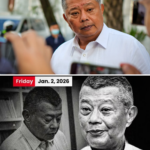

The flashing lights of cameras and the adoration of high society are now distant memories for Cedric Lee. In a dramatic turn of events that feels ripped from the pages of a crime novel, the wealthy businessman who once navigated the corridors of power with ease has been stripped of his freedom. The man who symbolized a certain brand of untouchable arrogance in the Philippines has faced a reckoning that many thought would never come. As the heavy gates of the New Bilibid Prison (NBP) slammed shut behind him, it marked not just the end of a long legal battle, but the complete and total collapse of a life built on privilege. The visuals are stark: the designer suits have been replaced by the standard-issue orange uniform of a maximum-security inmate, and the commanding presence he once held in boardrooms has been reduced to a booking number in the national penitentiary.
For years, Cedric Lee was a name associated with success, controversy, and a lifestyle that most could only dream of. A graduate of De La Salle University with a degree in Business Management, he built a reputation as an astute, albeit aggressive, entrepreneur. He sat as the chairman of Izumo Contractors and had significant stakes in mining operations, positioning himself as a major player in the country’s infrastructure and resource sectors. His connections ran deep, linking him to influential figures in both business and entertainment circles. He even fathered a child with a famous actress, further cementing his status as a public figure who lived life in the fast lane. However, beneath the veneer of success, whispers of legal troubles—including tax evasion charges and malversation cases—hinted at a turbulence that would eventually consume him.
The catalyst for his ultimate downfall was the infamous incident on January 22, 2014, a night that would forever change the trajectory of his life and the Philippine entertainment landscape. It was the night comedian and TV host Vhong Navarro was invited to a condominium in Bonifacio Global City, only to be subjected to a brutal ordeal. Reports detailed a harrowing sequence of events where Navarro was beaten, bound, and threatened, an act that the courts would later define as serious illegal detention. For over a decade, Lee and his co-accused, including model Deniece Cornejo, fought the charges, employing a battery of lawyers and resources to challenge the narrative. The public watched as the case twisted and turned, often wondering if justice would ever truly be served against someone with such substantial means.

That question was answered with a resounding “yes” when the Taguig Regional Trial Court Branch 153 delivered its verdict. In a decision that stunned observers and brought relief to the victim’s camp, Lee and his cohorts were found guilty beyond reasonable doubt. The sentence was “reclusion perpetua”—a term of up to 40 years imprisonment without the possibility of bail. It was a crushing blow. The court also ordered them to pay significant damages to Navarro, but the financial penalty paled in comparison to the loss of liberty. Following the verdict, Lee surrendered to the National Bureau of Investigation (NBI), a move he claimed was to allow him to be close to his legal team while preparing for an appeal, but which visibly signaled his acceptance of the immediate reality: his days of freedom were over.
The transfer to the New Bilibid Prison is a jarring transition for anyone, let alone a man accustomed to extreme comfort. Lee is now subject to the same rules and regulations as thousands of other inmates. He has undergone the standard reception and diagnostic procedures, which typically include a strip search, a medical exam, and the shaving of the head—a symbolic stripping of individuality. He enters a world defined by overcrowding, strict routines, and the constant threat of violence, a far cry from the exclusive parties and executive meetings of his past. The “happy days” are indeed finished, replaced by the cold, hard walls of confinement and the slow passage of time that defines a prisoner’s existence.
This development has resonated deeply with the public, sparking conversations about karma and the long arm of the law. For many, seeing Cedric Lee in handcuffs is a validation that the justice system, while slow, can still function impartially. It serves as a grim warning to those who believe their wealth can shield them from the consequences of their actions. While his lawyers continue to work on appeals, the image of the fallen tycoon entering prison remains a powerful testament to the fact that every action has a reaction. The story of Cedric Lee has shifted from a tale of ambition and power to a cautionary tragedy of hubris and punishment, proving that in the end, gravity comes for everyone.
News

Trahedya sa Canada: Mag-ina, Walang Awang Kinitilan ng Buhay ng Sariling Kadugo na Kanilang Tinulungan
Sa loob ng mahabang panahon, ang Canada ay naging simbolo ng pag-asa at bagong simula para sa milyon-milyong Pilipino na…

YARE si JR at BOY1NG sa WORLD BANK Nagpasa B0G saPALASY0? NIYARE si B0NGIT BOY/NG RECT0 CABRAL FILES
Sa kasalukuyang takbo ng pulitika sa Pilipinas, tila hindi na matapus-tapos ang mga rebelasyong gumugulantang sa sambayanang Pilipino. Ngunit ang…

MISSING BRIDE IBINAHAGI ANG NAKAKATAKOT NA SINAPIT NITO POSIBLENG MAY FOUL PLAY!STATEMENT NI SHERRA
Ang bawat kasalan ay inaasahang magiging simula ng isang masaya at bagong kabanata sa buhay ng dalawang taong nagmamahalan, subalit…

Luha o Laro? Tunay na Kulay ni Congressman Fernandez, Nabunyag sa Matapang na Rebelasyon ng Staff ni Cabral
Sa mundo ng pulitika at mga pampublikong pagdinig sa Pilipinas, hindi na bago ang makakita ng matitinding emosyon, sigawan, at…

HUWAG KANG SASAKAY DIYAN! MAMAMATAY KA! PUUPTOK ANG BARKO!
Matingkad ang sikat ng araw sa Manila Yacht Club. Ang hangin ay amoy dagat at mamahaling champagne. Ito ang araw…

Bilyunaryang Matanda Nagpanggap na Garbage Collector para Subukin ang Mapapangasawa ng Anak, Pero…
Matingkad ang sikat ng araw sa siyudad ng Makati, ngunit sa loob ng air-conditioned na opisina ng “Velasco Group of…
End of content
No more pages to load