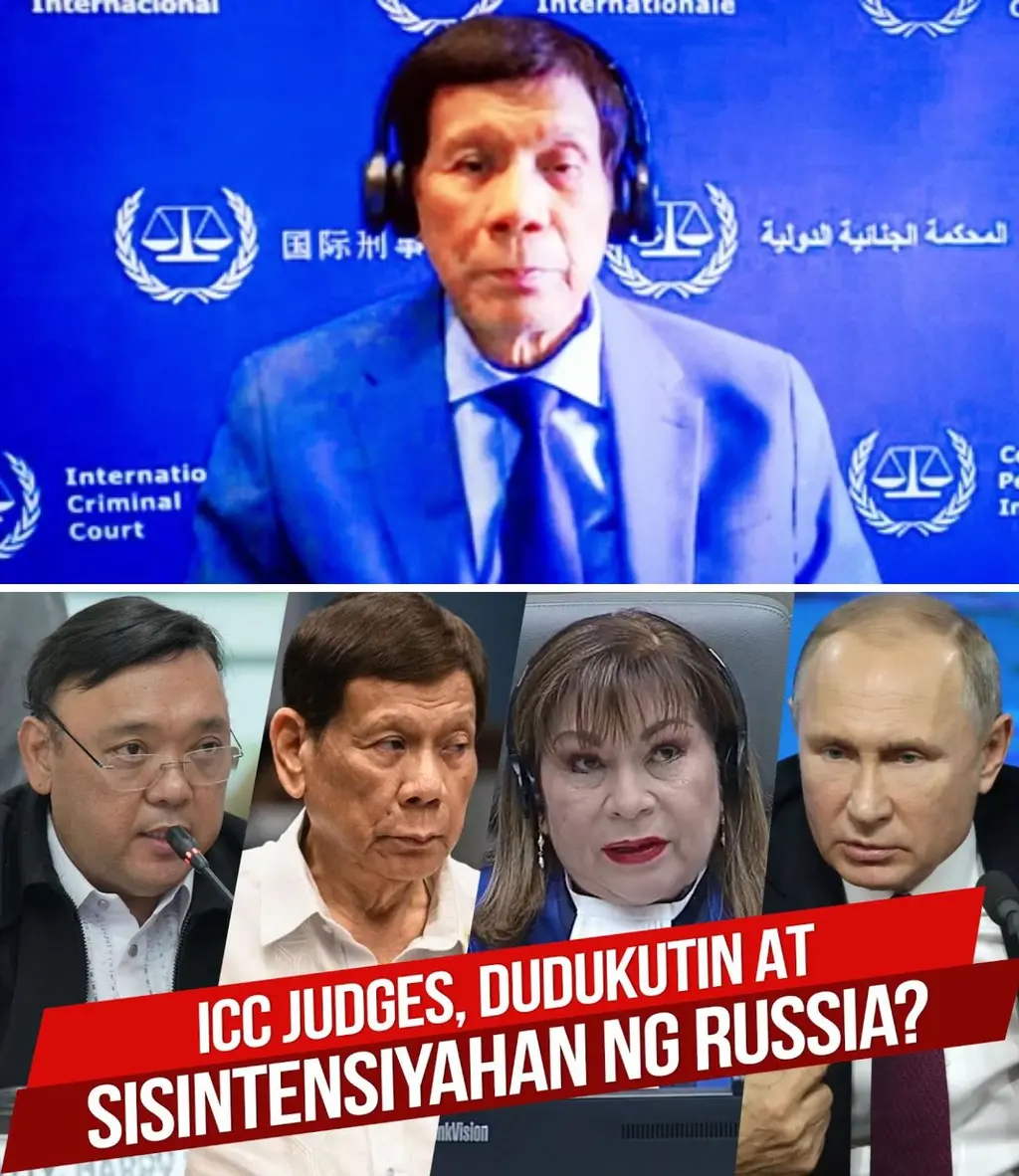
ICC JUDGES, DUDUKUTIN AT SISINTENSIYAHAN NG RUSSIA?
In a dramatic escalation of geopolitical tensions that has sent shockwaves through the international community, Russia has reportedly signaled its intent to take severe retaliatory measures against the judges and prosecutors of the International Criminal Court (ICC). This development comes as a direct response to the ICC’s controversial decision to issue an arrest warrant for Russian President Vladimir Putin, a move that Moscow has vehemently rejected as illegal and void. The situation has now evolved from a diplomatic dispute into a potential security crisis for the very officials tasked with upholding international law, raising terrifying questions about the future of global justice and the safety of those who enforce it.
The core of this intensifying conflict lies in the clash between international jurisdiction and national sovereignty. Russia, which is not a member of the ICC, has long maintained that the court has no authority over its citizens or its leadership. When the ICC moved to issue a warrant for President Putin, alleging responsibility for events in Ukraine, the Kremlin viewed this not merely as a legal challenge but as a direct act of aggression against the Russian state. In a move that mirrors the severity of the accusations against them, Russian authorities have reportedly convicted the ICC prosecutor, Karim Khan, and several judges in absentia, setting the stage for a dangerous game of “cat and mouse” on the global stage.
What makes this situation particularly alarming is the specific nature of the threats emerging from Moscow. It is not just a matter of angry rhetoric; there is a tangible fear that Russia may attempt to physically enforce its own judicial rulings. The concept being floated is one of “abduction” or targeted extraction—essentially, deploying specialized teams to detain ICC officials in foreign territories and bring them to Russia to face trial. This strategy, often compared to operations historically carried out by intelligence agencies like the Mossad or the CIA, would represent an unprecedented breach of diplomatic norms and a direct physical threat to the judiciary of an international body.
The logic being employed by Russian supporters and commentators is one of reciprocal action. They argue that if the ICC can claim jurisdiction over a head of state from a non-member country, effectively demanding his arrest and transfer to The Hague, then Russia is entitled to use similar methods to bring those it deems “criminals” to its own courts. This tit-for-tat mentality suggests that if the West supports the “kidnapping” (as Moscow views it) of Russian leaders, they should be prepared for their own officials to face similar risks. It is a chilling interpretation of international relations that replaces the rule of law with the rule of force, creating a scenario where judges must look over their shoulders, fearing that they too could become targets of a state-sponsored operation.
Historically, the abduction of individuals from foreign soil to face trial is not without precedent, a fact that Russian apologists are quick to highlight. They point to the capture of Nazi war criminal Adolf Eichmann by Israeli agents in Argentina, or various US renditions, as examples where the “end justified the means” in the eyes of the captors. By invoking these historical parallels, Russia is attempting to legitimize potential future actions against ICC staff, arguing that due process rights were ignored in those cases and, therefore, need not be respected now. This rhetoric serves to embolden hardliners within Russia while sending a clear message of intimidation to The Hague: no one is untouchable.
The implications of these threats extend far beyond the individuals named in Russian warrants. It represents a fundamental challenge to the post-World War II international order. If judges cannot rule without fear of physical retribution or abduction by powerful nations, the entire system of international justice begins to crumble. The fear is that this could set a precedent where any nation displeased with a court ruling could simply target the judges involved, reducing international law to a tool of the powerful rather than a shield for the weak. The psychological impact on the ICC is undeniable; officials may now face difficulties in travel, banking, and daily life, knowing that they are on a “wanted list” of a nuclear-armed superpower.
Furthermore, this standoff highlights the complex web of alliances and enmities that define modern geopolitics. The United States and China, like Russia, are not members of the ICC, creating a strange alignment of superpowers that do not recognize the court’s supreme authority. This lack of universal participation weakens the ICC’s position and emboldens Moscow to take such aggressive stances. Critics of the ICC argue that the court has overreached by targeting the leader of a non-member state without a clear mandate from the UN Security Council, inadvertently inviting this level of hostility. However, supporters maintain that impunity for alleged war crimes cannot be tolerated, regardless of a nation’s membership status.
The situation is further complicated by the internal narratives being spun within Russia and among its allies. The threat against ICC judges is being presented to domestic audiences as a show of strength and a defense of national dignity. It is framed as a necessary countermeasure against a “biased” and “colonial” western institution that seeks to humiliate Russia. This narrative helps to consolidate support for the government while simultaneously demonizing the West. The rhetoric suggests that Russia is merely playing by the new rules of engagement set by the West itself—rules where sovereignty is fluid and “justice” is defined by those with the power to enforce it.
As the world watches this tense standoff unfold, the primary concern remains the potential for miscalculation. A Russian attempt to detain an ICC judge in Europe or elsewhere could trigger a massive international incident, potentially drawing NATO or other security forces into a direct confrontation with Russian agents. The risks are incredibly high, and the margin for error is razor-thin. Diplomatic channels are currently strained to their breaking point, and this latest development adds a volatile new element to an already combustible mix.
Ultimately, the threat to abduct and sentence ICC judges serves as a grim reminder of the deteriorating state of international relations. It is a stark warning that the legal frameworks built to prevent conflict are themselves becoming battlegrounds. Whether these threats remain rhetorical or translate into action remains to be seen, but the message from Moscow is crystal clear: they will not submit to the ICC’s authority, and they are prepared to use every tool at their disposal, including the threat of force against judicial officials, to defend their position. The international community must now grapple with how to protect the integrity of its legal institutions in the face of such blatant intimidation, knowing that the outcome of this struggle will define the future of global justice for generations to come.