💥 Public Funds Vanish: Sarah Discaya Linked to P96.5M Phantom Infrastructure Scam 🔴
Published on December 22, 2025
Introduction
In a scandal that has sent shockwaves across the Philippines, Cezarah “Sarah” Discaya, a prominent government contractor, has been linked to the alleged embezzlement of P96.5 million in public funds. The money was meant for a flood control project in Davao Occidental, a region vulnerable to seasonal floods and climate-related disasters.
Dubbed the “phantom project”, the initiative reportedly exists only on paper, with government documents indicating completion while no tangible construction work occurred. The case has sparked public outrage, intensified scrutiny of government contracts, and highlighted systemic weaknesses in project monitoring and accountability.
Sarah Discaya’s arrest raises fundamental questions: How can billions in government contracts be mismanaged? Who is accountable for phantom projects? And what does this scandal mean for the future of infrastructure governance in the Philippines?
This article provides an in-depth examination of the scandal, covering Discaya’s background, the details of the project, the investigative timeline, the arrest and detention, legal charges, public reaction, and broader implications for Philippine governance.
Table of Contents
-
Sarah Discaya: From Prominence to Public Scrutiny
The P96.5 Million Phantom Flood Control Project
How the Irregularities Were Detected
Filing of Criminal Charges by the Ombudsman
The Arrest: Surrender, Warrants, and Processing
Legal Analysis: Non-Bailable Graft and Malversation Charges
Life Behind Bars: Detention in Lapu-Lapu City
Public Response: Outrage, Media Coverage, and Social Media
Implications for Philippine Infrastructure Oversight
Broader Lessons: Accountability, Transparency, and Reform
1. Sarah Discaya: From Prominence to Public Scrutiny
Cezarah “Sarah” Discaya emerged in the Philippine construction sector as a high-profile contractor with multiple government projects under her name. Her companies, notably St. Timothy Construction Corporation and Alpha & Omega General Contractor, were known for winning lucrative flood control and urban infrastructure contracts.
Reports suggest that her firms accumulated billions of pesos through government contracts over the past decade. Her swift rise was attributed to strategic partnerships, political connections, and aggressive bidding strategies, although her rapid accumulation of contracts also drew suspicions among regulatory and auditing agencies.
Sarah Discaya cultivated a lavish public image: luxury vehicles, social media presence, and high-profile events. However, beneath the glamour, questions about contract transparency, project completion, and ethical practices were quietly mounting, culminating in the Davao Occidental scandal.
2. The P96.5 Million Phantom Flood Control Project
The project at the heart of the controversy was a flood control and revetment project in Jose Abad Santos Municipality, Davao Occidental, officially budgeted at P96.5 million. Its goal was to mitigate flooding risks, protect local communities, and reinforce riverside embankments.
Despite government documents showing that the project was completed in 2022, on-site inspections in 2025 revealed that no meaningful construction had been carried out. Essential infrastructure, including concrete revetments and drainage systems, were completely absent, giving rise to the term “phantom project.”
Investigators found discrepancies between official progress reports and actual site conditions, including falsified completion certificates and manipulated photographs submitted by Discaya’s companies.
3. How the Irregularities Were Detected
The initial red flags emerged during routine audits conducted by government oversight agencies. Multiple inconsistencies were detected:
Payments issued despite lack of tangible results
Contradictory progress reports submitted to the Department of Public Works and Highways (DPWH)
Documentation showing full completion and inspection signatures, later found to be fraudulent
Independent watchdog organizations also played a critical role, spotting anomalies and pushing for formal investigations. The irregularities were significant enough to prompt action from the National Bureau of Investigation (NBI) and the Office of the Ombudsman.
4. Filing of Criminal Charges by the Ombudsman
On December 5, 2025, the Ombudsman formally filed criminal charges against Sarah Discaya and several co-accused, including corporate officers and DPWH officials involved in project oversight.
The charges included:
Malversation of Public Funds: Using government funds for personal gain or unauthorized purposes
Violation of RA 3019 (Anti-Graft and Corrupt Practices Act): Exhibiting gross negligence, bad faith, and causing undue injury to the government
President Ferdinand Marcos Jr. publicly endorsed the filing, emphasizing the non-bailable nature of the charges and ordering law enforcement to expedite the arrest of all involved parties.
5. The Arrest: Surrender, Warrants, and Processing
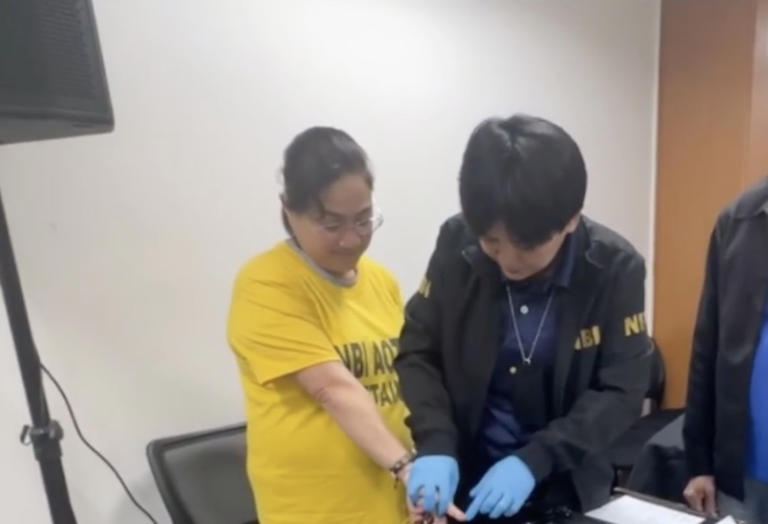
Rather than waiting for authorities, Sarah Discaya voluntarily surrendered to the NBI on December 8, 2025, a move widely covered by media outlets. She later faced formal arrest on December 18, following the issuance of a non-bailable warrant.
Processing included standard procedures:
Fingerprinting
Medical examination
Temporary detention at the NBI processing facility
Videos and photos from the event quickly circulated, amplifying public attention and igniting discussions about high-profile accountability in Philippine infrastructure projects.
6. Legal Analysis: Non-Bailable Graft and Malversation Charges
Discaya is charged with graft and malversation, both considered non-bailable offenses under Philippine law.
Graft (RA 3019): Alleged gross negligence and manifest partiality causing injury to the government.
Malversation of Public Funds: Alleged misappropriation through falsified project completion documents.
If convicted, penalties could include heavy fines, imprisonment, and perpetual disqualification from holding public office or government contracts. Legal experts note that the case could set a precedent for how phantom projects and contract fraud are prosecuted in the Philippines.
7. Life Behind Bars: Detention in Lapu-Lapu City
Following her arrest, Discaya was transferred to Lapu-Lapu City Jail, where she awaits preliminary hearings. Authorities emphasized that no special treatment is afforded, in contrast to her previously lavish lifestyle.
The case has already prompted the jail administration to tighten monitoring of high-profile detainees, with a focus on fairness and adherence to protocols.
8. Public Response: Outrage, Media Coverage, and Social Media
The case has provoked nationwide outrage, with citizens expressing concern over:
Misuse of public funds
Weak oversight in infrastructure projects
Risks to communities relying on flood control measures
Social media platforms amplified public discourse, with debates ranging from calls for systemic reforms to discussions about political connections enabling fraud. News outlets provided detailed coverage, and the case quickly became a national talking point.
9. Implications for Philippine Infrastructure Oversight
The scandal highlights structural vulnerabilities in government contracting:
Weak monitoring and inspection mechanisms
Insufficient auditing and verification procedures
Lack of accountability for contractors and supervising officials
Experts recommend transparent procurement processes, real-time monitoring, and independent verification of project completion to prevent similar occurrences.
10. Broader Lessons: Accountability, Transparency, and Reform
Key takeaways from the Discaya scandal include:
Early detection through audits and inspections is essential.
Transparency must be embedded in all stages of project procurement and implementation.
Public participation and media scrutiny are critical for accountability.
Legal frameworks like RA 3019 must be rigorously enforced to deter misconduct.
The case serves as a wake-up call for government agencies, contractors, and the public, emphasizing that corruption carries consequences and accountability is non-negotiable.
Conclusion
The “Phantom Infrastructure Scam” linked to Sarah Discaya underscores the dangers of weak oversight, fraudulent contracting, and misuse of public funds. Her arrest and non-bailable charges highlight the importance of enforcing laws strictly, ensuring transparency, and protecting public trust.
As the trial unfolds, the case will continue to shape discourse on governance, anti-corruption measures, and infrastructure integrity in the Philippines.
Related Articles
Anatomy of a Ghost Project: How Millions Disappear
Philippine Anti-Graft Law: RA 3019 Explained
High-Profile Infrastructure Corruption Cases in the Philippines
Flood Control Projects and Public Accountability
The Role of the Ombudsman and NBI in Anti-Corruption Enforcement
News

Shocking Development: Claudine Barretto Breaks Down After Incident Involving Mommy Inday (NH)
Shocking Development: Claudine Barretto Breaks Down After Incident Involving Mommy Inday An emotional moment that highlights family bonds and the…

PJ Abellana Admits He Was Not Invited to Daughter Carla Abellana’s Wedding to a Doctor (NH)
PJ Abellana Admits He Was Not Invited to Daughter Carla Abellana’s Wedding to a Doctor Family, celebrity, and personal choices…

Nearly in Tears: John Estrada Reunites With His Children With Janice De Belen Last Christmas 2025 (NH)
Nearly in Tears: John Estrada Reunites With His Children With Janice De Belen Last Christmas 2025 An emotional holiday reunion…

A Wedding Without an Invitation: Rey PJ Abellana Breaks His Silence on Carla Abellana’s Private Ceremony (NH)
A Wedding Without an Invitation: Rey PJ Abellana Breaks His Silence on Carla Abellana’s Private Ceremony Family, boundaries, and unanswered…
Coco Martin on Facing Financial Challenges: Ready When the Time Comes (NH)
Published Date: December 29, 2025 Introduction Coco Martin, one of the most recognized actors and filmmakers in the Philippines, recently…
Katherine Luna Expresses Heartfelt Thanks After Receiving Eye Care from Coco Martin and Julia Montes (NH)
Published Date: December 29, 2025 Introduction Filipina actress Katherine Luna recently shared her heartfelt gratitude towards actors Coco Martin and…
End of content
No more pages to load