⚖️ Rodrigo Duterte Arrested Under ICC Warrant: What’s Confirmed — What’s Next
December 10, 2025
Introduction
In March 2025, the former President of the Philippines, Rodrigo Duterte, was arrested on a warrant issued by the International Criminal Court. The warrant accuses him of crimes against humanity linked to his administration’s “war on drugs.” The case — the first time a former Asian head of state faces ICC custody — has triggered global reactions, local political upheaval, and renewed debates about justice, sovereignty, and accountability.
This article presents a balanced overview of confirmed developments: the warrant, the arrest, charges, procedural context, reactions from human‑rights groups and supporters, and what lies ahead for the trial process.
Table of Contents
-
The ICC Warrant: What It Says and Why It Matters
Arrest and Surrender: Timeline of Key Events
Charges and Allegations: What Duterte Is Accused Of
Legal Basis & Jurisdiction: ICC, Philippines, and Post‑Withdrawal Reality
Human Rights Reaction: Supporters of Accountability
Political Fallout: Domestic Response Inside the Philippines
Supporters & Opposition: Social Impact and Public Sentiment
Immediate Legal Proceedings: What Happens Next at ICC
Broader Significance: Implications for International Justice and Philippine Politics
Conclusion: A Moment of Reckoning or the Start of a Long Road?
1. The ICC Warrant: What It Says and Why It Matters
On 7 March 2025, a Pre‑Trial Chamber of the ICC issued a warrant of arrest for Duterte.
The warrant charges him with crimes against humanity — murder under the Rome Statute.
The charges relate to alleged killings committed between 1 November 2011 and 16 March 2019, covering his time as Davao City mayor and as President of the Philippines.
ICC’s Pre‑Trial Chamber justified the warrant by citing “considerable power” still wielded by Duterte and high risk of non‑compliance with summons, interference with investigations, or endangerment to victims and witnesses.
This marks a landmark moment: for the first time, a former Philippine head of state is formally charged by an international tribunal for alleged crimes committed while in office — underscoring ICC’s willingness to hold powerful individuals accountable.
2. Arrest and Surrender: Timeline of Key Events
Here’s the sequence of what happened after the warrant was issued:
Date
Event
7 Mar 2025
ICC Pre‑Trial Chamber issues arrest warrant for Duterte.
11 Mar 2025
Duterte arrested by Philippine authorities upon arrival at Manila’s international airport, after notification from ICC via INTERPOL.
12 Mar 2025
Duterte surrendered to ICC custody and transported to The Hague.
13 Mar 2025
Official ICC confirmation: initial appearance scheduled.
Legal experts have affirmed the validity of the warrant, stating it meets all requirements under the ICC Statute despite the Philippines’ withdrawal from the court.
Human‑rights organizations have hailed the arrest as “a monumental step for justice” for victims of the “war on drugs.”
3. Charges and Allegations: What Duterte Is Accused Of
According to the ICC documents and public disclosures:
Duterte is alleged to be responsible — as an indirect co‑perpetrator — for widespread murder under the definition of “crimes against humanity.”
The time frame of alleged crimes spans many years, covering both his tenure as mayor of Davao City and as president during the national “war on drugs,” a campaign that led to thousands of deaths according to official and human‑rights group estimates.
The warrant includes “reasonable grounds” to believe that state‑sanctioned killings, extrajudicial executions, and systemic violations occurred under his administration.
The ICC’s merit in issuing the warrant lies in the scale, alleged organization and state involvement, and persistence of violations spanning multiple years — factors elevating the case beyond isolated incidents to potential crimes against humanity under international law.
4. Legal Basis & Jurisdiction: ICC, Philippines, and Post‑Withdrawal Reality
One contested issue is jurisdiction, because:
The Philippines withdrew from the Rome Statute in 2019.
However, ICC retains jurisdiction over crimes committed while the Philippines was a member — i.e. from 1 November 2011 through March 2019.
Legal experts confirm the warrant’s legitimacy regardless of the withdrawal.
The arrest execution was facilitated through cooperation with INTERPOL and domestic law (under Philippine Act on Crimes Against International Humanitarian Law), which allows surrender of persons accused of crimes against humanity even if the country is no longer a Rome Statute member.
This legal framework establishes a precedent: former heads of state can be held accountable internationally, provided crimes occurred when their countries were ICC signatories — a significant affirmation of international justice norms.
5. Human Rights Reaction: Supporters of Accountability
Global and local human‑rights organizations responded swiftly:
Amnesty International called the arrest “a monumental step for justice,” particularly for victims and survivors of the war on drugs, many of whom belong to marginalized communities.
Human Rights Watch echoed that the arrest sends a powerful message to human‑rights abusers worldwide — that no one is above the law.
Victims’ families and advocacy groups have expressed cautious hope that formal proceedings can lead to truth, reparations, and systemic reforms.
In many ways, the arrest is seen as vindication of long years of struggle, documentation of abuses, and advocacy by civil‑society actors calling for accountability.
6. Political Fallout: Domestic Response Inside the Philippines
Back home, the arrest and surrender sparked diverse reactions:
The government’s official channels acknowledged receipt of the ICC warrant and compliance, citing domestic law obligations and cooperation via INTERPOL.
Some political allies and defenders of Duterte criticized the arrest as external interference, nationalism vs. international law, and potential threat to sovereignty.
Others warned of possible destabilization, political polarization, and social unrest, especially among parts of the population that still support Duterte’s legacy.
Within political circles, some analysts believe that the case, and subsequent hearings, could reshape power dynamics — influencing elections, alliances, and public office credibility.
The event has reopened debates about war‑on‑drugs policies, human‑rights accountability, and the future of governance in the Philippines.
7. Supporters & Opposition: Social Impact and Public Sentiment
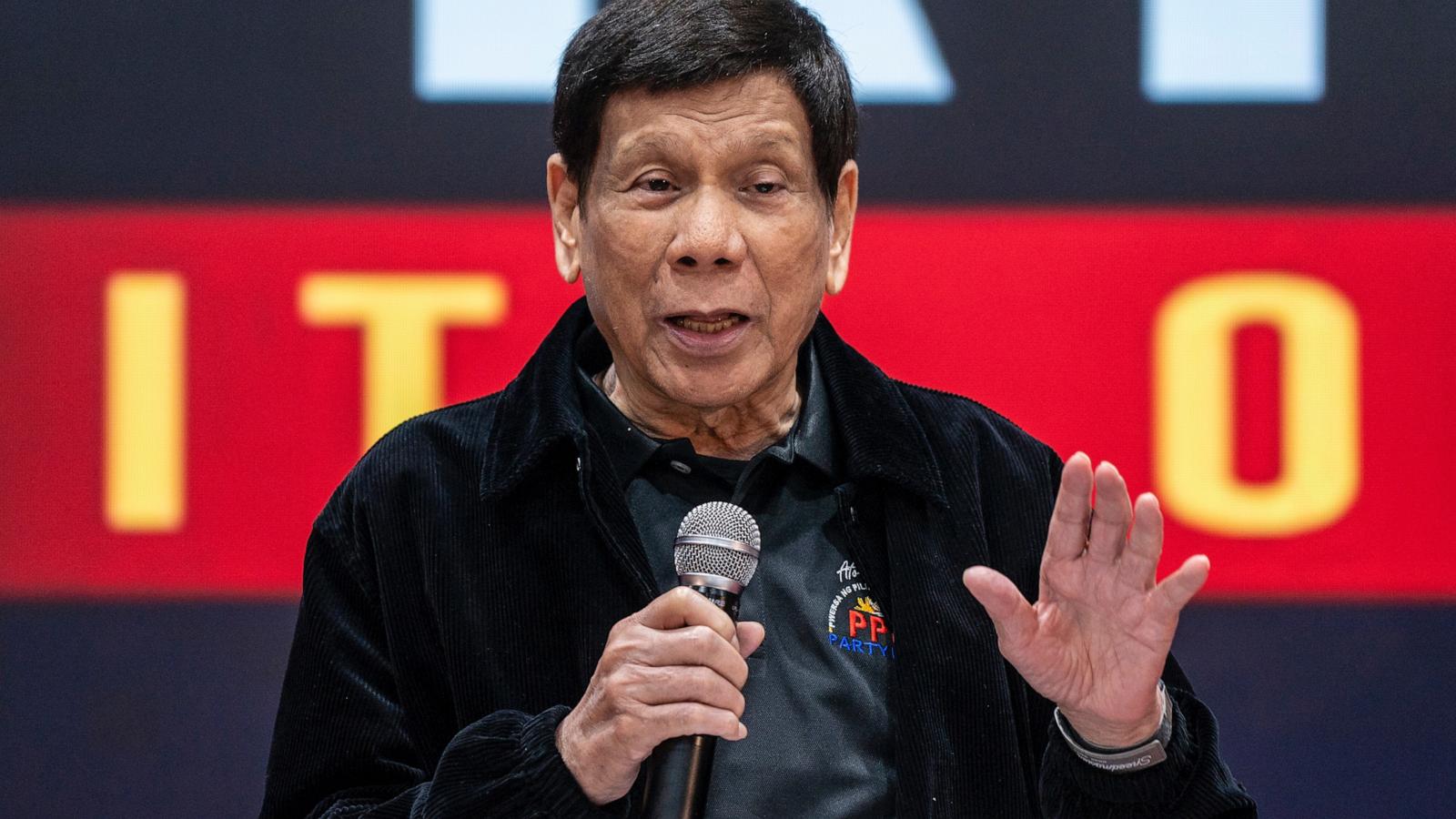
Public reaction has been divided but intense:
Many Filipinos — particularly younger generations, human‑rights advocates, and urban communities — welcomed the arrest as overdue justice. Social‑media posts, rallies, and solidarity demonstrations echoed calls for accountability.
Among Duterte’s supporters, there is remorse, denial, and defiance — some view the arrest as politically motivated, unjust, or as a betrayal by international institutions.
The situation has sparked national conversations about impunity, institutional reform, democratic accountability, and the balance between security, justice, and human rights.
The case symbolizes a broader social reckoning: whether past policies — even if once widely supported — can be revisited under international norms, and whether victims’ voices can finally be heard.
8. Immediate Legal Proceedings: What Happens Next at ICC
After surrender and initial appearance, the following steps are expected:
A confirmation-of-charges hearing, where the Prosecutor presents evidence and the defense may challenge admissibility or facts (scheduled tentatively for September 2025).
Pre‑trial and trial proceedings, which may include witness testimonies, documentation review, expert evidence — a complex, lengthy, and high‑stakes process.
If convicted, possible sentencing under international law. If acquitted, legal finality — but also potential domestic legal or political aftermath, depending on Philippine reactions.
Parallel calls for broader investigations — not limited to Duterte, but potentially extending to other officials, military and police actors allegedly involved in extrajudicial killings. Human-rights groups urge that justice should not end at one individual.
The case will become a test not only of justice for past abuses, but of international law’s capacity to hold powerful leaders accountable, enforceable across borders.
9. Broader Significance: Implications for International Justice and Philippine Politics
This arrest carries weight beyond the immediate case:
It reinforces the principle that no one is above the law, including former heads of state. This may influence other countries and contexts where alleged human‑rights abuses occurred under powerful leaders.
It might galvanize survivors, human‑rights advocates, and civil society in the Philippines to push for domestic reforms, such as stronger oversight, accountability mechanisms, and transparent policing.
Politically, it could reshape public trust, electoral outcomes, and narratives around leadership, governance, and human‑rights record.
Internationally, it affirms the role of global justice institutions — while also sparking debates about sovereignty, foreign jurisdiction, and political interference.
In short, the case could mark a turning point — for justice, for victims, for Philippine politics, and for the credibility of international law.
10. Conclusion: A Moment of Reckoning — But the Road Is Long
Rodrigo Duterte’s arrest under an ICC warrant marks a historic moment: a former head of state now faces international justice for alleged systemic human‑rights abuses. The case reflects decades of pain, activism, and demand for accountability.
But this is not an endpoint. It is the beginning of a long, uncertain process — fraught with political resistance, legal complexity, and social tension. The outcomes remain uncertain: conviction or acquittal, reform or backlash.
For victims and their families, the arrest brings hope — but only a fair, transparent trial can deliver justice. For Philippine society and international observers, it is a test: can accountability stand even against power?
One thing is clear: across Manila, The Hague, and the world, the eyes of justice — and judgment — are watching.
Amnesty International
South China Morning Post
pbs.org
aa.com.tr
GMA Network

News

Shocking Development: Claudine Barretto Breaks Down After Incident Involving Mommy Inday (NH)
Shocking Development: Claudine Barretto Breaks Down After Incident Involving Mommy Inday An emotional moment that highlights family bonds and the…

PJ Abellana Admits He Was Not Invited to Daughter Carla Abellana’s Wedding to a Doctor (NH)
PJ Abellana Admits He Was Not Invited to Daughter Carla Abellana’s Wedding to a Doctor Family, celebrity, and personal choices…

Nearly in Tears: John Estrada Reunites With His Children With Janice De Belen Last Christmas 2025 (NH)
Nearly in Tears: John Estrada Reunites With His Children With Janice De Belen Last Christmas 2025 An emotional holiday reunion…

A Wedding Without an Invitation: Rey PJ Abellana Breaks His Silence on Carla Abellana’s Private Ceremony (NH)
A Wedding Without an Invitation: Rey PJ Abellana Breaks His Silence on Carla Abellana’s Private Ceremony Family, boundaries, and unanswered…
Coco Martin on Facing Financial Challenges: Ready When the Time Comes (NH)
Published Date: December 29, 2025 Introduction Coco Martin, one of the most recognized actors and filmmakers in the Philippines, recently…
Katherine Luna Expresses Heartfelt Thanks After Receiving Eye Care from Coco Martin and Julia Montes (NH)
Published Date: December 29, 2025 Introduction Filipina actress Katherine Luna recently shared her heartfelt gratitude towards actors Coco Martin and…
End of content
No more pages to load