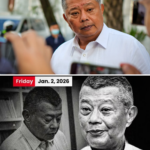
DOJ Recommends Homicide, Kidnapping Charges Against Tycoon Atong Ang and Police Officials in High-Stakes Sabungero Disappearance Case
The Department of Justice (DOJ) in the Philippines has delivered a seismic jolt to the nation, recommending the filing of multiple criminal charges, including kidnapping with homicide and kidnapping with serious illegal detention, against prominent businessman Charlie “Atong” Ang and 21 other individuals. This sweeping recommendation marks the most significant legal development yet in the deeply unsettling case of the missing cockfight enthusiasts, known locally as “sabungeros,” who vanished without a trace between 2021 and 2022 across several provinces. The sheer scope of the charges, coupled with the involvement of high-ranking law enforcement officers, elevates this incident from a simple missing persons case into a massive public scandal exposing the dark, intricate webs of power and alleged crime.

The DOJ’s panel of prosecutors meticulously weighed the evidence, culminating in a recommendation to charge Ang and the other suspects with ten counts of kidnapping with homicide. Separately, the panel also proposed sixteen counts of kidnapping with serious illegal detention. The list of those implicated reads like a stark indictment of institutional failure, including several active police officials such as Lieutenant Colonel Ryan J. Orapa and Police Major Philip Almedilla, alongside several unnamed “John Does” who are believed to be members of Orapa’s group. The decision to file these charges in multiple regional trial courts, including those in Lipa City, Batangas, and Santa Cruz and San Pablo in Laguna, underscores the geographical breadth of the alleged criminal enterprise and the concerted effort to bring justice to a wide range of victims and their families.
What tipped the scales for the DOJ was the compelling and damning testimony provided by a number of key whistleblowers. The panel of prosecutors placed significant weight on the affidavits of Julie Donondon Patidongan and the siblings Elqu and Matose, as well as the account of another Ang employee, Glear Codilla. These individuals, facing immense personal risk, provided the narrative backbone that prosecutors needed to construct a viable case. Their accounts painted a coherent, albeit chilling, picture of the events leading up to and following the disappearances, directly contradicting the long-held ambiguity surrounding the sabungeros’ fate. The testimonies essentially transitioned the official investigation from a search-and-rescue operation to a full-blown homicide inquiry.
Central to the whistleblower testimony was the direct accusation against Charlie “Atong” Ang. Patidongan specifically pointed to Ang as the mastermind behind the abductions of the missing sabungeros. The scale of the alleged operation is staggering, covering numerous locations across Bulacan, Manila, Laguna, and Batangas. For years, the case remained a source of intense speculation and heartache for the families, with various theories circulating in the public domain. Patidongan’s testimony sought to cut through the noise, offering a definitive, albeit horrific, conclusion to the victims’ fate. It is this direct link, established through credible witnesses, that forms the cornerstone of the DOJ’s aggressive legal action.
The most harrowing detail to emerge from the investigation involves the alleged final resting place of the victims. Patidongan provided an account stating that the sabungeros were not only taken but were subsequently k.i.l.l.e.d and their bodies disposed of in Taal Lake. This revelation, if proven true in court, adds a layer of immense tragedy to the case and transforms the scenic body of water into a macabre site of a hidden crime. The depth of the lake and the difficulty of potential recovery operations further complicate the judicial process, but the significance of the testimony lies in its attempt to provide closure for the grieving families by confirming their worst fears. This testimony alone provided the necessary justification for the DOJ to pursue the more severe charges of kidnapping with homicide, moving beyond simple detention charges.
The response from Ang’s legal camp was immediate and strongly worded. The businessman’s attorney quickly labeled the DOJ’s recommendation as “defective and unfair,” vowing to file a motion for reconsideration. This legal counter-maneuver is a standard, yet critical, step in a high-profile case, signaling that the battle for justice will be long and fiercely contested in the courts. The defense is expected to challenge the credibility of the whistleblowers and the sufficiency of the evidence presented by the prosecution. This initial legal pushback sets the stage for what will undoubtedly be a protracted and highly publicized legal drama, with the public keenly watching every procedural move.
In the wake of the DOJ’s announcement, journalists from various outlets, including GMA Integrated News represented by Sandra Aguinaldo, have made concerted efforts to secure statements from the other individuals named in the recommendation. The challenge lies in the complex network of individuals involved, many of whom are members of law enforcement who may now be seeking legal counsel or avoiding public comment. Obtaining their direct accounts is crucial for a balanced journalistic perspective, but their silence speaks volumes in the current charged atmosphere. The public and media scrutiny on the police officers named, including Orapa and Almedilla, will be immense, raising serious questions about the integrity of the police force itself.
For the families of the missing sabungeros, the DOJ’s decision is not just a legal formality; it is a profound emotional victory. It represents the first official acknowledgment that a crime was committed, moving their years of desperate searching and speculation into the realm of legal certainty. A family representative expressed a cautious sense of relief, stating that while the decision validates their pain and struggle, the fight is far from over. True justice, they maintain, will only be achieved with a definitive guilty verdict and the full accountability of all those involved, regardless of their status or influence. The announcement has rekindled their resolve, transforming their grief into a renewed commitment to see the case through to the end.
The saga began in 2021 when the first reports of missing sabungeros surfaced. These were not isolated incidents but a series of unsettling disappearances, often occurring under similar, mysterious circumstances, creating a climate of fear within the cockfighting community. The victims, mostly individuals associated with the high-stakes world of e-sabong (online cockfighting), were last seen in various locations, adding to the complexity of the investigation. The pattern of their disappearance suggested a coordinated, well-funded, and potentially institutionalized operation—a suspicion that has now been dramatically affirmed by the DOJ’s move to indict law enforcement personnel. The initial slow pace of the investigation was a source of great frustration for the families, who felt their loved ones were being forgotten.
The alleged involvement of police officials is perhaps the most disturbing element of the case. The presence of Lieutenant Colonel Orapa and Police Major Almedilla in the charge sheet suggests a profound breach of public trust, indicating that individuals sworn to uphold the law may have actively participated in or facilitated serious criminal acts. This specific detail lends credence to the belief that the scale of the operation required an element of institutional protection or capability that only law enforcement could provide. The investigation must now scrutinize the extent of this alleged police complicity, determining if the actions were isolated to a few rogue officers or indicative of a more systemic problem within certain units. This aspect of the case necessitates an internal affairs investigation to run parallel with the criminal proceedings, aiming to restore public confidence in the police force.
The mention of the victims’ bodies being allegedly dumped into Taal Lake invokes a powerful, somber image. Taal Lake, a natural wonder and a key tourist attraction, now carries a hidden narrative of alleged violence. The logistics of confirming this part of the testimony present an enormous challenge for investigators, potentially requiring specialized underwater search and recovery operations. Should evidence be retrieved from the lake, it would unequivocally strengthen the prosecution’s case and provide undeniable physical proof of the alleged crimes, overriding any potential challenges to the witnesses’ credibility. The emotional weight this detail carries for the families is immeasurable, as it offers the only known suggestion of a final resting place.
Furthermore, the legal concept of kidnapping with homicide is a highly severe charge in the Philippine legal system, carrying with it the penalty of life imprisonment or, where applicable, capital punishment. By consolidating the act of kidnapping with the alleged subsequent killing of the victims, the DOJ is signaling the gravity of the offenses and its determination to pursue the maximum accountability under the law. The prosecution’s success will hinge on its ability to seamlessly connect the actions of all 22 individuals, from the alleged mastermind to the police officers and the unnamed participants, demonstrating a clear, unbroken chain of criminal responsibility.
The case has also cast a harsh light on the unregulated, high-stakes nature of the cockfighting industry, especially the newer e-sabong sector, which involves massive sums of money. While the DOJ’s focus is strictly criminal, the underlying context of the sabungeros’ disappearances suggests potential disputes over large wagers, ownership, or operational control within this lucrative business. The events have served as a wake-up call, prompting closer examination of the industry’s vulnerabilities to organized crime and coercion. The victims, drawn into this world for various reasons, became silent casualties of a dangerous power struggle, and the legal battle now underway is their only voice remaining.
In conclusion, the DOJ’s recommendation is a watershed moment, finally injecting decisive legal action into a cold case that haunted the nation. The filing of charges against a prominent business tycoon like Atong Ang, coupled with the indictment of multiple police officials, shatters the perception of impunity and signifies a major test for the country’s justice system. As the case moves from the investigative phase to the adversarial environment of the Regional Trial Courts, all eyes will be on the proceedings. The motions for reconsideration and the subsequent legal maneuvers promise a tense, drawn-out confrontation. Yet, for the families, the fight has just been validated; it is no longer a search for the missing, but a demand for justice for the k.i.l.l.e.d. Their long struggle for accountability has found a path forward, and the quest for a guilty verdict to bring true closure has begun in earnest, marking a new, critical phase in one of the most significant criminal cases in recent Philippine history.
News

“Head First” Noon, “Feet First” Ngayon? Ang Nakakabahalang Kontradiksyon sa Kaso ni Usec. Cabral at ang Hinalang Cover-Up
Ang Misteryo ng Pabago-bagong Kwento Sa anumang imbestigasyon ng krimen o trahedya, ang detalye ay hari. Ang bawat anggulo, bawat…

“Hindi Ako Magpa-file ng Kasong Nakakahiya!” – Ang Matapang na Hamon ng Isang Doktora at ang Kinatatakutang ‘Trojan Horse’ sa Impeachment ni VP Sara
Ang Panibagong Sigwa sa Pulitika ng Pilipinas Sa bawat sulok ng kapuluan, mula sa mga kapehan hanggang sa mga opisina,…
Misteryo at Katahimikan: Nasaan si Ombudsman Boying Remulla at Bakit Nangangamba ang Taong Bayan?
Ang Nakakabinging Katahimikan sa Opisina ng Ombudsman Sa mundo ng pulitika sa Pilipinas, ang ingay ay karaniwang senyales ng aksyon….

Takot o Kasabwat? Ang Lihim sa Likod ng Pagtanggi ni Sec. Vince Dizon sa Bilyun-Bilyong ‘Allocables’ na Ibinunyag ni Leviste
Sa bawat administrasyon, ang tiwala ng taumbayan ang nagsisilbing pundasyon ng kapangyarihan. Ngunit sa paglipas ng panahon sa ilalim ng…

“Cabral Files” at ang Lihim ng ‘Allocables’: Ang Bilyong Pisong ‘Pork Barrel’ na Pilit Itinatago sa Taumbayan?
Sa bawat paglipas ng taon, tila isang mapait na siklo na lamang ang paghihintay ng taong bayan sa badyet na…

Ang Ungol sa Huling Hantungan: Ang Lihim na Binabantayan ng Asong si Loyal
Hindi umaalis si Loyal. Nakatayo ang aso sa ibabaw ng bagong bunton ng lupa. Ang kanyang mga balahibo sa likod…
End of content
No more pages to load