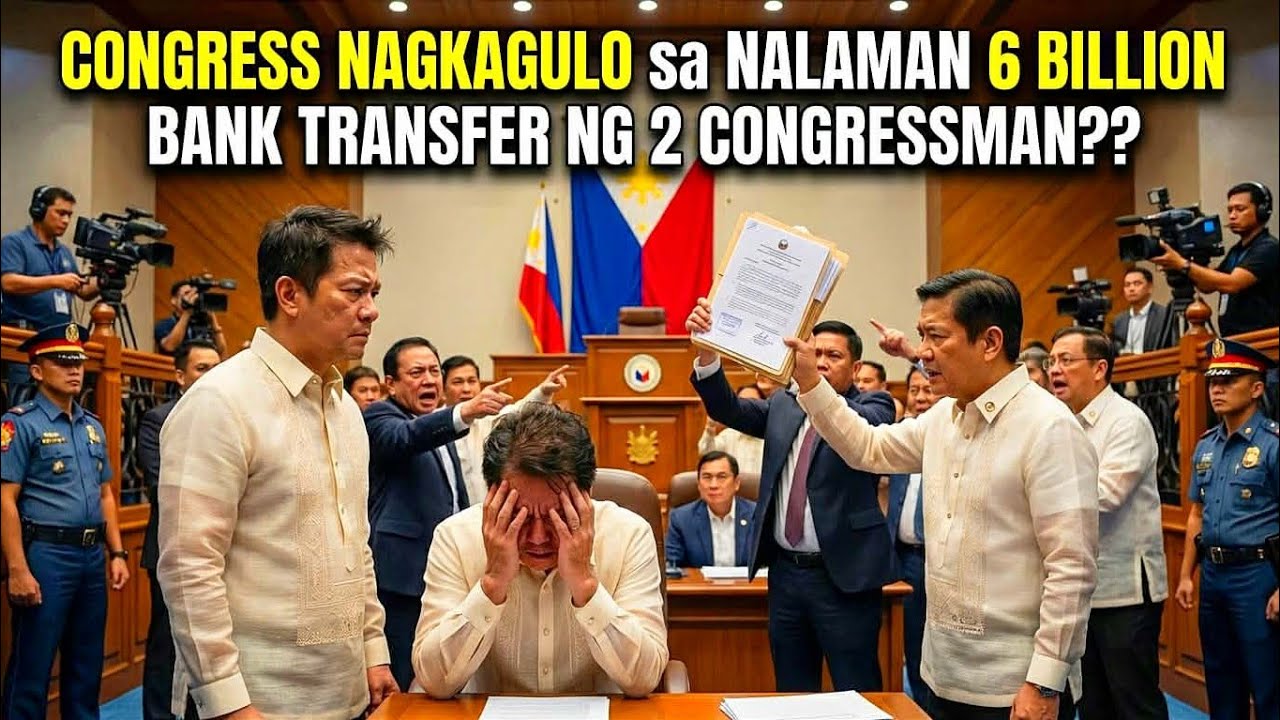
MALAKING SCANDAL TO! IBINUNYAG NG AMLC ang 6 BILLION FUND TRANSFER sa 2 CONGRESSMAN?!!?!
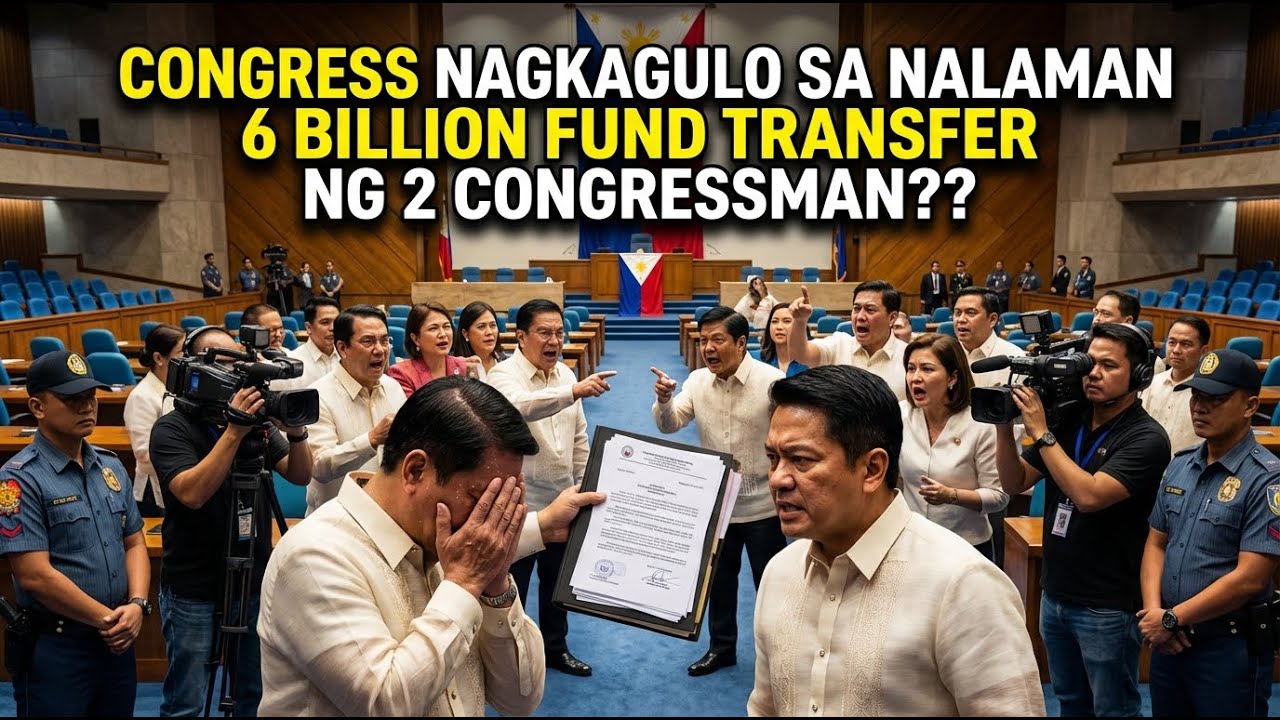
The national political and financial spheres have been rocked by an investigation revealing a staggering and unprecedented degree of alleged financial misconduct, immediately confirming the public’s worst fears about systemic corruption. At the heart of this storm is an explosive report from the Anti-Money Laundering Council (AMLC), which has exposed a colossal, covert fund transfer of P6.1 billion. This immense sum allegedly originated from public works contracts and was channeled directly into the personal bank accounts of two sitting legislators, Congressmen Eric and Edvic Yap, and their business associate. This trail of money provides what is arguably the most concrete evidence yet of the rot within the financial architecture of the nation’s public infrastructure projects, specifically linked to the notorious flood control scandal.
The AMLC’s meticulous financial sleuthing directly targets the Yap brothers. Eric Yap, a Representative and former Chairman of the powerful House Committee on Appropriations in 2020, was previously implicated by whistleblowers who claimed he facilitated the transfer of billions in cash related to the public works controversy. While Congressman Yap vehemently denied these accusations and claimed to have divested from his construction firm, Silver Wolves Construction, the AMLC’s investigation tells a fundamentally different story. The AMLC found that from 2022 to 2025, Silver Wolves engaged in massive financial transactions totaling P16.6 billion, with P3.1 billion of that amount explicitly derived from flood control contracts. The most damning discovery, however, was the exposed financial artery: a direct, astonishing P6.1 billion fund transfer flowing out of Silver Wolves’ accounts and into the personal accounts of Eric Yap, his brother Edvic Yap, and their business partner, Mark Anthony Ching. This transaction record directly contravenes Eric Yap’s public statements of divestment and, according to critics, represents a clear, brazen mechanism for allegedly siphoning government funds directly into the hands of sitting legislators.
The financial entanglement does not stop with Eric Yap. The investigation revealed that his brother, ACT CIS Representative Edvic Yap, was allegedly operating a parallel network of highly suspicious transactions. The AMLC discovered that Edvic Yap received billions in direct payments from various controversial private contractors. Specifically, he was identified as receiving P4.7 billion across 161 direct transactions from these firms between 2022 and 2025. Leading the list of entities making these payments was St. Timothy Construction, a firm directly associated with the infamous Discaya couple, who have become synonymous with the flood control controversy and are now facing legal action. This secondary financial trail provides a terrifying illustration of a wider, systemic pattern, suggesting that the alleged financial misconduct network extended beyond a single construction firm and involved numerous entities allegedly channeling funds directly to the personal accounts of a legislative official. This level of direct financial entanglement between contractors and lawmakers, critics argue, fundamentally undermines the integrity of the appropriations and bidding processes.
The AMLC’s findings paint a chilling picture of systemic financial circumvention. The evidence suggests a system where public project funds, ostensibly meant for essential infrastructure and flood control, were allegedly routed through favored construction companies and then, through a series of calculated transfers, wound up as personal wealth for top legislators and their associates. This alleged pipeline of illicit gains was so extensive that it also revealed links between Silver Wolves and another company, Unimx Steel, owned by the son of the proprietor of Mjinit. Mjinit is a company that had inexplicably secured massive government contracts despite having a negligible paid-up capital of only P250,000, and was notably included in a list of allegedly favored contractors. The implication is that the alleged network did not just involve inflating prices but controlled the entire supply chain, from appropriation and construction to the final alleged diversion of proceeds into private hands.
The disclosure of these massive financial records comes at a critical moment, providing stark validation to a series of escalating political and legal crises. It is now widely recognized that the relentless pursuit of accountability extends beyond the financial records of the Yap brothers, widening the net to other highly sensitive areas of the political elite. This is exemplified by the simultaneous, aggressive actions taken by the National Bureau of Investigation (NBI) against Zaldico, another central figure in the flood control scandal. Following an initial inspection, NBI operatives recently returned to Zaldico’s massive, connected condo units in Bonifacio Global City, this time armed with a potent search warrant issued by the Taguig City Regional Trial Court.
The new search warrant marks a significant escalation in the government’s recovery efforts. Unlike the previous inspection order that only permitted photocopying of documents, the new warrant grants the NBI the power to directly confiscate or seize any documents related to the case. Most dramatically, the warrant includes a specific, direct order to forcibly open any vaults found inside the condo and seize any cash believed to be connected to the anomalous transactions. This unprecedented move—to forcibly breach secure private storage and confiscate physical money—signals a decisive shift in the government’s determination to not only document the financial misconduct but to recover the physical assets believed to have been allegedly stolen from the public coffers. This targeted raid, specifically on the massive unit where a previous whistleblower claimed cash-filled suitcases were delivered, emphasizes that the state is committed to following the money trail wherever it leads.
Further complicating the political integrity crisis is the simultaneous eruption of a separate, but equally serious, whistleblower scandal directly targeting the office of Vice President Sara Duterte. Ramil Madriaga, a self-proclaimed former intelligence operative, has submitted a sworn affidavit alleging that the Vice President’s campaign was substantially funded by controversial and unauthorized sources, specifically POGO and organized illegal commerce operators. His claims, detailing bags of cash delivered to various locations and linking the Vice President’s spouse to the controversial magnetic lifters incident of 2018, add another layer to the systemic corruption crisis.
The relentless flow of these allegations has led political analysts to identify the next critical legal pressure point: the opening of the bank accounts of the high-ranking political figures involved. Ronald Jamas, a political analyst, has noted that the barrage of criminal complaints, including Plunder, filed with the Ombudsman, is key. Should the Ombudsman find probable cause in the cases filed against the Vice President, the office would then be legally mandated to request the AMLC to issue orders to banks to open the subject’s accounts. For analysts, the opening of these accounts represents the “moment of truth,” a definitive legal step that would confirm or dismantle the allegations of illicit funding sources that have plagued her campaign and family for years. The estimated P60 billion worth of evidence against the Yap brothers, coupled with the serious claims leveled against the Vice President, has created a compelling environment where the traditional protection of bank secrecy may soon be overridden in the name of public accountability.
In conclusion, the AMLC’s exposure of the P6.1 billion fund transfer to two Congressmen is not an isolated incident; it is a central pillar in a massive, converging integrity crisis that spans the legislative and executive branches. The scale of the alleged financial misconduct, the aggressive NBI recovery efforts, and the political pressure fueled by new whistleblowers all point toward an unprecedented reckoning. The financial trails unearthed by the AMLC provide hard, compelling evidence that demands immediate accountability. The coming legal and political battles will test the limits of the nation’s governance and determine whether the wealth allegedly secured through illicit means can truly be recovered, and whether high-ranking officials will finally be held responsible for the alleged wholesale betrayal of public trust.