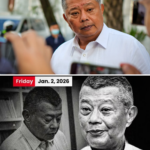
In an industry where personal lives are often louder than performances, Akshaye Khanna has always been an anomaly. While Bollywood thrived on weddings, breakups, scandals, and carefully curated romances, he chose something radically different: silence. At 50, unmarried and largely detached from the social circuits of the film industry, Akshaye Khanna remains one of the most intriguing figures in Indian cinema. The question that has followed him for decades is simple yet persistent—why did he never marry? But the answer, much like the man himself, is layered, understated, and deeply personal.
Akshaye Khanna was born into a legacy. As the son of legendary actor Vinod Khanna, expectations followed him from the very beginning. Fame, in his case, was never a destination; it was an inheritance. Yet, unlike many star kids who embraced the spotlight with ease, Akshaye approached it cautiously, almost reluctantly. From his earliest interviews, there was a sense that he viewed stardom not as validation, but as responsibility. This mindset would go on to shape not only his career choices, but his personal life as well.
While his contemporaries built images around romance and mass appeal, Akshaye gravitated toward characters that were introspective, morally complex, and often emotionally restrained. His performances spoke volumes, even when his characters barely did. This preference mirrored his real life. He was rarely seen at parties, avoided unnecessary media attention, and never seemed interested in crafting a public persona beyond his work. Marriage, in that sense, was never presented as a milestone he felt compelled to achieve for public approval.
Over the years, speculation grew louder. Some suggested heartbreaks that never healed. Others assumed career obsession or emotional detachment. But Akshaye Khanna never fueled these narratives. In the rare moments he addressed the subject, his answers were honest, almost disarmingly so. He spoke of companionship not as a social obligation, but as a deep responsibility. He admitted that he valued solitude, mental peace, and personal freedom more than societal expectations. For him, marriage was not something to be entered into casually, nor under pressure.
There is a quiet courage in choosing a path that contradicts tradition, especially in a culture where marriage is often seen as essential, if not inevitable. Akshaye’s bachelorhood was not rebellion; it was alignment. He understood his temperament, his need for space, and the emotional bandwidth required to share a life with someone else. Rather than compromise or perform happiness, he chose honesty—with himself first.
As years passed, his presence in Bollywood became increasingly selective. Long gaps between films became the norm, not the exception. Some mistook this for irrelevance. Others called it withdrawal. But those who paid attention noticed something else entirely: intentional absence. Akshaye was never chasing quantity. He waited for roles that resonated, stories that demanded depth, and characters that challenged him internally. This patience mirrored his approach to life itself. Nothing rushed. Nothing forced.
Yet absence has a way of amplifying curiosity. When Akshaye Khanna wasn’t seen on screen, audiences felt it. His performances lingered in memory—his quiet intensity, his ability to convey emotion without excess, his refusal to overplay moments. In an industry increasingly driven by spectacle, he represented restraint. And restraint, over time, became his signature.
Now, with Dhurandhar, that restraint feels like it is finally finding release. The project has reignited conversations not just about Akshaye the actor, but Akshaye the man. Is this a comeback? Or was he never really gone? Perhaps Dhurandhar is not a return, but a continuation—a reminder that some journeys unfold slowly, deliberately, on their own terms.
What makes this moment particularly compelling is its timing. At 50, when many actors are either typecast or fading into nostalgia, Akshaye Khanna stands at a crossroads that feels surprisingly fresh. His age, once seen as a limitation, now adds gravitas. His bachelorhood, once questioned, now appears intentional. His silence, once misunderstood, now reads as self-awareness.
There is something profoundly modern about his choices. In a world obsessed with visibility, Akshaye embraced invisibility. In a culture that equates success with accumulation—of fame, relationships, headlines—he chose minimalism. And now, as Dhurandhar brings him back into focus, the contrast is striking. The industry has changed. Audiences have evolved. And suddenly, the man who stayed away feels perfectly in sync with the present moment.
Akshaye Khanna’s story challenges conventional narratives of fulfillment. It suggests that a life need not follow a predefined script to be meaningful. That solitude can coexist with contentment. That success can be quiet. His bachelor life at 50 is not a mystery to be solved, but a choice to be understood. And perhaps that is why it fascinates people so deeply—it forces reflection, not gossip.
As Dhurandhar approaches audiences, it carries with it more than cinematic promise. It carries the weight of patience, discipline, and self-knowledge. Akshaye Khanna is not returning to prove anything. He is arriving as he has always been—measured, thoughtful, and unapologetically himself.
And maybe that is the real reason his story endures. Not because he stayed single. Not because he disappeared. But because he never pretended to be anyone else.
When the first whispers of Dhurandhar began circulating within industry circles, the reaction was immediate and unmistakable: curiosity. Not loud excitement, not exaggerated hype, but a quiet, almost respectful interest. Akshaye Khanna’s name attached to a project still carries weight, not because he is everywhere, but because he is not. His return sparked conversations that went beyond box office predictions. People wanted to know why now, why this film, and why him. In a film landscape saturated with constant releases, Dhurandhar felt different even before a single frame was revealed.
Within the industry, Akshaye has long been regarded as an actor’s actor. Directors speak of his discipline, his preparation, and his ability to internalize characters rather than perform them. He is known to ask questions others avoid, to sit with a script in silence, to strip a role down to its emotional core. Dhurandhar, by all accounts, demanded exactly that kind of engagement. It was not a film built on noise or spectacle, but on presence, tension, and psychological depth. For those who know Akshaye’s working style, the pairing felt inevitable rather than surprising.
Colleagues who have worked with him in the past were quick to express admiration. They described his comeback not as a reinvention, but as a continuation of something unfinished. To them, Akshaye never truly left; he simply chose not to participate in the race. His selective approach, once misunderstood as disinterest, now appears almost visionary. In an era where audiences are gravitating toward layered storytelling and complex characters, his strengths align perfectly with changing tastes.
The response from audiences was even more telling. Social media conversations revealed a sense of rediscovery. Younger viewers, who may have encountered Akshaye Khanna only through a handful of memorable performances, began exploring his earlier work. Clips resurfaced, scenes were rewatched, dialogues shared. Older fans expressed something closer to validation, as if the industry was finally catching up to what they had always known. Dhurandhar became the bridge between generations, uniting long-time admirers and new audiences through a shared curiosity.
What sets Dhurandhar apart in Akshaye’s filmography is not scale, but alignment. The character he portrays is reportedly layered, restrained, and morally ambiguous—traits that echo both his acting style and his personal philosophy. There is no excess in his performance, no attempt to dominate the screen through volume or force. Instead, he allows silence to speak, letting pauses carry meaning. This approach resonates deeply in a time when subtlety is once again being valued as strength.
Critics, too, have responded with anticipation rather than skepticism. Early discussions focus on nuance rather than numbers. Film analysts point out that Akshaye’s long absences have preserved a certain freshness. Unlike actors who are constantly visible, he arrives without fatigue. There is no overexposure to work against him. Every appearance feels intentional, almost curated. Dhurandhar benefits from this scarcity, elevating its impact before release.
The conversation inevitably circles back to his personal life. Observers draw parallels between the man who chose solitude and the actor who chooses restraint. His bachelorhood, once a source of speculation, is now seen through a more empathetic lens. In a world increasingly open to diverse life choices, Akshaye’s path feels less like an anomaly and more like quiet resistance to conformity. His return at 50, unmarred by desperation or reinvention, challenges assumptions about age, relevance, and fulfillment.
There is also a subtle shift in how masculinity is being perceived through his work. Akshaye does not project dominance through aggression or bravado. His strength lies in control, introspection, and emotional intelligence. Dhurandhar reportedly amplifies these qualities, presenting a character whose power comes from awareness rather than force. This portrayal aligns with a broader cultural shift, where audiences are embracing complexity over caricature.
Industry insiders suggest that Dhurandhar may open doors to a new phase in Akshaye’s career—not in terms of volume, but depth. Rather than marking a full-scale return, it signals availability. A willingness to engage, to explore, to participate on his own terms. For filmmakers seeking actors who can carry weight without noise, his presence becomes invaluable. The comeback, if it can be called that, is subtle and self-directed.
Perhaps the most compelling aspect of this moment is its authenticity. There is no dramatic narrative of redemption, no claims of struggle or regret. Akshaye Khanna does not frame his return as a correction of past mistakes. He presents it simply as a continuation of his journey. This honesty resonates in a media environment often driven by exaggerated arcs. His story does not demand attention; it earns it.
As Dhurandhar approaches its release, the anticipation feels grounded rather than inflated. Viewers are not expecting spectacle; they are expecting substance. They are not looking for transformation; they are looking for truth. Akshaye Khanna, in his quiet way, offers both. His presence reminds audiences that relevance is not about constant visibility, but about lasting impact.
In many ways, Dhurandhar reflects the man behind it—measured, thoughtful, and uncompromising. It does not shout for attention; it invites engagement. And in doing so, it reaffirms something essential: that some actors do not fade away. They simply wait. And when they return, they do so not to reclaim space, but to deepen it.
As Dhurandhar edges closer to audiences, the conversation around Akshaye Khanna has shifted from curiosity to contemplation. This is no longer just about a comeback film or a long-absent actor returning to the screen. It is about timing, intention, and the quiet confidence of a man who has never chased relevance, yet somehow continues to command it. At 50, Akshaye stands at a rare intersection where experience meets restraint, and where legacy is built not through volume, but through precision.
What makes this moment particularly striking is the absence of urgency. There is no sense that Akshaye Khanna is trying to reclaim lost ground or compete with younger contemporaries. His return does not feel defensive or corrective. Instead, it feels deliberate, as if he has stepped forward only because the moment finally aligns with his inner compass. Dhurandhar is not positioned as a reinvention, but as a reaffirmation of who he has always been—an actor who trusts silence, depth, and time.
Audiences, too, are responding differently. There is a noticeable shift in expectation. Viewers are not asking how big the film will be, but how it will feel. They are not looking for spectacle, but for immersion. In an era where attention spans are shrinking, Akshaye Khanna’s presence demands patience—and rewards it. His performances invite the audience to lean in, to observe, to feel rather than consume. Dhurandhar is anticipated not as entertainment alone, but as an experience shaped by nuance and emotional intelligence.
This anticipation is deeply connected to how Akshaye has aged in the public imagination. Unlike many actors whose personas are frozen in a particular era, his has evolved quietly. Age has added texture to his screen presence. Lines on his face do not signal decline; they signal depth. His voice carries a calm authority that cannot be manufactured. At 50, he brings something increasingly rare to cinema: credibility. Not the kind that comes from hype, but the kind that comes from consistency and self-knowledge.
The future that opens up after Dhurandhar feels intentionally undefined. Akshaye Khanna has never been one to announce plans or promise phases. If anything, his career has taught audiences to expect the unexpected, delivered sparingly. Industry insiders suggest that this film may lead to more collaborations—but only if they align with his sensibilities. He is not likely to flood the market with appearances. Instead, each role will continue to feel like a considered choice, a conversation rather than a declaration.
There is also a growing appreciation for the kind of legacy he is building. In a film culture often dominated by extremes—overnight success or rapid obsolescence—Akshaye represents continuity. His journey challenges the idea that visibility equals value. He has shown that it is possible to step away without disappearing, to stay relevant without constant presence. Younger actors, in particular, are beginning to see his path as an alternative blueprint—one that prioritizes craft, mental well-being, and personal alignment over relentless exposure.
His bachelorhood, once framed as an unanswered question, now appears integral to this narrative. At a time when conversations around choice, autonomy, and non-traditional life paths are gaining acceptance, Akshaye’s personal decisions feel less like anomalies and more like quiet assertions of self-awareness. He did not opt out of marriage to make a statement. He simply chose a life that suited his emotional and psychological needs. That same clarity echoes in his professional choices, reinforcing the sense that his life, on and off screen, is guided by coherence rather than compromise.
Dhurandhar also invites reflection on what audiences truly seek from cinema today. There is fatigue around noise, exaggeration, and formula. In that landscape, Akshaye Khanna’s restrained intensity feels refreshing. He does not demand attention; he earns trust. His characters often linger in the mind long after the screen fades to black, not because they are loud, but because they are real. This quality positions him uniquely for the kind of cinema that values authenticity over amplification.
As discussions around legacy grow louder, it becomes clear that Akshaye’s contribution cannot be measured solely by box office numbers or award counts. His impact lies in influence—on storytelling, on performance, and on the unspoken permission he gives others to choose differently. He represents a form of success that is inwardly validated rather than externally dictated. And in an industry built on validation, that distinction matters.
The release of Dhurandhar may mark a renewed chapter, but it does not rewrite his story. It deepens it. It adds another layer to a career defined by patience and precision. Akshaye Khanna does not arrive with declarations or grand narratives. He arrives with presence. And that presence, cultivated over decades of introspection and selective engagement, carries weight.
Ultimately, what makes this moment resonate is its honesty. There is no myth being constructed, no redemption arc being sold. Just a man, an actor, and a story unfolding at its own pace. Akshaye Khanna’s journey at 50 stands as a reminder that fulfillment does not have a deadline, and relevance does not require noise. Sometimes, the most powerful statements are made quietly, through consistency and choice.
As audiences prepare to watch Dhurandhar, they are not just watching a film. They are witnessing the continuation of a philosophy—one that values depth over display, intention over impulse, and truth over trend. Akshaye Khanna’s legacy is not one of disappearance and return, but of steady presence shaped by absence. And in that balance, he has found something rare: longevity without compromise.
His story does not conclude here. It simply pauses, inviting reflection. And when he chooses to speak again—through another role, another silence, another deliberate step—the world will listen. Not because he demands attention, but because he has taught us the value of waiting.
News

Behind the Headlines: Balraj Calls Out Tanya’s Factory and House Tour Videos
The recent controversy surrounding Tanya’s factory and house tour videos has sent shockwaves through her fanbase and the broader social…

How Naagin Transformed Priyanka Chahar Choudhary’s Career: Ekta Kapoor Shows Her Support
Priyanka Chahar Choudhary’s journey in the television industry took an unexpected and dramatic turn the moment she joined the cast…
Shahrukh Khan Shares Heartwarming Moments With Son Abram Khan Caught on Camera
Shahrukh Khan, often hailed as Bollywood’s King Khan, has always shared a close bond with his children, but his youngest…

How the KISS Incident Changed Tara Sutaria and Veer Pahariya’s Relationship: Is a Breakup Imminent?
The controversial KISS incident involving Tara Sutaria and Veer Pahariya sent shockwaves through Bollywood circles, but its impact may have…
Why Twinkle Khanna Used to Call Sunny Deol ‘Chhote Papa’ and the Story Behind Her Gesture Toward Akshay
The bond between Twinkle Khanna and the Deol family has always been a mix of affection, humor, and playful teasing,…

Trouble Hits the Khan Family as Ex Daughter In Law Is Rushed to Hospital Before New Year
The Khan family, long admired for their unity and prominence in Bollywood, faced an unexpected wave of tension just days…
End of content
No more pages to load