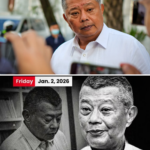
Long before his name echoed through Karachi’s narrow streets, long before he became a figure both feared and whispered about, Rehman Dakait was just another child in Lyari. A boy born into a neighborhood where survival was a daily negotiation, where hope often drowned beneath the noise of gang wars, poverty and political chaos. Lyari was alive, loud, bruised and unforgiving. And Rehman grew up breathing its air like destiny had already chosen a path he could not escape.
People who knew him as a child remembered him differently. Some said he was quiet, others claimed he carried an unusual spark in his eyes, a mix of restlessness and intelligence. But there was one thing no one doubted. Lyari shaped him. Its streets were his school, its violence his teacher, its gangs the only visible roadmap of power in a world where the weak were devoured by circumstance.
By the time he was thirteen, life had already pushed him into territory no child should ever walk. The boundaries between right and survival blurred. Rumors spread that he committed his first violent act before most boys his age learned responsibility. Whether those stories were exaggerated by fear or rooted in truth, no one could say with certainty. Lyari was a place where facts and legends mingled until they became inseparable.
But one truth remained constant. Rehman was changing. He was no longer just a boy. He was becoming something else.
His teenage years were the turning point. Lyari’s gang ecosystem pulled him in deeper. Older men with hardened eyes saw potential in him. They saw talent. They saw fearlessness. And in a neighborhood where the law often felt distant and powerless, raw courage held currency. Rehman rose quickly, his reputation building one confrontation at a time. Each step he took toward notoriety dimmed whatever innocence he once had.
To outsiders, it seemed he embraced brutality far too young. But those who grew up beside him had another perspective. They believed Rehman was a product of everything around him, a reflection of a place where choices were limited and consequences came fast. Poverty, neglect, crime and politics all braided together in Lyari like a knot no one could untangle.
As he grew older, his name began appearing in police reports. Slowly at first, then frequently enough that he became known beyond the alleys he walked. He was no longer Rehman. He was Rehman Dakait. A title earned through fear, violence and the reputation of someone who no longer backed away from conflict. The transformation wasn’t sudden. It was gradual, built over years of battles, alliances and street wars that defined Lyari’s dark chapters.
There were stories about him that circulated among locals. Stories of his anger. Stories of his sharp mind. Stories of his unpredictable nature. Some feared him. Others respected him. A few even admired his rising influence because in Lyari, power often translated to protection. Every neighborhood had its own view, shaped by whatever encounter they had with him.
But the most unsettling stories drifted into the public domain when he was still young. Stories dark enough to freeze the breath of those who heard them. Stories that painted Rehman as a man capable of choices so ruthless that morality held no boundary in his world. Some of those accounts, repeated by newspapers over the years, became part of the legend surrounding him, though not all could be independently verified in a landscape where chaos often distorted truth.
Yet, no matter how the narratives differed, they shared one undeniable element. At some point during his early adulthood, Rehman crossed a threshold from which there was no return. Whatever humanity he had clung to began slipping away, replaced by the hardened shell of a man shaped by the brutal environment he lived in.
By the time he reached his twenties, Rehman wasn’t just another gang member. He was a rising force. A strategist. A figure people began to follow. He carried an aura of someone who had lived too many lives too quickly. Someone who built his empire not from opportunity, but from necessity. Lyari’s underworld was changing, and Rehman was fast becoming a central figure in that transformation.
His circle expanded to include men like Uzair Baloch, a cousin whose own rise in the gang landscape would later dominate headlines. Their bond was complex. Built on blood. Built on loyalty. Built on the unspoken understanding that power in Lyari was never a straight line. It twisted, shifted and demanded sacrifices that ordinary people could never comprehend.
As the years passed, Rehman’s reputation grew darker, sharper, more dangerous. Law enforcement began hunting him with increasing urgency. His name became associated with extortion, turf wars, street battles and political alliances that blurred the line between criminal and influencer. Karachi was changing, and Rehman’s presence felt like a storm gathering strength on the horizon.
But behind the legend, behind the fear, behind the crimes attributed to him, there remained a question few dared to ask. Was Rehman Dakait born a villain, or did Lyari shape him into one? Was he a mastermind of chaos, or a boy trapped in a world that offered him no alternative?
The truth lay somewhere in the shadows he left behind.
And his story had only just begun.
By the time Rehman stepped into his twenties, the streets of Lyari had already begun whispering his name with a mix of fear and awe. The transformation was complete. Whatever remained of the boy he once was had long vanished, replaced by a man who understood that power in his world was earned through blood, loyalty and an unwavering will to dominate. Lyari had molded him, carved him and hardened him, and now he was ready to claim the territory that had shaped his destiny.
The city around him roared with tension. Karachi was a battleground of political factions, criminal alliances and decades-long animosity between rival groups. For many, this chaos was a curse. For Rehman, it was opportunity. He navigated the instability with a mind far sharper than those who underestimated him. People often described him as unpredictable, but those close to him saw something different. They saw calculation. They saw strategy. They saw a leader capable of thinking five steps ahead while others struggled to survive the present moment.
Rehman’s rise was not accidental. It was deliberate. He forged alliances with men who recognized his potential, including his cousin Uzair, whose own influence would soon echo across Lyari. Together, they built a network that reached deep into the slums, expanding through fear, respect and a promise of protection. In neighborhoods where law enforcement rarely dared to enter, where the state felt like a distant rumor, Rehman became a force people learned to rely on. Some willingly. Some out of necessity. Some because refusal meant consequences no one wanted to face.
His charisma was dangerous. He carried himself with the confidence of someone who had survived too much to ever fear anything again. He knew the city’s pulse, its secrets, its weaknesses. And he used that knowledge to turn himself into a myth. People claimed he could sense betrayal before it happened. Others swore he had a way of bending loyalty to his will, turning gang members into devoted followers who would die for him without questioning why.
But every empire, even one built in the shadows, comes with a cost. As Rehman’s power grew, so did the brutality around him. Street wars erupted between rival factions. Bodies appeared in alleys. Families mourned children caught in crossfire they never chose. The underworld fed on itself, and Rehman stood at the center of this violent whirlwind, shaping it with every move.
There were moments of chilling ruthlessness that became part of the legend. Moments that turned his name into something people spoke softly, careful not to attract the wrong kind of attention. In Lyari’s crowded houses and narrow corridors, whispered stories painted him as both protector and predator. Some believed he punished anyone who betrayed the sanctuary of his gang. Others insisted his rage knew no boundaries. Dark tales surfaced in newspapers, stories of acts so cold they blurred the line between myth and truth. Every rumor added another layer to his reputation. Every crime linked to him fed the fear that surrounded his name.
Yet behind the violence was a man who understood power better than most. Rehman wasn’t reckless. He wasn’t chaotic. He was deliberate, always pushing his influence further into Karachi’s underworld. His network became so deeply rooted that removing him would be like trying to rip the city’s spine from its body. Politicians noticed. Police noticed. Enemies noticed. And all of them began searching for ways to bring him down.
Still, Rehman remained forward-moving, building connections as fast as he eliminated threats. He took control of lucrative extortion routes. He negotiated deals with men who operated in Karachi’s darkest corners. Everything he touched seemed to bend to his authority. Lyari changed under his rule. For some, life became even more dangerous. For others, strangely, it became more structured. The contradictions of Rehman Dakait only added to his mystique.
But power built on fear is fragile. And power gained too quickly often draws the wrong eyes.
It was during these years of rising dominance that Rehman crossed a line he could never step back from. A line that forever cemented him as one of the most feared figures in Karachi’s history. Reports spread across media outlets, stories too shocking to ignore. Stories of a crime so severe, so personal, that it shattered whatever humanity people believed he still possessed. Whether every detail was factual or exaggerated by a city addicted to fear hardly mattered. The legend had been written, and Rehman became a symbol of the darkness that ruled Lyari.
With this act, real or embellished by retellings, his fate was sealed. He would never again be seen as merely a criminal. He became the embodiment of Lyari’s brutal legacy. A man swallowed entirely by the world that created him.
Law enforcement intensified its hunt. Rivals sharpened their knives. Allies questioned their loyalty in private. And yet, Rehman remained untouchable, riding the wave of power he had created with an iron grip.
But every rise carries its shadow. Every empire carries its curse. And Rehman’s story was heading toward the inevitable collision between the man he had become and the city that could no longer contain him.
The storm was coming.
And Rehman Dakait was standing at its center.
By the time the final years of Rehman Dakait’s life unfolded, the city of Karachi had grown tired of fear. His name, once whispered in dark alleys and crowded teahouses, had now become a headline carved into the nation’s consciousness. Every newspaper carried a story about him. Every television debate analyzed his next move. And every rival gang leader plotted a world where Rehman no longer existed.
But Rehman walked through these years with the strange calm of a man who had already made peace with fate. He had built his world from the ashes of Lyari’s suffering, and he seemed to know that the forces closing in on him were inevitable. He once ruled the underworld with confidence bordering on arrogance. Now he moved differently, with a quiet awareness that the shadows he commanded were slipping away.
His gang remained loyal, but loyalty in Lyari was a fragile glass that could shatter with a single wrong step. Power had made him many friends, but fear had made him even more enemies. And enemies never forgot.
Karachi at this time was a city ready to erupt. Political parties, criminal factions and law enforcement struggled for control. Rehman found himself at the center of a chaos he could no longer direct. He had risen too fast, too high, and his empire had become too big to hide. The police wanted him. Politicians wanted him. Rivals wanted him. His world had become a tightening circle.
Yet he continued to walk the streets he once ruled, knowing every corner carried the possibility of betrayal. Those who saw him in his final months described a man who looked both invincible and exhausted. His eyes still carried fire, but behind that fire was something else. Something softer. Something tired. As if the years of violence he had survived had finally settled into his bones.
Rumors swirled that he wanted to change, that he wanted a way out, that he wanted to reshape his life before the city decided his fate for him. But Lyari was a place where change was rarely granted, and redemption was a luxury afforded only to those who had never tasted power.
The night of his downfall arrived without warning. It wasn’t a cinematic showdown or a carefully orchestrated conspiracy. It was a confrontation born from years of pursuit, years of bloodshed, years of restless tension between Rehman and the police forces determined to bring him down. They found him in the outskirts of Karachi, somewhere between escape and resistance, surrounded by men who had followed him into battles that defied logic.
What happened next unfolded quickly. Too quickly for a man who had survived impossible odds. Too quickly for a legend whose name had dominated Karachi’s underworld for over a decade. Shots were fired. Lights blazed. Sirens cut through the night like a blade. By the time the city heard the news, Rehman Dakait was already gone.
He died in his mid-thirties, but his shadow stretched far beyond the years he lived. His death sent shockwaves through Lyari. Some mourned. Some celebrated. Some simply sighed, believing the storm had finally passed. But the truth was more complicated. Rehman was not just a criminal to them. He was a symbol of everything the neighborhood had endured. Poverty. Violence. Survival. A reminder of how a place can shape a person until escape becomes impossible.
His cousin Uzair Baloch later stepped into his place, continuing the legacy in ways even darker and more politically entangled. But Rehman remained, in the public imagination, the original. The one who rose from nothing and controlled everything. The one whose brutality became a cautionary tale. The one whose life forced Karachi to confront the uncomfortable truth that monsters are rarely born. They are made.
Years after his death, stories about him still echo across Lyari. In some homes, he is remembered as the boy who had no choice. In others, he is remembered as the man who chose too much. But in every retelling, one question lingers like a ghost that refuses to fade.
Was Rehman Dakait a victim of his world, or the architect of his own darkness?
No one has ever given a definitive answer. And perhaps that is why his name still lives on, wrapped in myth, fear, tragedy and the kind of power that refuses to be buried.
Because some legends don’t end when a man dies.
They begin.
News

Behind the Headlines: Balraj Calls Out Tanya’s Factory and House Tour Videos
The recent controversy surrounding Tanya’s factory and house tour videos has sent shockwaves through her fanbase and the broader social…

How Naagin Transformed Priyanka Chahar Choudhary’s Career: Ekta Kapoor Shows Her Support
Priyanka Chahar Choudhary’s journey in the television industry took an unexpected and dramatic turn the moment she joined the cast…
Shahrukh Khan Shares Heartwarming Moments With Son Abram Khan Caught on Camera
Shahrukh Khan, often hailed as Bollywood’s King Khan, has always shared a close bond with his children, but his youngest…

How the KISS Incident Changed Tara Sutaria and Veer Pahariya’s Relationship: Is a Breakup Imminent?
The controversial KISS incident involving Tara Sutaria and Veer Pahariya sent shockwaves through Bollywood circles, but its impact may have…
Why Twinkle Khanna Used to Call Sunny Deol ‘Chhote Papa’ and the Story Behind Her Gesture Toward Akshay
The bond between Twinkle Khanna and the Deol family has always been a mix of affection, humor, and playful teasing,…

Trouble Hits the Khan Family as Ex Daughter In Law Is Rushed to Hospital Before New Year
The Khan family, long admired for their unity and prominence in Bollywood, faced an unexpected wave of tension just days…
End of content
No more pages to load