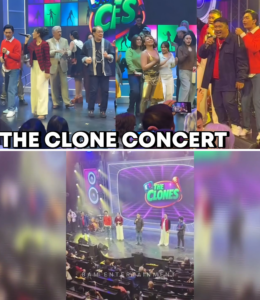
 The stage lights dim, a familiar orchestral swell begins, and suddenly, the past feels utterly present. For decades, the noontime show Eat Bulaga has been a staple of Filipino culture, known not only for its hosts but for launching unforgettable segments that capture the nation’s imagination. Among the most successful in recent memory is “The Clones: Ka-Voice of the Stars,” a singing competition that goes beyond mere karaoke. It’s a quest for vocal reincarnation, where amateur singers don’t just cover a song, they fully embody the distinctive sound, mannerisms, and spirit of a music legend.
This segment’s immense popularity recently led to an extraordinary event: a full-scale concert titled “Santa Clones Are Coming To Town.” This wasn’t just another televised special; it was the ultimate, sold-out graduation ceremony for a new breed of artists who had spent months mastering the voices of global icons. The context of this event is crucial: it marked the transition of these talented vocalists from being contestants on a TV show to being legitimate, headlining concert artists. It was a moment of true validation for the power of voice, passion, and the unwavering support of the Eat Bulaga audience, the “Dabarkads.”
The Christmas-themed concert, held at the historic Music Museum, was less about dazzling effects and more about raw, spectacular vocal talent. The atmosphere was charged with a palpable sense of anticipation. The audience wasn’t just there to see impersonators; they were there to witness the magic of memory, hearing the voices of legends like Matt Monro, Elvis Presley, Karen Carpenter, and Michael Bolton echo powerfully on a live stage once again.
The line-up was a powerhouse of precision. Rouelle Cariño, the man who brings the velvety, smooth baritone of Matt Monro back to life, demonstrated why his interpretation is so deeply moving. He doesn’t just sing Monro’s songs; he channels the sentimentality and elegance of a bygone era. His performance of Christmas classics, imbued with Monro’s signature warmth, managed to be simultaneously nostalgic and entirely new. It’s a trick of artistry that few can manage: honoring the original while making the performance completely his own.
Then there was Jerome Evardome, the Elvis Presley clone, whose magnetic stage presence is as compelling as his voice. Embodying ‘The King’ is a monumental task, requiring a blend of vocal power, rock-and-roll swagger, and a certain kind of dangerous charm. Evardome delivered, bringing the energy and iconic hip-swiveling moves that made Elvis a global phenomenon. His rendition of classic Christmas rock-and-roll hits transported the audience straight to the 1950s, a testament to his dedication to the persona.
The performances were a masterclass in vocal mimicry and artistic interpretation. Jean Jordan Abina, the voice behind Karen Carpenter, demonstrated the heartbreaking purity and gentle strength that defined The Carpenters’ sound. To hear a voice so closely resemble one of the most beloved singers of the 20th century is an emotional experience, often bringing tears to the eyes of long-time fans who miss the original. This is where the concert transcended entertainment and dipped into collective therapy—a chance to briefly reclaim a treasured musical memory.
Adding to the diversity were Dominador Alviola Jr., who captured the soaring, dramatic tenor of Michael Bolton, filling the venue with power ballads that felt both enormous and intimate. Lucky Robles, the Gary Valenciano clone, brought the high-octane energy and impassioned vocal delivery of ‘Mr. Pure Energy,’ reminding everyone that an effective tribute requires not just vocal resemblance but an equal measure of stamina and heart.
The power of “The Clones” concept lies in its ability to introduce a new generation of listeners to timeless music, while giving older fans a potent dose of nostalgia. The artists are not simply covering songs; they are performing a cultural service, preserving and celebrating the music that defined entire decades. This concert, therefore, was a beautiful bridge between the past and the present, a recognition that great music is eternal, surviving and thriving through the dedication of new interpreters.
Beyond the individual spotlights, the ensemble performances were particularly thrilling. The collaboration between these distinct ‘clones’ created musical arrangements that were complex and captivating. Imagine the powerful, signature vocal qualities of Michael Bolton, Matt Monro, and Elvis Presley converging on a single stage—it was an electrifying experience that no single artist could replicate alone. It showcased the strength of the concept: by working together, the Clones created something greater than the sum of their impressive parts.
The entire event was a massive win for the performers, for Eat Bulaga, and for Filipino talent. It proved that a TV segment, built on novelty and admiration, could genuinely foster serious, professional artistry. These were not singers who just won a contest; they were artists who earned the right to headline a sold-out show, standing shoulder-to-shoulder with established figures in the industry. The Eat Bulaga team, through their platform, gave these individuals not just a moment of fame, but a genuine career opportunity.
The concert also highlighted the depth of the Filipino musical spirit. Filipinos have always been known as a nation of exceptional singers, and “The Clones” is a vivid demonstration of this national gift. The singers’ ability to perfectly replicate the nuances, the vocal texture, and the emotional delivery of internationally renowned artists speaks volumes about their discipline, listening skills, and inherent talent.
What resonated most with the audience was the sheer professionalism of the show. Everything, from the stage design to the lighting and the live band, was top-tier, underscoring the seriousness with which this segment’s success was treated. It was a declaration that these singers were not a novelty act, but concert-worthy artists.
As the show concluded with a spectacular Christmas medley, featuring all the clones, the energy in the Music Museum was infectious. The audience was on its feet, not just applauding the perfect vocal imitations, but celebrating the hard-won success of a group of artists who started as hopeful contestants on a television show. The “Santa Clones Are Coming To Town” concert was more than a holiday treat; it was a defining moment in the careers of these singers, a powerful reminder that talent, when nurtured and celebrated, can truly bring the voices of the stars back down to earth. It was a celebration of music, memory, and the extraordinary human capacity for both emulation and originality. The event stands as a landmark, demonstrating the viral power of a unique concept and the enduring desire of the audience to reconnect with the timeless soundtrack of their lives.
News

MULA SA SIKAT NA BUHAY PATUNGO SA HINDI INAASAHANG KALAGAYAN: Ang Nakakaantig na Transpormasyon na Gumulantang sa Publiko
Maraming mga kwento sa ating lipunan ang nagsisimula sa ningning ng tagumpay, ngunit hindi lahat ay nagtatapos sa paraang ating…
MABIGAT NA PAGSUBOK! Ang Buong Katotohanan sa Viral Cheating Issue ni Lean de Guzman at ang Posibleng Pagkakakulong ni Vinz Jimenez
Yumanig sa buong mundo ng social media ang mabilis na pagkalat ng mga balita tungkol sa kontrobersyal na paghihiwalay…

NABUKING ANG PAGPAPANGGAP! Staff ni Catalina Cabral Nagsalita na Laban kay Cong. Ngaw Ngaw Tungkol sa Totoong Ugali Nito
Mainit na usapan ngayon sa social media ang muling pagputok ng tensyon sa pagitan ng kampo ni Catalina Cabral at…

SUPALPAL SA KONGRESO! Cong. Mark Leviste Hindi Nakapagsalita Tungkol Sa Bilyong Halaga Ng Isyu At Cabral Files
Naging usap-usapan sa buong bansa ang hindi inaasahang kaganapan sa loob ng Mababang Kapulungan matapos mabigo si Congressman Mark Leviste…

MALI-MALI AT KULANG-KULANG? Cong. Mark Leviste At Cong. Ngaw Ngaw Pinaiimbestigahan Dahil Sa Sablay Na Dokumento!
Mainit na usapan ngayon sa apat na sulok ng Kongreso at maging sa social media ang palitan ng mga pahayag…

KAHIT SI POLONG NAGULAT! Driver ni Catalina Cabral Tumestigo na at Inilantad ang Lahat ng Alam sa Likod ng Isyu
Muling naging sentro ng usapan sa buong bansa ang mainit na isyung kinasasangkutan ni Catalina Cabral matapos lumutang ang isang…
End of content
No more pages to load