 The political atmosphere in the Philippines has been dramatically charged by a single, explosive rumor: the sudden, imminent issuance of an International Criminal Court (ICC) arrest warrant targeting key figures from the previous administration, specifically Senators Ronald “Bato” Dela Rosa and Christopher “Bong” Go. This is not a drill; it’s a high-stakes legal and political confrontation that has put the Philippine government on edge and created massive uncertainty for two of the country’s most visible political leaders. The entire controversy hinges on the ongoing ICC investigation into the thousands of deaths linked to the previous administration’s relentless “War on Drugs” campaign.
For the Filipino public, the news is a whirlwind of confusion, fear, and dramatic anticipation. On one side are the legal voices and activists, led by figures like ICC Assistant to Counsel Atty. Kristina Conti, who suggest these warrants are the logical next step in the international judicial process. On the other side are the officials from the Department of Justice (DOJ) and the senators’ camps, who maintain that officially, no such warrant has been received, labeling the entire conversation as currently existing in a “theoretical space.” But in politics, as in life, the threat is often as powerful as the action itself. The specter of international accountability is now casting a long shadow over the halls of the Senate.
The current escalation follows a precedent already set: the arrest and transfer of the former President to the International Criminal Court’s custody in The Hague earlier this year. That event, a political tremor that shook the very foundations of the Philippine justice system, demonstrated clearly that the ICC, even without the Philippines being a current State Party to the Rome Statute, possesses a mechanism for enforcement, often through coordination with bodies like the International Criminal Police Organization (INTERPOL).
The Spark that Ignited the Firestorm
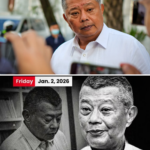
The current round of chaos began with a direct claim from a high-ranking government official—reportedly Ombudsman Jesus Crispin “Boying” Remulla—who publicly stated that the ICC had indeed issued an arrest warrant against Senator Dela Rosa. Dela Rosa, the former Chief of the Philippine National Police (PNP) and the chief executor of the War on Drugs at its peak, is considered a central figure in the ICC’s scope of investigation, alongside his former boss.
This statement, coming from an official who theoretically should have privileged insight, immediately triggered alarm bells. It wasn’t just a political analyst or a journalist making the claim; it was someone inside the government apparatus. The public reaction was immediate and intense, splitting between those who saw this as a long-awaited move toward justice for the victims and those who condemned it as an infringement on national sovereignty and a political persecution of a man who was merely following orders.
However, the key fact that keeps the controversy alive is the official non-confirmation. The ICC, known for its strict protocol, refused to confirm the issuance through unofficial channels. The Department of Justice also quickly stepped in, stating they had not yet received any formal copy of the warrant. This created a dramatic information vacuum, allowing rumors, speculation, and viral social media content to fill the void.
Atty. Conti and the Next in Line Theory
Adding fuel to the fire is the voice of Atty. Kristina Conti, who represents the victims of the drug war. Her public statements have been both clarifying and ominous. Conti has consistently explained that the absence of a public ICC document does not mean a warrant doesn’t exist. She suggests that the warrant may be “under seal” or sent directly to the Office of the President or the appropriate law enforcement channels (like INTERPOL), bypassing conventional public disclosure at the initial stage—a scenario that aligns with how the warrant for the former President was reportedly handled.
Conti’s core argument is one of logical progression. With the former President already in custody, the legal process naturally moves to the next responsible individuals. In her view, given the scope of the alleged crimes against humanity, the roles of Senator Dela Rosa (as PNP Chief) and Senator Bong Go (as a close confidante and key figure in the previous administration) make them the likely “next in line” for ICC scrutiny. For the victims’ families, this confirmation, even if unofficial, offers a powerful glimmer of hope that the international justice system is indeed moving forward. For the two senators, it represents the absolute worst-case scenario unfolding in real time.
Senator Dela Rosa, recognizing the immediate gravity of the situation, has already taken legal steps, asking the Supreme Court to issue a Temporary Restraining Order (TRO) against the implementation of the supposed warrant. This move, asking the highest court of the land to intervene, underscores just how seriously he is treating the unconfirmed reports, transforming the rumor into a concrete legal battle.
The Political Ripples: Sotto and VP Sara
While the focus remains squarely on Dela Rosa and Go, the political discussion has inevitably pulled in other key figures, including former Senate President Tito Sotto and Vice President Sara Duterte.
Tito Sotto’s involvement is less about direct legal exposure and more about the institutional crisis this creates. As a senior figure in the Senate, his comments reflect the chamber’s stance on sovereignty and the legal rights of its members. He has been quoted, in the past, emphasizing the dignity of the Senate and questioning the process of international warrants, particularly those coming from a court the Philippines officially withdrew from. His voice represents the institutional resistance to external legal interference, a stance that resonates with many nationalist-leaning Filipinos who view the ICC probe as an attack on the nation.
Vice President Sara Duterte, daughter of the former President, is perpetually linked to this issue by lineage and loyalty. Her public position has been one of staunch support for the previous administration’s War on Drugs and a consistent defense of her father and his allies. While she faces no confirmed ICC warrant herself, her every move is scrutinized for its potential impact on the case. Her political alliances, her statements on the ICC’s jurisdiction, and her willingness to offer legal or moral support to those potentially facing arrest are all critical elements in this unfolding national drama. Her presence in the conversation symbolizes the continued political divide that the ICC case has exacerbated.
The Stare Down: Sovereignty vs. Justice
At its heart, this controversy is a dramatic stare-down between two profound concepts: national sovereignty and international justice. The Philippine government has long maintained that local courts are fully capable of handling alleged crimes, insisting on the principle of complementarity—that the ICC should only step in when national courts are unwilling or unable to act. The ICC, by issuing warrants, clearly signals its belief that this condition has not been met.
The reported warrants force the current administration into an agonizing dilemma. If a warrant is officially received, the government must decide: enforce the international warrant via INTERPOL, upholding the country’s global commitments, or resist the warrant, prioritizing the principle of sovereignty and protecting high-ranking political allies. The decision either way will have monumental consequences, defining President Marcos Jr.’s legacy on human rights and international cooperation.
For Senators Dela Rosa and Go, the situation is intensely personal. They are navigating a period of profound uncertainty, with their freedom and their reputations hanging in the balance. The constant public speculation, the legal maneuvers, and the relentless media spotlight take an immense toll. They stand accused of the gravest crimes, and the very ground beneath them feels unstable.
The legal and political chess match will continue. While the DOJ is currently in a state of verification, the political reality is that the threat is real, the pressure is mounting, and the nation is watching, waiting for the next, inevitable development that will determine whether two of the country’s most recognizable political figures will soon be making a reluctant journey to The Hague. The silence from the ICC is deafening, and the waiting game is agonizing for everyone involved—most importantly, for the thousands of victims who seek definitive answers and accountability.
News

MULA SA SIKAT NA BUHAY PATUNGO SA HINDI INAASAHANG KALAGAYAN: Ang Nakakaantig na Transpormasyon na Gumulantang sa Publiko
Maraming mga kwento sa ating lipunan ang nagsisimula sa ningning ng tagumpay, ngunit hindi lahat ay nagtatapos sa paraang ating…

MABIGAT NA PAGSUBOK! Ang Buong Katotohanan sa Viral Cheating Issue ni Lean de Guzman at ang Posibleng Pagkakakulong ni Vinz Jimenez
Yumanig sa buong mundo ng social media ang mabilis na pagkalat ng mga balita tungkol sa kontrobersyal na paghihiwalay…

NABUKING ANG PAGPAPANGGAP! Staff ni Catalina Cabral Nagsalita na Laban kay Cong. Ngaw Ngaw Tungkol sa Totoong Ugali Nito
Mainit na usapan ngayon sa social media ang muling pagputok ng tensyon sa pagitan ng kampo ni Catalina Cabral at…

SUPALPAL SA KONGRESO! Cong. Mark Leviste Hindi Nakapagsalita Tungkol Sa Bilyong Halaga Ng Isyu At Cabral Files
Naging usap-usapan sa buong bansa ang hindi inaasahang kaganapan sa loob ng Mababang Kapulungan matapos mabigo si Congressman Mark Leviste…

MALI-MALI AT KULANG-KULANG? Cong. Mark Leviste At Cong. Ngaw Ngaw Pinaiimbestigahan Dahil Sa Sablay Na Dokumento!
Mainit na usapan ngayon sa apat na sulok ng Kongreso at maging sa social media ang palitan ng mga pahayag…

KAHIT SI POLONG NAGULAT! Driver ni Catalina Cabral Tumestigo na at Inilantad ang Lahat ng Alam sa Likod ng Isyu
Muling naging sentro ng usapan sa buong bansa ang mainit na isyung kinasasangkutan ni Catalina Cabral matapos lumutang ang isang…
End of content
No more pages to load