Samantha Ruth Prabhu Trolled for Her Look Just 13 Days After Marriage
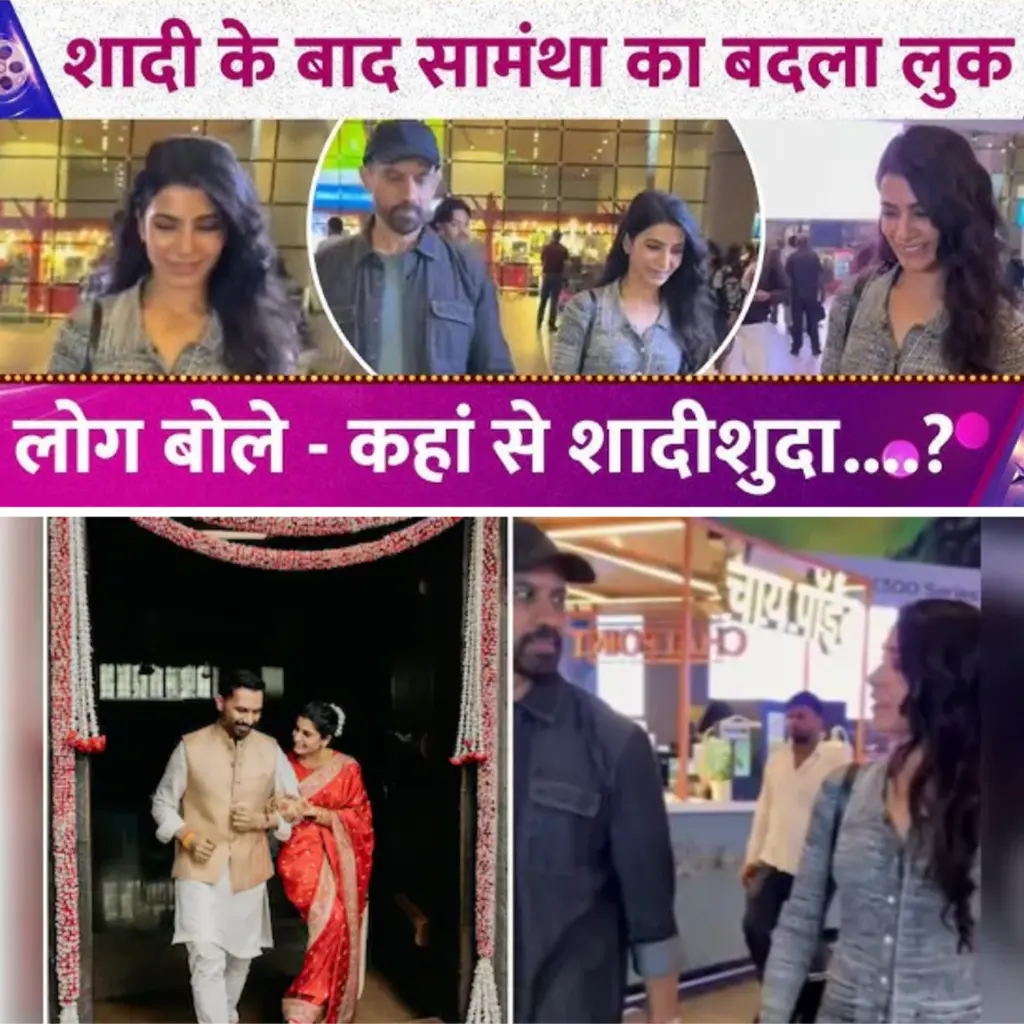
It was supposed to be ordinary. A public appearance, a few photographs, a familiar face moving through a familiar space. But within minutes, it stopped being ordinary. Just thirteen days after her wedding, Samantha Ruth Prabhu was seen without sindoor, without mangalsutra, without the visual markers society has long demanded from a married woman. And suddenly, the conversation was no longer about where she was going, but about what she was not wearing.
The reaction was instant and unforgiving.
Social media lit up with accusations disguised as concern. Questions masqueraded as advice. Anger wrapped itself in the language of tradition. For many, the absence of two symbols became louder than any statement Samantha could have made. In the eyes of strangers, her marriage was being audited through photographs, her commitment measured in accessories.
What unsettled people was not her look. It was her silence.
She did not explain. She did not clarify. She did not rush to reassure. And in a culture accustomed to women justifying every deviation from expectation, that silence felt provocative. Almost rebellious. Thirteen days after marriage, she chose presence over performance, and that choice made people uncomfortable.
Because marriage, especially for women in the public eye, has never been allowed to be private.
From the moment a wedding is announced, expectations follow. How she should dress. How she should behave. How soon she should transform into a visible symbol of tradition. Sindoor and mangalsutra are not just ornaments in this context. They are declarations demanded by society, proof offered to strangers, assurances that a woman has stepped into a role correctly.
Samantha’s appearance disrupted that script.
For some, it was seen as disrespect. For others, as defiance. But beneath the outrage lay something deeper. A fear that if a woman can choose not to display her marriage, then perhaps the rules were never as fixed as they were believed to be.
Supporters were quick to point out the obvious. Marriage is not erased by the absence of jewelry. Commitment does not disappear when symbols do. A woman does not become less married because she chooses comfort, personal belief, or simply her own timing. Yet these voices often struggled to rise above the noise of outrage.
Because outrage is louder than reason.
What made this moment particularly charged was Samantha’s history. She is not new to scrutiny. Her life, her relationships, her choices have long been dissected in public spaces. Every shift in her personal journey has been followed by opinion. But this time, the reaction felt sharper. Less about curiosity, more about control.
It was not just about tradition. It was about ownership.
There is an unspoken expectation that once married, a woman’s body becomes a canvas for societal approval. Symbols are not just worn for faith or belief. They are worn for validation. And when a woman refuses to participate in that visual ritual, it is seen as a challenge, not a choice.
Thirteen days is an arbitrary number, yet it was repeated like a charge sheet. As if time alone dictates obedience. As if grief, comfort, belief, or individuality have expiration dates. As if marriage immediately overrides personal agency.
Samantha’s look did not break any law. It did not insult any individual. It simply failed to meet expectations. And in doing so, it exposed how fragile those expectations truly are.
What was missing from much of the backlash was empathy. No one asked how she felt. No one paused to consider that traditions, while meaningful to many, are not universal mandates. Instead, judgment arrived fully formed, fueled by the belief that a woman owes society visible proof of her personal life.
And yet, amid the criticism, something else happened.
A quieter conversation began to form.
Women started sharing their own stories. Of being questioned. Of being judged. Of being told they were “wrong” wives because they did not conform visually. Some spoke of pressure from families. Others of silent resistance. Samantha’s appearance became a mirror, reflecting countless private battles into a public moment.
She did not speak. But many spoke because of her.
That is the power of absence. Of not explaining. Of not defending. Sometimes, the refusal to perform is the loudest statement of all.
This moment is not about whether sindoor or mangalsutra matter. They do, to many. It is about whether choice is allowed to coexist with tradition. Whether marriage can be lived differently without being declared invalid by strangers.
Samantha Ruth Prabhu did not announce a revolution. She did not post a caption. She simply showed up as herself. And in doing so, she reminded everyone of an uncomfortable truth. That society is often more invested in how a woman looks married than in how she lives her life.
As the noise continued to grow, it became clear that this was never just about Samantha Ruth Prabhu. Her photograph was only the spark. What followed was the release of long-suppressed expectations that society places on married women, especially those who live their lives in the public eye.
The outrage revealed an uncomfortable obsession. The need to visually confirm a woman’s marital status, again and again, as if marriage must be performed daily to remain valid. Sindoor and mangalsutra, for many, are sacred symbols. But for others, they have also become tools of surveillance. A way to monitor, judge, and correct women who step outside the accepted frame.
Samantha’s silence deepened the discomfort.
In a world where celebrities are expected to issue clarifications for every perceived misstep, her refusal to explain felt almost radical. She did not offer context. She did not soften the moment with reassurance. That absence of justification forced people to confront something they rarely like to examine. Why does a woman owe explanations for how she lives her marriage?
For years, women have been taught that marriage comes with visible responsibilities. That love must be worn. That commitment must be displayed. And that any deviation invites suspicion. The anger directed at Samantha carried that conditioning. It was not about concern for tradition. It was about enforcing it.
Supporters argued that traditions gain meaning through belief, not compulsion. That symbols lose their sanctity when they are demanded instead of chosen. But these arguments were often drowned out by louder voices insisting that a married woman has a duty to reassure society.
What made this moment heavier was how quickly judgment replaced understanding.
No one paused to consider personal comfort. Or health. Or belief systems. Or the simple possibility that not every woman relates to symbols in the same way. Instead, timelines and comment sections turned into courtrooms, declaring verdicts on loyalty and values based on a single appearance.
And yet, something was shifting beneath the surface.
Women began recognizing themselves in the backlash. The pressure to look married enough. The constant policing of appearance. The silent fear of being labeled rebellious or disrespectful for choosing differently. Samantha’s experience became familiar, uncomfortably so.
This is where the conversation moved beyond celebrity culture.
It became about autonomy. About whether marriage enhances a woman’s identity or erases parts of it. About whether tradition is meant to support women or restrict them. Samantha, intentionally or not, had placed these questions in the center of public discourse.
Her critics saw defiance. Her supporters saw dignity.
And perhaps that is why the reaction was so intense. Because her appearance challenged a deeply ingrained belief. That a woman’s choices after marriage are no longer entirely her own. That society gains a stake in her body, her symbols, her silence.
Samantha did not break tradition. She simply did not perform it on demand.
In doing so, she exposed how fragile public approval can be. How quickly admiration turns into outrage when control is threatened. And how uncomfortable society becomes when a woman refuses to conform without apology.
The irony is that nothing about her appearance suggested rejection. It suggested normalcy. Ease. A woman moving through her life without theatrical reassurance. And yet, that simplicity felt threatening to those who equate marriage with constant display.
As the days passed, the anger did not fade. But neither did the support. The divide remained sharp. On one side, tradition defended with fury. On the other, choice defended with quiet resolve.
Samantha remained silent through it all.
And in that silence, she allowed the truth to surface on its own. That this debate was never about jewelry. It was about control, expectation, and the discomfort that arises when women stop asking for permission.
By the time the outrage began to slow, one thing was undeniable. This moment had already outgrown Samantha Ruth Prabhu. What started as commentary on her appearance had turned into a reflection of society itself. A mirror held up not by words, but by absence. By what she chose not to wear. By what she chose not to explain.
Samantha never entered the debate, yet she stood at its center.
Her silence became the most powerful element of the story. In an age where constant clarification is expected, where women are pressured to soften every decision with context and apology, she offered neither. And in doing so, she quietly reclaimed something many women are taught to surrender after marriage. Autonomy.
This was not rebellion in the loud, dramatic sense. It was something far more unsettling. It was calm. It was ordinary. It was a woman living her life without performing it for approval.
The reactions revealed a hard truth. Society is often more disturbed by women who remain composed than by those who openly resist. Anger can be dismissed. Silence cannot. Silence forces people to confront their own discomfort, their own expectations, their own need to control narratives that no longer belong to them.
Samantha’s appearance did not erase tradition. It challenged the idea that tradition must look the same on every woman, every day. That marriage demands constant visual confirmation. That belief systems lose value the moment choice enters the equation.
For many women watching, this was not just about a celebrity moment. It felt personal. It echoed their own experiences of being watched, questioned, corrected. Of being told they were not married enough, respectful enough, traditional enough. Samantha became a symbol not because she tried to be one, but because her normalcy felt radical.
What this episode ultimately exposed was fear. Fear of change. Fear of women rewriting rules that were never designed with their comfort in mind. Fear that if one woman can step outside expectation and remain unashamed, others might follow.
And many already are.
Whether Samantha ever addresses this moment or not no longer matters. The conversation has moved beyond her intent. It has settled into something larger. A slow, uncomfortable questioning of why women are still expected to wear their commitment while men are allowed to live it quietly.
This was never about sindoor or mangalsutra. It was about permission.
And Samantha Ruth Prabhu did not ask for it.
She walked forward exactly as she was. Unexplained. Unapologetic. Unburdened by the need to reassure strangers about the validity of her personal life. In doing so, she reminded everyone that marriage does not erase individuality, and tradition does not lose meaning when it is chosen rather than enforced.
The noise will fade. Trends always do.
But the question this moment raised will remain. How much space does society truly allow women after marriage. And what happens when a woman decides to take that space without asking.