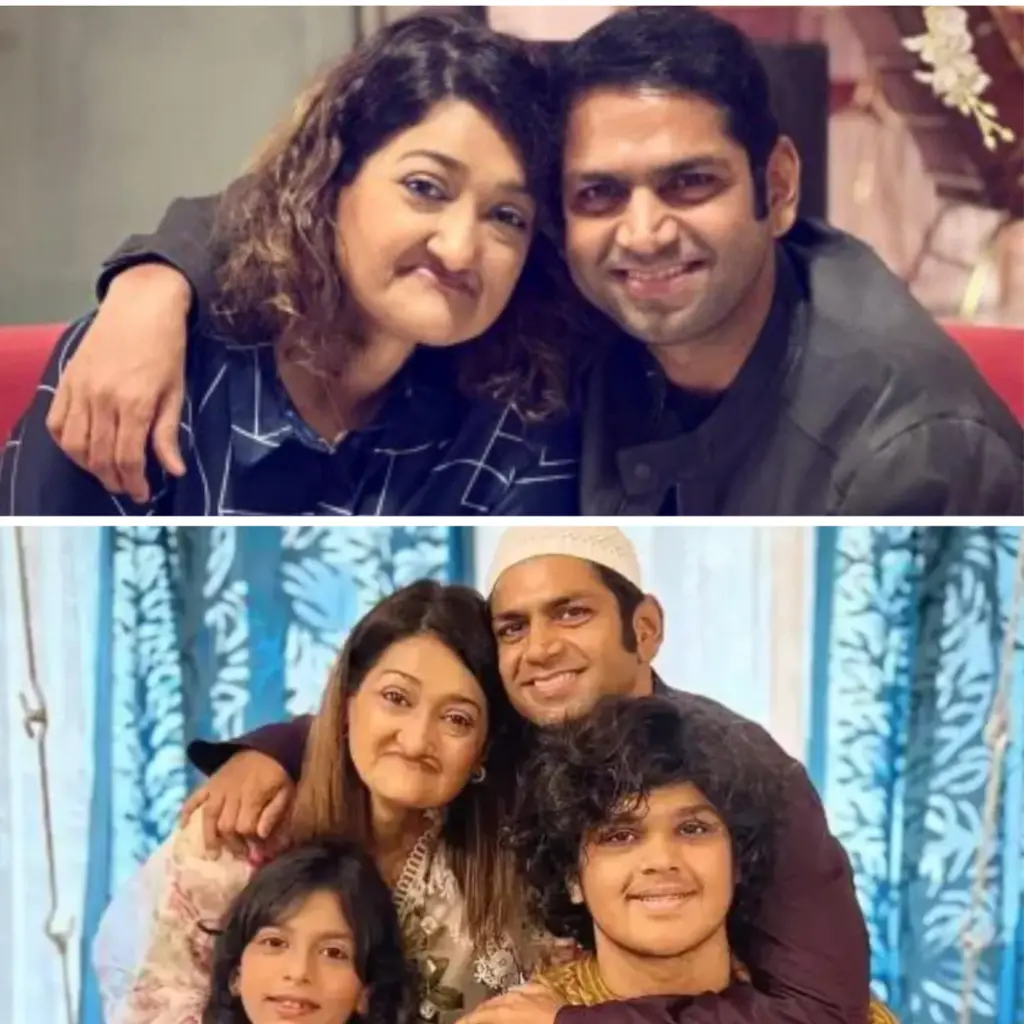
The Family Man Actor Whose Wife Beat Cancer Four Times: A 30-Year Love Story That Redefined Strength
Long before audiences recognized him as JK Talpade from The Family Man, long before applause followed his name, Sharib Hashmi was simply a man chasing a fragile dream in a city that rarely forgives uncertainty. Bollywood, with all its glamour, offered him no guarantees. What it did offer instead were years of rejection, financial strain, and moments where walking away would have been the easier choice. Through it all, one presence remained constant. His wife, Nasreen Hashmi.
Their love story did not begin under studio lights or red carpets. It began quietly, away from the noise of the industry, rooted in companionship rather than ambition. When Sharib chose acting over a stable job, it was not applause that followed him home. It was fear. Fear of failure. Fear of disappointing his family. Fear of not being able to provide. Yet Nasreen did not ask him to compromise his dream. She asked him to stay honest to it.
Those early years tested them in ways fame never could. Money was scarce. Opportunities were inconsistent. Days passed without auditions, and nights were filled with uncertainty. There were moments when survival mattered more than passion. To keep the household running, sacrifices were made quietly. Jewelry was sold. Comfort was postponed. Pride was swallowed. And still, neither of them spoke of giving up.
What makes their story different is not just endurance, but timing. Nasreen stood beside Sharib before success ever found him. She believed in a future she could not yet see, even when the present offered little reassurance. In an industry where partnerships often grow fragile once struggle arrives, their bond was built inside it.
As Sharib navigated the harsh realities of the entertainment world, life prepared another, far more brutal test. Nasreen was diagnosed with cancer. It was not a single battle. It was the beginning of a war that would return again and again. Four times, cancer entered their lives without warning. Four times, it demanded strength they did not know they possessed.
The first diagnosis changed everything. Dreams paused. Careers slowed. Priorities rearranged themselves overnight. Hospitals replaced sets. Medical reports replaced scripts. And fear became a daily companion. Yet even in illness, Nasreen refused to become fragile in spirit. Those close to the family recall her willpower as unshakable. She fought not just for herself, but for the life they had built together.
Sharib often speaks of that period not as a time when he supported his wife, but as a time when she carried him. Watching her endure pain without surrender taught him what courage truly looks like. While treatments drained her physically, her resolve strengthened the man beside her. In moments when Sharib felt helpless, Nasreen became the one reminding him to stand firm.
Financial pressure returned during this time with cruel intensity. Medical expenses mounted. Acting work remained inconsistent. Yet Sharib never framed these struggles as burdens. In interviews, he recalls them as lessons. Love, he realized, is not tested when life is comfortable. It is tested when survival itself becomes uncertain.
Each time Nasreen recovered, hope returned cautiously. Each remission felt like borrowed time, cherished deeply. But cancer did not retreat permanently. It came back. And with every return, the battle grew heavier. Still, neither of them allowed bitterness to enter their home. Instead, resilience became routine.
What is often overlooked in stories like these is the emotional cost on the caregiver. Sharib lived with constant fear of loss, yet he never allowed it to define his behavior. He showed up every day. For hospital visits. For conversations. For silence. He learned that strength is not always loud or visible. Sometimes it is simply staying.
Years passed. Slowly, work began to stabilize. Roles improved. Recognition followed. But by the time success arrived, Sharib was already shaped by something far greater than fame. He had learned humility through helplessness. Gratitude through loss narrowly avoided. And love through adversity repeated.
When The Family Man finally introduced him to a wider audience, fans admired his performance, his chemistry with Manoj Bajpayee, and his understated brilliance. Few knew the journey that stood behind that calm presence on screen. Fewer still understood that the man portraying loyalty and partnership had already lived those values long before he performed them.
Sharib has often said that he does not consider himself the pillar of his family. He believes Nasreen is. Her battles with cancer did not weaken her spirit. They revealed it. And in doing so, they reshaped the man standing beside her.
This is not yet the full story. It is only the beginning. A story where love arrived before fame. Where marriage became a shelter rather than a celebration. And where strength was forged not in success, but in survival.
In Part 2, the journey deepens into how Nasreen’s repeated cancer battles reshaped their marriage, how Sharib balanced career uncertainty with caregiving, and why this love story feels almost unbelievable in today’s celebrity culture.
The second time cancer entered Nasreen Hashmi’s life, it no longer felt like an accident. It felt like a cruel reminder that survival did not guarantee safety. Just as the family had begun to breathe again, fear returned with a familiar knock. For Sharib Hashmi, the déjà vu was devastating. He knew the road ahead. He knew the hospitals, the treatments, the silence that followed difficult conversations. And yet, he walked into it again without hesitation.
By then, Sharib had learned something important. Love is not proven through grand declarations, but through repetition. Showing up once is bravery. Showing up again and again is commitment. As Nasreen prepared herself for another round of treatment, Sharib prepared himself to become invisible. His ambitions took a back seat. His needs became secondary. His days began and ended around her strength.
What made this phase different was exhaustion. Physical, emotional, and financial. Fighting cancer once is traumatic. Fighting it repeatedly is consuming. The fear is no longer abstract. It becomes specific. Will this treatment work. Will her body endure. Will they have enough resources to continue. Sharib has spoken about this period as one where hope existed, but never without anxiety following closely behind.
Nasreen, however, refused to let fear define her identity. Each diagnosis brought pain, but also clarity. She understood that time was precious, and she chose to spend it without bitterness. Those around her often describe her as calm, even in moments where panic would have been understandable. That calm became Sharib’s anchor. When his confidence wavered, hers remained firm.
Cancer did not just attack Nasreen’s body. It tested their marriage in quiet ways. Fatigue replaced conversation. Hospital corridors replaced shared spaces. Yet even in distance, intimacy survived. Sometimes it appeared as silence shared on a hospital bench. Sometimes as a hand held during long nights. Love adapted to circumstances without demanding anything in return.
Financial instability returned with force. Medical bills did not pause for artistic uncertainty. There were moments when Sharib questioned his choices, not because he doubted acting, but because responsibility felt overwhelming. In those moments, Nasreen reminded him that fear should never dictate life’s direction. She encouraged him to continue auditioning, to continue believing, even when her own body was fighting to recover.
Then came the third diagnosis. By this point, the word cancer had lost its shock and gained weight instead. It was no longer a surprise, but a burden. Friends expressed sympathy. Some drifted away, unable to witness repeated suffering. The world moved on quickly, as it always does. But inside their home, resilience had become habitual.
Sharib learned how to balance two realities. In one, he was an actor chasing relevance in an unforgiving industry. In the other, he was a husband navigating fear without letting it show. He would attend auditions and return home to hospital updates. He would rehearse lines while preparing for doctor visits. Life did not pause for pain. It demanded coexistence.
It was during this period that Sharib began to understand a deeper truth. Support is not always about fixing what is broken. Sometimes it is about standing steady while things remain uncertain. He could not fight cancer for Nasreen. He could only fight despair around her. And he did that with consistency.
The fourth battle was the hardest. By then, both knew what was at stake. Physical strength had been tested before. Emotional reserves were thinner. Yet something remarkable happened. Instead of fear increasing, acceptance grew. Not surrender, but clarity. They understood that whatever time they had, it would be lived with intention, not panic.
Sharib has often said that during this phase, he stopped asking why. He started asking how. How to be present. How to reduce pain. How to preserve dignity. This shift changed everything. Love became practical. It showed up in medication schedules, in sleepless nights, in reassurance offered without words.
Against all odds, Nasreen recovered again. Four times, she faced cancer. Four times, she survived. Doctors called it remarkable. Sharib called it strength. He credits her willpower more than medicine, though he never underestimates science. He believes that survival is as much mental as it is physical.
As life slowly stabilized, something else began to happen. Sharib’s career started gaining momentum. Recognition followed. Roles became more substantial. Yet success did not change him. He did not suddenly become consumed by ambition. If anything, he became more grounded. Fame arrived, but humility stayed.
When audiences applauded his work in The Family Man, Sharib stood there carrying invisible scars. He knew success could disappear. He knew health could vanish. He knew relationships could fracture. And because he knew these truths, he treated his achievements with gratitude rather than entitlement.
This phase of their journey reveals something rare. A marriage that did not just survive crisis, but matured through it. Cancer did not weaken their bond. It stripped it down to essentials. Trust. Presence. Patience.
In Part 3, the story reaches its emotional conclusion. How Sharib Hashmi publicly acknowledges his wife as his greatest strength, how fans respond to their journey, and why this love story feels almost unreal in today’s celebrity culture.
When Sharib Hashmi finally found consistent success, it did not arrive with celebration alone. It arrived with perspective. Fame came after fear. Applause followed survival. And recognition meant something very different to a man who had already faced the possibility of loss multiple times. By the time audiences embraced him as JK Talpade in The Family Man, Sharib had long understood what truly matters.
He never spoke of his achievements without mentioning his wife. In interviews, award conversations, and casual interactions, Nasreen’s name surfaced naturally. Not as an obligation, but as truth. He did not call himself her protector. He called her his strength. That distinction mattered. It revealed a partnership built on mutual resilience rather than traditional roles.
Fans began to notice this quiet consistency. In a world where celebrity relationships are often loud and performative, Sharib’s marriage stood out precisely because it wasn’t. There were no dramatic declarations. No social media spectacles. Only steady acknowledgment. Over time, curiosity turned into admiration.
As stories about Nasreen’s four battles with cancer became more widely known, public perception shifted. People were not just impressed by her survival, but by the dignity with which both husband and wife navigated unimaginable challenges. The narrative was no longer about tragedy. It was about choice. The choice to stay. The choice to believe. The choice to love without conditions.
Sharib’s openness about their journey was never sensational. He did not dramatize pain. He did not monetize suffering. When he spoke, it was with restraint. He credited doctors, destiny, and above all, Nasreen’s willpower. He admitted vulnerability. He admitted fear. And in doing so, he made strength look human rather than heroic.
Audiences who admired his on-screen partnership with Manoj Bajpayee began to see another layer in his performances. The calm, the loyalty, the understated humor carried lived experience. Sharib was not acting commitment. He was expressing it. His real-life journey infused authenticity into every role he played.
What resonated most with fans was not just the survival story, but the balance. Sharib never positioned himself as a martyr. He acknowledged exhaustion. He acknowledged doubt. Yet he also emphasized gratitude. Gratitude for time. Gratitude for resilience. Gratitude for the quiet moments that survive chaos.
In today’s entertainment landscape, where relationships are often reduced to headlines, this story felt grounding. People saw in Sharib and Nasreen a reflection of real marriage. One that does not promise perfection, but perseverance. One that does not chase admiration, but earns it through consistency.
The phrase “family man” gained new meaning through their journey. It was no longer about providing materially or protecting physically. It became about emotional presence. About choosing partnership over ego. About standing firm when life demands more than comfort.
Nasreen’s survival became a symbol of something larger. It represented inner strength that does not seek applause. It represented hope without denial. It represented a woman who refused to let illness define her narrative. And beside her stood a man who understood that love is not proven through control, but through trust.
Sharib has said that if he appears grounded today, it is because life humbled him early. He learned that success is temporary. Health is fragile. And relationships are sacred. These lessons cannot be taught by fame. They are learned through loss narrowly escaped.
As fans continue to celebrate his performances, many find themselves inspired by his life off screen. Messages pour in from couples, caregivers, and survivors who see their own struggles reflected in his story. For them, Sharib and Nasreen are not celebrities. They are proof that endurance is possible.
This is why their love story feels rare. Not because it lacks pain, but because it survived it. Not because it avoided hardship, but because it faced it repeatedly without breaking. In a time when leaving is often easier than staying, their choice to remain together feels quietly revolutionary.
Sharib Hashmi does not call himself extraordinary. But his life suggests otherwise. Not because he conquered an industry, but because he stood beside his wife when life demanded everything. Not because he avoided suffering, but because he refused to let it destroy love.
In the end, this is not just a celebrity story. It is a human one. About marriage as partnership. About illness as a test of spirit. About love that does not fade when applause fades.
And that is why fans continue to draw inspiration from this journey. Because it reminds us that real heroes are not always visible on screen. Sometimes, they are simply the ones who stay.