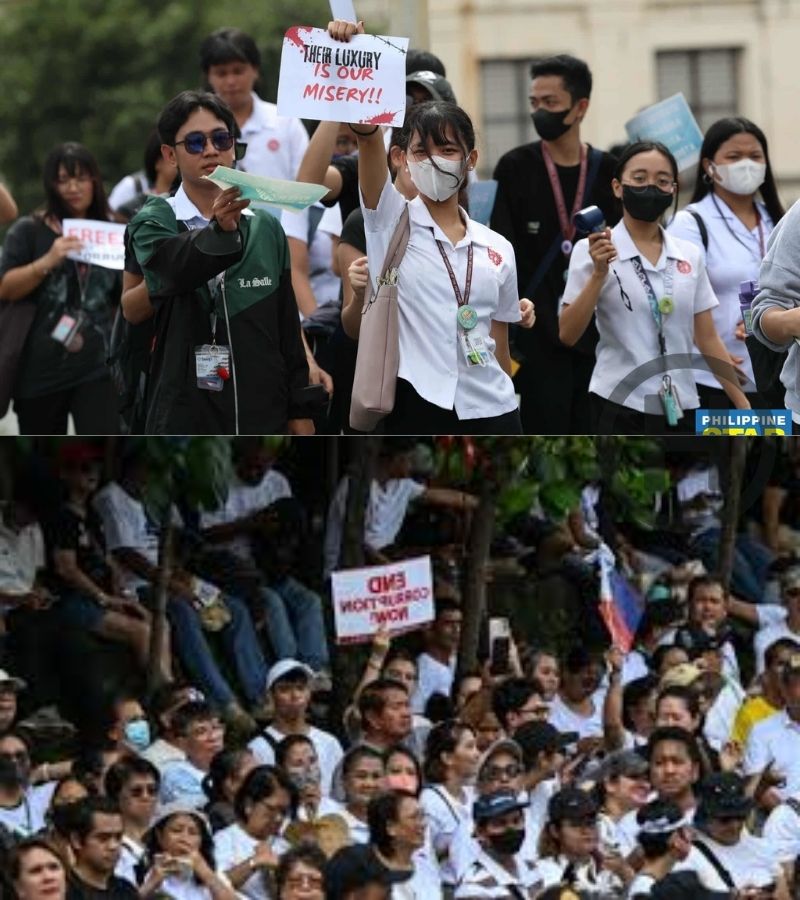
Filipinos’ Concern Over Corruption Hits Record High Amid Infrastructure Scandals (NH)
📈 Filipinos’ Concern Over Corruption Hits Record High Amid Infrastructure Scandals
December 10, 2025
Introduction
In a dramatic shift of public sentiment, concern over government corruption in the Philippines has surged to levels not seen in decades. What once hovered on the periphery of national anxieties — alongside inflation, poverty, and unemployment — has now taken center stage. Recent revelations of massive irregularities in flood-control and infrastructure projects, compounded by widespread media coverage, have ignited waves of public outrage. The mounting distrust is not just among activists or opposition groups — it reflects a broader societal alarm.
This article examines the evolving landscape: newly released survey data, what triggered the spike, regional and demographic patterns, institutional trust, and what this means for governance and the future of public works in the Philippines.
Table of Contents
-
Recent Scandals: What Sparked the Surge
Survey Data: Public Concern in Numbers
Regional & Demographic Breakdown
Public Perception: Flood-Control Scandal and Collusion
Institutional Trust and Trust Deficit: Who Can People Still Believe?
Historical Comparison: Why 2025 Is Different
Social & Political Consequences: Protests, Pressure, Demand for Accountability
Economic Risks: Business, Investment, and Infrastructure Impacts
What Filipinos Are Demanding: Transparency, Reform, Accountability
Conclusion: A Turning Point for Governance or Another Phase of Outrage?
1. Recent Scandals: What Sparked the Surge
The catalyst for public anger — and the surge in concern — has been a wave of high-profile revelations regarding flood-control and infrastructure projects across the country. Multiple reports and ongoing investigations uncovered alleged large-scale anomalies: ghost projects, overpriced contracts, under-performing or substandard works, and suspicious collusion among government officials, contractors, and lawmakers. (TIME)
The fact that these projects—meant to protect communities from floods and disasters—have allegedly resulted in no visible benefits, or worse, continued vulnerability, struck a deep nerve among Filipinos. The sense of betrayal is widespread.
As these developments played out, media outlets, citizen groups, and social-media channels amplified the outrage. Protests and public demonstrations followed, but perhaps more importantly, a shift occurred at the level of personal concern: ordinary citizens began to view corruption not as a distant political issue, but as a personal, urgent problem affecting their safety, livelihoods, and trust in public institutions.
2. Survey Data: Public Concern in Numbers
Recent polling data paints a stark picture of changing priorities among Filipinos:
A survey by OCTA Research carried out in late September 2025 found that 31% of respondents listed corruption among their top three national concerns — a dramatic rise from just 13% in July. This is the first time corruption has entered the top five national issues in OCTA’s quarterly surveys.
Meanwhile, a poll by Social Weather Stations (SWS) focused on Metro Manila and surrounding provinces found that 84% of respondents believe there is “a lot” of corruption in government. This is the highest recorded figure in the survey series since 2000.
Even broader: a national-level survey by Pulse Asia Research Inc. indicated that 97% of Filipinos believe corruption is “widespread.” Only a minuscule fraction — about 0.4% — said corruption is “not widespread.”
These figures reflect a rapid shift: corruption has gone from being a “persistent but tolerated problem” to a top concern, on par with inflation, poverty, and economic stability.
3. Regional & Demographic Breakdown
The surge in concern is nationwide, but intensity varies across regions and socioeconomic groups:
Concern is highest in urban and peri-urban areas. For example, in the National Capital Region and nearby provinces (Mega Manila), SWS recorded 84% acknowledging “a lot” of corruption.
A majority across income classes now express pessimism: many believe corruption has worsened compared to three years ago — indicating widespread disillusionment, not limited to a specific sector.
Though concern is widespread, the forms of perceived corruption vary by locale. In flood-prone regions and provinces heavily affected by infrastructure scandals, distrust toward national-level projects appears strongest.
4. Public Perception: Flood-Control Scandal and Collusion
The flood-control scam — among the most salient scandals in 2025 — has deeply shaped public perceptions:
According to a survey released mid-October 2025, 9 in 10 Filipinos believe there was collusion among government officials, legislators, and private contractors in the misuse of funds for flood-control works.
A majority expressed the view that corruption is not sporadic but systemic and widespread across the public sector.
Public sentiment underscores a loss of trust: many believe that even with investigations and oversight bodies in place, accountability remains uncertain — reflecting years of perceived impunity and failed reforms.
This perception of systemic graft has transformed the scandal from a technical or sector-specific issue into a broader crisis of legitimacy for public institutions.
5. Institutional Trust and Trust Deficit: Who Can People Still Believe?
As corruption concerns rise, trust in institutions has eroded significantly:
The agency most implicated in project anomalies — the Department of Public Works and Highways (DPWH) — saw its public trust rating plummet. According to the same 2025 survey, only 7% of respondents expressed trust in DPWH to address corruption issues; 81% said they had “very little or no trust.”
Legislative and oversight bodies (Senate, House of Representatives) also suffered credibility hits; many Filipinos doubt the effectiveness of investigations meant to hold guilty parties accountable.
Meanwhile, public perception now tends to place more trust in media and civil society organizations than in government institutions — a significant shift documented in the surveys.
The result is a growing “trust deficit”: a broad section of society no longer expects that government alone can guarantee transparency, justice, or effective public service.
6. Historical Comparison: Why 2025 Is Different
Corruption has long been a chronic issue in Philippine politics. Previous administrations saw similar scandals — yet public concern rarely reached the current levels.
Reasons for this shift in 2025 include:
Visibility & Severity: Unlike prior scandals, the flood-control crisis directly impacted ordinary citizens — through overflowing rivers, failed infrastructure, flooded homes — making the impact tangible and personal.
Simultaneous Crises: Economic stress (inflation, rising costs), natural disasters, and pandemic aftermath compounded grievances. Corruption was no longer abstract — it became a root cause of suffering.
Media and Civil-Society Amplification: Investigative journalism, social media, and grassroots activism have spotlighted issues, making it harder for officials to hide behind bureaucracy.
Demographic Shift: Younger Filipinos, more digitally connected and attuned to social issues, are more likely to demand accountability — changing the tone and pressure on governance.
7. Social & Political Consequences: Protests, Pressure, Demand for Accountability
The surge in public concern has already translated into visible social and political pressure:
Nationwide protests, rallies, and calls for accountability — many triggered by flood-control scandal revelations.
Civil-society groups, youth organizations, and even religious sectors have joined the clamor for transparency and reform — indicating a broad base of anger and resolve.
For the first time in a long while, anti-corruption and good-governance demand competes with traditional economic issues (like inflation or jobs) as a top public priority.
Politically, this could pressure lawmakers and the executive branch to deliver concrete actions: resignations, prosecutions, audits, reforms — or risk further public backlash.
8. Economic Risks: Business, Investment, and Infrastructure Impacts
The growing distrust does not affect just politics — the economy feels the ripple too:
Investors and businesses are increasingly wary of involvement in public-private infrastructure projects, given the risk of corruption and regulatory uncertainty. Some foreign investors and international business chambers have reportedly flagged the recent scandals as a deterrent for investment.
Infrastructure development — essential for economic growth, disaster resilience, and climate adaptation — faces delays and skepticism. Public support now demands stricter oversight, transparency, and accountability, raising the bar for future projects.
At the same time, renewed public pressure may force reforms: stronger procurement rules, better auditing, improved transparency — which, if implemented well, could eventually restore confidence and attract credible investors.
Thus, the cost of corruption is not just fiscal theft — it’s lost opportunities, stalled development, and prolonged vulnerability.
9. What Filipinos Are Demanding: Transparency, Reform, Accountability

Based on surveys and public discourse, the key demands emerging from the public are:
Full disclosure of infrastructure budgets, contracts, project details, and audit reports.
Recovery of mis-used or diverted funds; restitution of losses to public treasury.
Legal accountability — prosecution and punishment of corrupt officials, contractors, and colluding lawmakers.
Institutional reform — stronger oversight, transparent procurement processes, independent auditing, and citizen-monitoring mechanisms.
Ensuring integrity in future public works — no more ghost projects, substandard works, or kickback-ridden contracts.
In short: ordinary Filipinos are no longer asking just for improvements in wages or inflation control — they are demanding a clean, honest, transparent government.
10. Conclusion: A Turning Point for Governance or Another Phase of Outrage?
The surge in public concern over corruption in 2025 — fueled by massive infrastructure scandals, flood-control failures, and widespread distrust — feels like a watershed moment. For many Filipinos, this is no longer about partisan politics or fleeting scandals — it is about fundamental governance, public accountability, and national dignity.
Whether this moment becomes a turning point depends on whether institutions respond decisively: through transparent investigations, prosecutions, reforms — and not just symbolic gestures.
If the government and public institutions deliver, this could mark the beginning of a re-defined social contract: one where public funds serve the public, not private interests, and where accountability becomes non-negotiable.
If they fail — the risk is deeper cynicism, institutional breakdown, and a hardened society increasingly disillusioned with governance.
In 2025, Filipinos appear to be saying: “Enough is enough.” What follows — reform or relapse — remains to be seen.
Philstar
arabnews.com
TIME
Gulf News
Asia Media Center