Flight Risk or Family Vacation? The Truth Behind the Controversial ‘World Tour’ Halt Order Against a High-Profile Political Scion

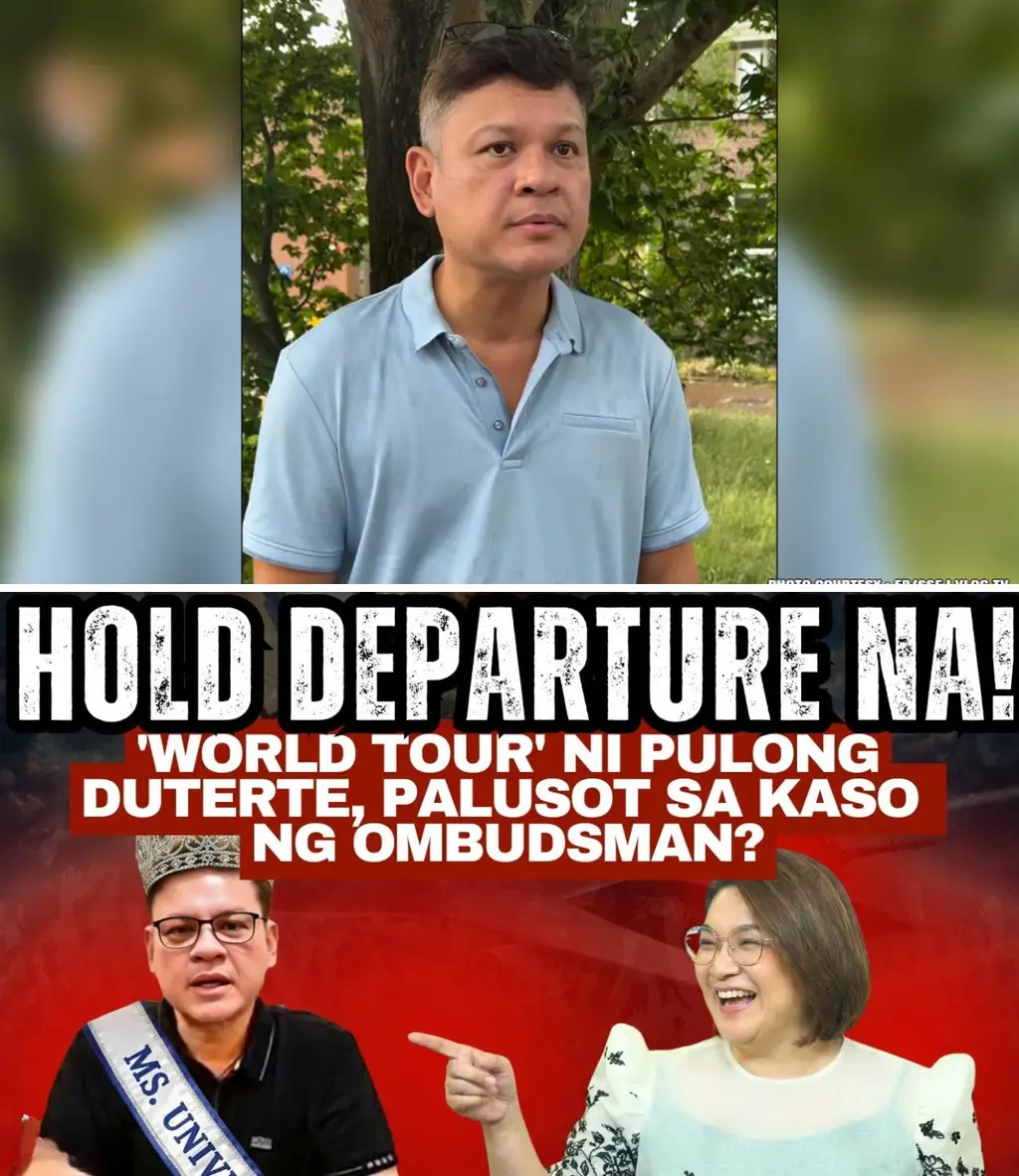
In a political landscape often defined by dramatic twists and turns, the latest chapter involving Representative Paolo “Pulong” Duterte has ignited a firestorm of speculation and public scrutiny. The former presidential son finds himself at the center of a heated debate, not for a new piece of legislation, but for a travel itinerary that reads like a billionaire’s bucket list. His request to visit 17 countries over a span of two months has raised more than just eyebrows—it has raised serious questions about accountability, legal evasion, and the integrity of the justice system. The timing could not be more precarious. With the Office of the Ombudsman tightening its grip on investigations regarding alleged anomalies in Davao City’s infrastructure projects, the proposed “World Tour” is being viewed by critics not as a leisurely escape, but as a potential flight from justice. The narrative shifting from a simple vacation to a high-stakes legal standoff has captivated the public, leaving many to wonder whether this is a legitimate break for a public servant or a calculated exit strategy.
The details of the travel request are staggering, spanning multiple continents and including destinations known for their luxury and exclusivity. For a sitting congressman, being away from his constituency for over two months is already a point of contention, but the context makes it explosive. Reports indicate that the travel period coincides with crucial phases of ongoing investigations, leading critics to argue that a public official facing such serious allegations should prioritize clearing their name over international leisure. The sheer scale of the trip—17 nations—suggests a complexity that goes beyond a simple family holiday and implies a level of movement that would make tracking and recalling an individual difficult, should the need arise. This “jet-setter” lifestyle stands in stark contrast to the issues plaguing his district, particularly the concerns over flood control projects that are currently under the microscope. The juxtaposition of a congressman touring Europe while his constituents deal with the aftermath of infrastructure failures has fueled public outrage and demands for a Hold Departure Order.
At the heart of the controversy is the concept of “flight risk,” which refers to the likelihood that a defendant or person of interest will leave the country to avoid prosecution. The prosecution and critics alike are pointing to the “World Tour” as a classic red flag. The investigation involves staggering amounts of public funds—specifically, billions of pesos allocated for flood control and other infrastructure projects in the First District of Davao City. Allegations suggest that these funds may have been mishandled, leading to the substandard output that has left the city vulnerable to flooding. With such high stakes, the fear is that if allowed to leave, Pulong might not return, effectively stalling the wheels of justice. The recent freezing of assets belonging to Congressman Eric Yap, a known close ally of Duterte, has added fuel to the fire. It signals that the administration is closing in on financial irregularities, and many believe this pressure is the true catalyst for the sudden urge to travel. The theory is simple: secure the assets, secure the person, or perhaps, secure a safe haven abroad.
One of the most damning criticisms comes from the perspective of public service duty. As an elected official, a congressman’s primary responsibility is to his constituents, and being absent for a quarter of the year raises questions about representation. Commentators have pointed out the lackluster legislative performance attributed to the Representative, noting that the few bills authored seem disconnected from the immediate needs of his district. Instead of focusing on local development, some of the proposed measures appear to be politically motivated jabs at current administration figures. This perceived neglect, coupled with the request for an extended leave, paints a picture of a public servant who is arguably out of touch with his mandate. The argument is that public office is a public trust, and when that trust is under investigation, the official has a moral, if not legal, obligation to remain present and transparent. Attempting to leave the country for an extended period is seen by many as a dereliction of that duty.
On the other side of the coin, the defense argues for the constitutional right to travel. They maintain that until a court issues a specific Hold Departure Order or until a warrant is actively served, a citizen—regardless of their status—is free to leave the country. They frame the “World Tour” as a much-needed respite for the family, a private matter that is being politicized by opponents. Supporters dismiss the “flight risk” narrative as fear-mongering, arguing that the Duterte family has deep roots in the Philippines and that abandoning their political stronghold is unlikely. They emphasize that previous travel requests were honored and that the Representative has always returned. However, legal experts note that the context has changed. The investigations are no longer just rumors; they are active, with asset freezes and tangible legal motions in play.
This travel controversy is not happening in a vacuum; it is a symptom of the fracturing political landscape in the Philippines. The shifting alliances between the current administration and the Duterte clan have turned every move into a political statement. The strict scrutiny of Pulong’s travel is seen by some as a power play—a way for the current administration to assert dominance and show that the “untouchables” of the previous era are now subject to the same laws as everyone else. It sends a powerful message that political influence has an expiration date, and accountability will eventually come knocking. For the Duterte family, this is a test of resilience. If the travel is blocked, it is a significant blow to their perceived invincibility. If he is allowed to leave and does not return, it confirms the worst fears of the public and stains their legacy permanently.
As the decision on the travel clearance hangs in the balance, the nation watches with bated breath, knowing the outcome will set a precedent. Will the justice system prioritize the potential risk of evasion, or will it uphold the right to travel despite the clouds of suspicion? The “World Tour” has become a symbol of the tension between privilege and accountability. It is a storyline filled with intrigue, money, and power. Whether Pulong Duterte boards that plane or remains to face the Ombudsman is a question that carries weight far beyond a simple vacation. It is a question of whether justice in the Philippines can truly hold the powerful to account. For now, the suitcases may be packed, but the departure gates remain uncertain. The public remains vigilant, knowing that in the game of political survival, the next move could change everything.