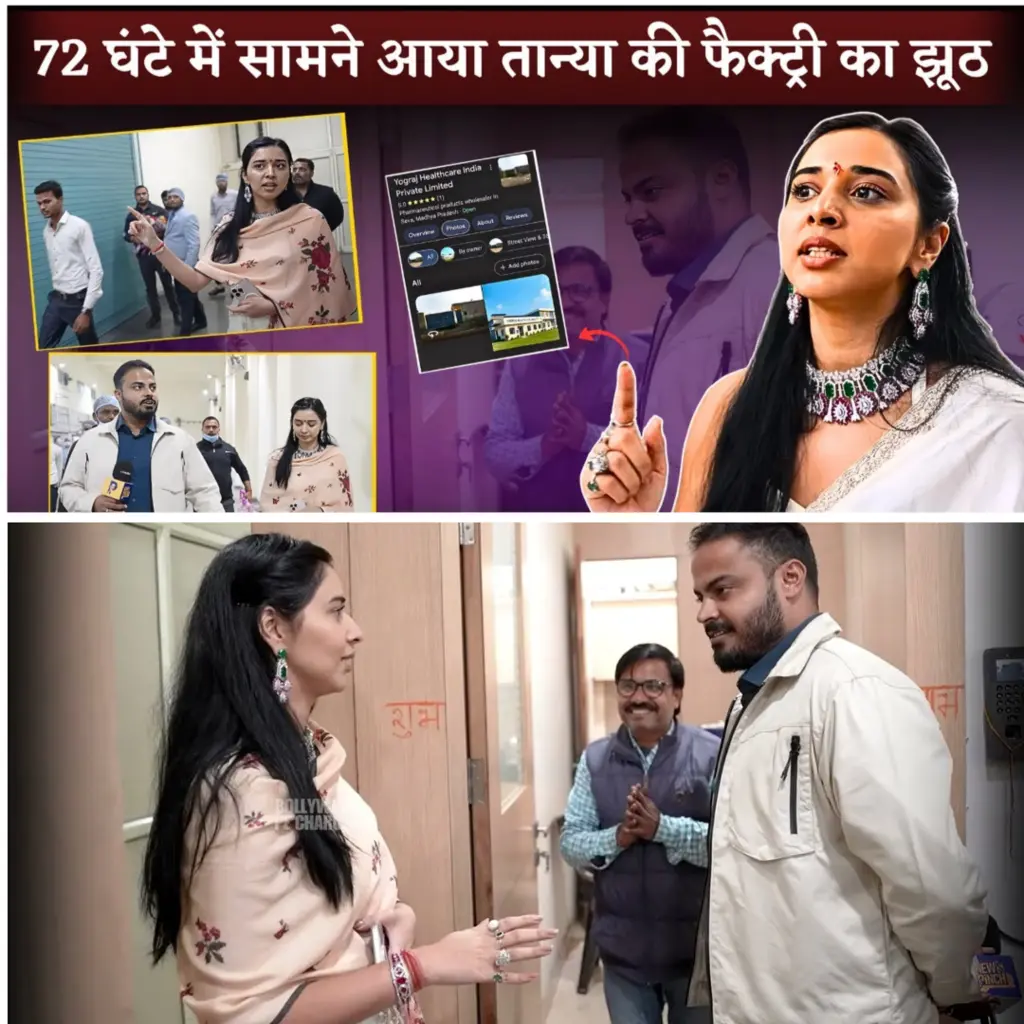
Tanya Mittal’s Stylist Breaks Silence: The Real Truth Behind Her Designer Saree Payments
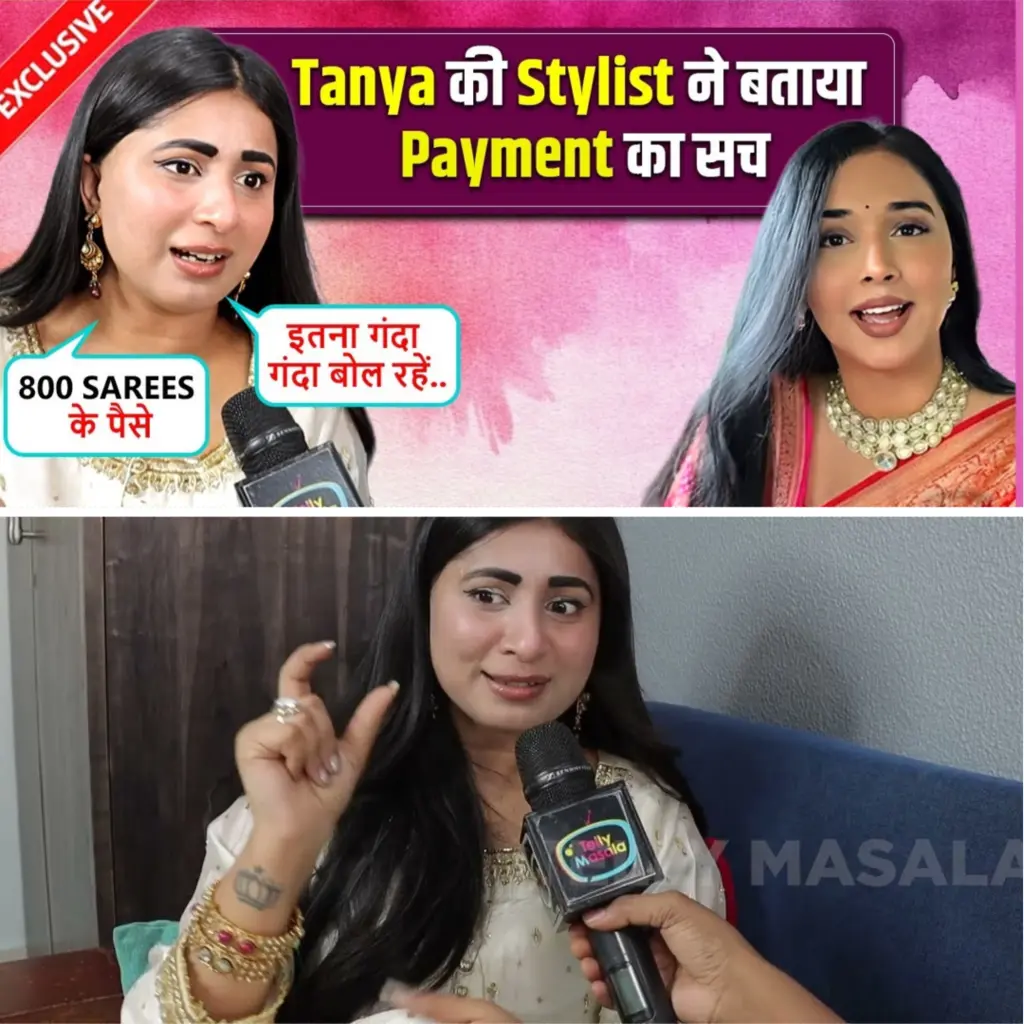
When whispers began circulating about Tanya Mittal’s designer sarees and unpaid dues, the narrative quickly took on a familiar tone. Glamour questioned. Success scrutinized. And assumptions made long before facts emerged. But this time, the silence did not last long. Tanya Mittal’s stylist, Riddhima, finally spoke up and what she revealed added an unexpected layer to a story many thought they already understood.
Designer sarees are not just outfits in the world of television and reality stars. They are statements. Carefully chosen extensions of personality, image, and ambition. During Tanya’s Bigg Boss journey and subsequent appearances, her sarees drew admiration. Elegant. Confident. Distinctive. But behind that elegance, murmurs began to surface. Claims suggesting delayed or unsettled payments quietly made their way into gossip circles, threatening to overshadow the work itself.
Riddhima’s decision to address the issue publicly was not impulsive. As someone who worked closely with Tanya, she had watched speculation grow louder while the truth remained unheard. According to her, the narrative circulating online had drifted far from reality. What many perceived as negligence or entitlement, she described as a misunderstanding shaped by incomplete information.
She revealed that Tanya’s designer collaborations were never casual transactions. Each outfit involved clear communication, agreed terms, and mutual understanding between teams. Payments, she stated, were structured, documented, and aligned with industry norms. In some cases, timelines differed not due to refusal, but due to coordination between brands, designers, and management. A common practice in an industry where appearances are planned months in advance.
What made Riddhima’s words stand out was her tone. It was not defensive. It was clarifying. She did not deny delays where they existed, but she emphasized intent. According to her, Tanya never dismissed her responsibilities. On the contrary, she remained conscious of the value of creative labor. The portrayal of her as someone exploiting designers, Riddhima insisted, was both unfair and damaging.
The stylist also addressed a crucial detail often ignored in public debates. Many designer outfits worn by celebrities are part of collaborative agreements. Some are paid placements. Some are brand associations. Others are long term partnerships that function differently from one time purchases. Without understanding these distinctions, she argued, it becomes easy to label complexity as controversy.
For Tanya, this situation arrived at a sensitive time. Post reality show visibility is fragile. Every action is magnified. Every rumor feels louder. And every accusation carries disproportionate weight. Riddhima hinted that this scrutiny had emotional consequences. Not dramatic, but real. The pressure of having one’s integrity questioned publicly can quietly erode confidence, especially when the facts remain partial.
What also emerged from Riddhima’s statement was loyalty. She did not speak as a detached professional, but as someone who had observed Tanya’s work ethic up close. Long hours. Rehearsals. Fittings. Revisions. Payments discussed, not avoided. In her words, Tanya was not careless with credit or compensation. She was navigating an ecosystem where processes are rarely linear.
The internet, however, prefers clarity over nuance. A simple accusation travels faster than a detailed explanation. And once an image is planted, it becomes difficult to uproot. Riddhima seemed aware of this reality. Her decision to speak was less about winning an argument and more about restoring balance to a conversation that had tilted too far in one direction.
This moment also exposed a broader issue within the fashion and entertainment industry. The blurred lines between gifting, collaborations, and payments often lead to public confusion. Designers hesitate to speak. Celebrities hesitate to clarify. And in that silence, narratives form on their own. Riddhima’s intervention broke that cycle, at least partially.
For Tanya Mittal, the revelation shifted the lens. From accusation to context. From judgment to understanding. It reminded audiences that visibility does not equal simplicity. That behind every glamorous appearance lies negotiation, trust, and coordination rarely seen by the public eye.
The story, however, does not end with clarification alone. Questions still linger. Not about guilt, but about transparency. About how much celebrities owe the public in explaining professional arrangements. And about how quickly admiration can turn into doubt in a culture that thrives on exposure.
In the next part, we will look deeper into why payment controversies surface so often around rising stars, how stylists and designers navigate power imbalances, and what this moment reveals about the fragile relationship between image and trust in the entertainment industry.
As Riddhima’s clarification began circulating, the conversation slowly moved beyond Tanya Mittal herself and toward a larger, more uncomfortable truth about the industry. Payment controversies rarely emerge in isolation. They surface at the intersection of ambition, visibility, and imbalance. And rising stars are often the most vulnerable at that intersection.
In fashion and entertainment, power is fluid. Today’s newcomer can be tomorrow’s headline. Designers, stylists, and brands often enter collaborations with expectations shaped by potential rather than certainty. When a celebrity is still establishing footing, agreements tend to be flexible, sometimes deliberately so. That flexibility can later become the source of confusion, especially when public perception steps in.
Riddhima pointed out that many of the outfits Tanya wore were never simple buyer seller transactions. They were part of negotiated arrangements where exposure, association, and future collaboration played a role. In such cases, timelines and responsibilities are rarely as straightforward as the public assumes. Payments may pass through agencies. Clearances may depend on brand approvals. Delays can occur without any intent to default.
The problem, she suggested, arises when these internal processes collide with external judgment. Once a rumor takes shape, it is often stripped of context. A delayed payment becomes a refusal. A pending clearance becomes exploitation. And a professional misunderstanding turns into a character flaw. For a young celebrity, that shift can be devastating.
What makes this dynamic particularly fragile is the silence that usually surrounds it. Designers often feel pressured not to speak openly, fearing loss of future work or access. Celebrities, on the other hand, hesitate to explain themselves publicly, knowing that partial disclosure can invite further scrutiny. This mutual hesitation creates a vacuum. And in that vacuum, speculation thrives.
Riddhima’s intervention was notable because it disrupted that pattern. She acknowledged imperfections without assigning blame. She did not claim the system worked flawlessly. Instead, she highlighted how easily complexity is mistaken for wrongdoing. Her words reflected an understanding that professional ecosystems are rarely clean or linear, especially at transitional stages of a career.
For Tanya Mittal, the timing of this controversy mattered. Fresh out of a high visibility reality show, she was still redefining her public identity. At such moments, perception can outweigh fact. A single negative narrative can overshadow months of disciplined work. Riddhima hinted that this was not just about money, but about credibility. About whether Tanya would be seen as respectful of creative labor or dismissive of it.
The stylist also touched upon emotional labor, a factor often ignored in these debates. For designers and stylists, creating for a public figure is not merely transactional. It involves trust. When that trust feels threatened by online narratives, it creates resentment even when facts are unresolved. Addressing misunderstandings early, Riddhima suggested, is essential to preserving professional relationships.
This episode also revealed how quickly audiences adopt moral positions. In a digital culture driven by outrage cycles, neutrality is rare. People choose sides before understanding structure. Riddhima’s statement challenged that instinct. She asked viewers, implicitly, to pause. To recognize that not every allegation carries intent. That not every delay carries disrespect.
There is also a generational element at play. Newer celebrities often enter the industry without the buffers that established stars possess. They rely heavily on teams, managers, and intermediaries. When something goes wrong, accountability becomes diffused. Blame, however, tends to concentrate on the most visible face. Tanya, in this case, became the focal point of a system larger than her individual control.
The public response to Riddhima’s clarification was telling. While some skepticism remained, there was also a noticeable softening. People began asking different questions. Not “did she pay,” but “how do these collaborations actually work.” That shift matters. It indicates a growing awareness that glamour does not eliminate complexity.
Still, clarification does not erase damage entirely. Even corrected narratives leave traces. Trust, once questioned, takes time to rebuild. Riddhima seemed aware of this. Her goal was not to claim victory, but to restore fairness. To ensure that Tanya’s name was not permanently tied to an assumption formed without full context.
This moment may also influence how Tanya approaches future collaborations. Greater transparency. Firmer documentation. Clearer communication. Not because she was at fault, but because visibility demands caution. Rising stars often learn these lessons publicly, through moments they would rather avoid.
As the discussion settles, what remains is a broader reflection. The entertainment industry thrives on appearances, but it functions through negotiation. When those negotiations become public without explanation, reputations are the first casualty. Riddhima’s voice served as a reminder that behind every accusation lies a process rarely understood by outsiders.
In the final part, we will explore what this episode means for Tanya Mittal’s evolving image, how public trust can be rebuilt after controversy, and whether moments like these ultimately strengthen or strain a rising celebrity’s journey.
As the noise around the designer saree payments slowly settled, what remained was not outrage, but reflection. Riddhima’s revelation did not erase the controversy overnight, yet it reframed it in a way that made space for understanding rather than judgment. And in that shift, Tanya Mittal’s image began to evolve quietly.
This episode became less about money and more about maturity. About how a rising public figure responds when integrity is questioned. Tanya did not rush to defend herself publicly. She allowed her work and her professional relationships to speak in time. That restraint, while risky, also signaled confidence. Confidence that truth does not always need immediate amplification.
Public trust, once shaken, is rarely rebuilt through statements alone. It is restored through consistency. Through future conduct that aligns with values being defended. For Tanya, this means greater clarity in collaborations, visible respect for creative partnerships, and perhaps a more structured approach to how professional arrangements are perceived from the outside.
Riddhima’s role in this moment cannot be understated. By stepping forward, she absorbed some of the pressure that would have otherwise fallen solely on Tanya. But more importantly, she humanized the situation. She reminded audiences that misunderstandings often arise not from malice, but from systems that operate behind closed doors. Her voice added nuance to a narrative that had become too simplified.
The fashion and entertainment industries are built on visibility, yet governed by informal structures. This contradiction creates fertile ground for controversy. When things work smoothly, no one notices the process. When they do not, the lack of transparency becomes glaring. Tanya’s situation highlighted this imbalance, especially for those still navigating their early years of prominence.
What also became evident was the audience’s growing discernment. While initial reactions leaned toward suspicion, many viewers adjusted their stance once context emerged. This willingness to reconsider reflects a maturing public consciousness. People are beginning to understand that influence does not negate complexity, and that rising stars are often learning in real time.
For Tanya Mittal, this moment may ultimately serve as a checkpoint rather than a setback. A reminder that every step forward brings new scrutiny. That professionalism must extend beyond performance into perception. And that silence, while dignified, must sometimes be balanced with timely clarity to prevent narratives from hardening.
There is also a broader lesson here for the industry itself. Clearer communication. Better documentation. Defined expectations. These are not just administrative necessities, but safeguards for trust. When ambiguity exists, it rarely favors the less powerful party. In this case, a young celebrity bore the weight of assumptions shaped by incomplete visibility.
As time passes, this controversy will likely fade, replaced by new stories and new faces. But its imprint may remain in subtle ways. In how Tanya chooses her collaborations. In how her team structures agreements. In how quickly she addresses misunderstandings going forward. Growth often emerges from moments of discomfort, not applause.
The idea of “truth” in public discourse is rarely absolute. It is shaped by access, timing, and voice. Riddhima’s revelation did not claim perfection. It claimed fairness. And fairness, in an environment driven by extremes, is often the hardest thing to defend.
What ultimately strengthened Tanya’s position was not denial, but alignment. Her stylist’s account matched her on screen persona. Calm. Considerate. Measured. That consistency matters. Audiences may forgive mistakes, but they rarely forgive hypocrisy. In this case, the narrative of intent aligned with observed behavior.
As Tanya Mittal moves forward, she does so with a clearer understanding of visibility’s cost. Fame amplifies not only success, but scrutiny. Navigating that duality requires not just talent, but systems of support and self awareness. This episode, while challenging, may have equipped her with both.
In the end, the story did not expose exploitation or entitlement. It exposed misunderstanding. And sometimes, clearing a misunderstanding is more powerful than denying an accusation. It invites conversation rather than conflict. Reflection rather than reaction.
Tanya Mittal’s journey remains in motion. This chapter, though uncomfortable, added depth rather than damage. It reminded audiences that behind every glamorous image is a network of negotiations, intentions, and human error. And that truth, when allowed to surface with patience, often carries more weight than noise.
What began as a controversy ended as a lesson. Not just for Tanya, but for an industry and an audience learning, slowly, to look beyond appearances.