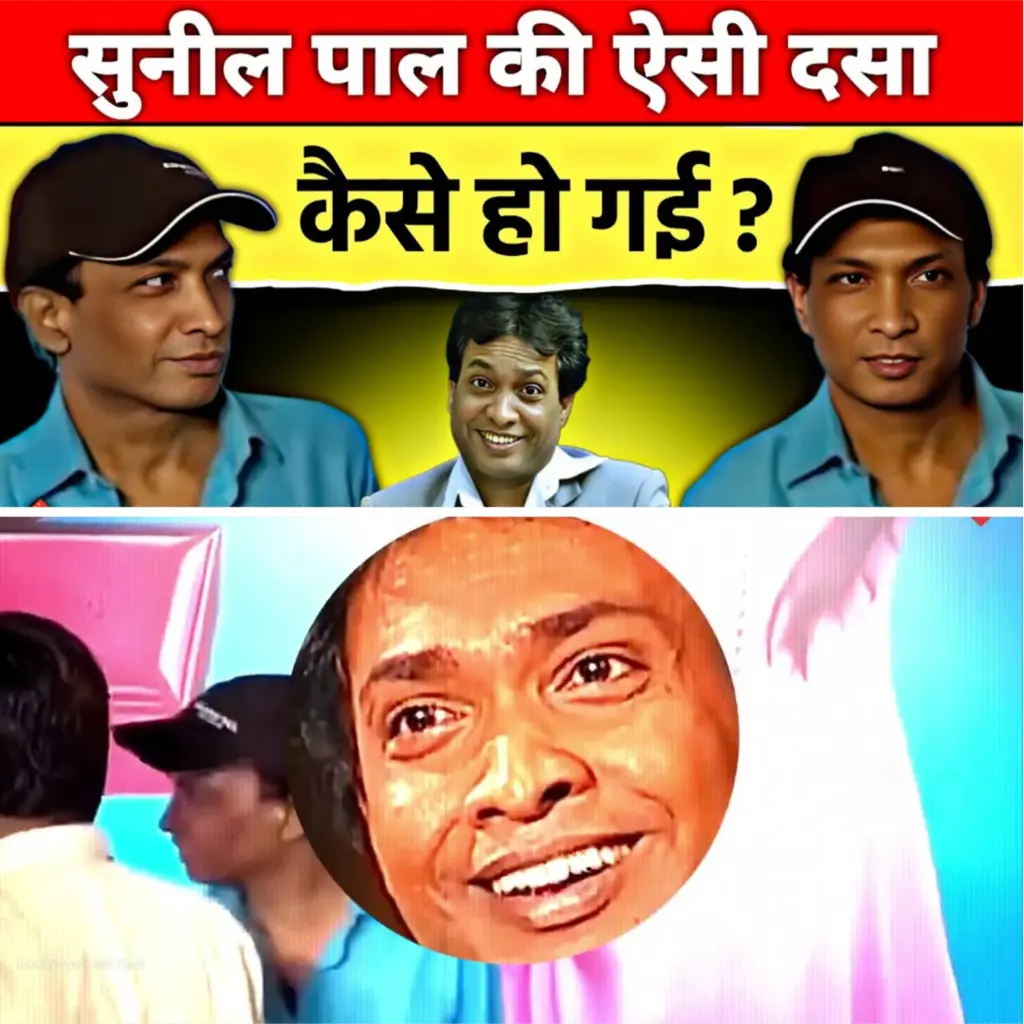
From Laughter to Tears: The Tragic Downfall of Sunil Pal Who Once Ruled India’s Comedy Stage
There was a time when Sunil Pal’s name alone was enough to make an entire room erupt in laughter. Television screens flickered with his expressions, his voice, his unmistakable comic rhythm. In middle class homes across India, families paused their worries for a few minutes just to watch him perform. For millions, Sunil Pal was not just a comedian. He was relief. He was escape. He was proof that laughter could rise from the harshest realities.
Sunil Pal’s journey did not begin under bright lights or glamorous banners. It began in hardship. Born into a modest family, he saw struggle early in life, the kind that teaches you resilience before it teaches you dreams. Comedy was not a luxury for him. It was survival. While others saw jokes, Sunil saw a way out. Every mimicry, every punchline carried the weight of hope, the belief that one day his voice would be heard beyond narrow lanes and small stages.
That belief paid off when he stepped into the national spotlight. Winning The Great Indian Laughter Challenge changed everything overnight. The applause was thunderous. The recognition was instant. He became the face of a new wave of comedy, raw, relatable, and rooted in the lives of ordinary people. Audiences connected because they saw themselves in him. His humor did not come from arrogance, but from pain transformed into laughter.
Offers followed success, but not in the way people imagine. While fame gave him visibility, stability remained fragile. Comedy, unlike other art forms, is unforgiving. One moment you are loved, the next moment you are replaced by a newer face, a louder joke, a trend that shifts without warning. Sunil Pal worked relentlessly, appearing in shows, films, and live performances, trying to hold onto the momentum that once felt unstoppable.
Behind the scenes, however, cracks began to form. The industry celebrated him, but it did not protect him. Roles were inconsistent. Payments were uncertain. Respect was conditional. For a man who had climbed from nothing, the fear of slipping back was constant. And yet, on stage, he smiled. He delivered laughter with the same sincerity, hiding exhaustion behind perfect timing.
Bollywood, often seen as a dream factory, can also be a place of quiet cruelty. For comedians, the space is even narrower. Leading roles are rare, and comic actors are often reduced to moments rather than stories. Sunil Pal found himself struggling to transition from stage fame to lasting cinematic relevance. The applause grew shorter. The phone rang less often. Silence slowly replaced noise.
What made the fall more painful was memory. Fans remembered him as the man who made them laugh during difficult times. But memory alone does not pay bills or heal loneliness. As newer comedians emerged, social media stars rose overnight, and humor evolved into faster, sharper formats, Sunil Pal was left fighting to stay visible in a world that had already moved on.
Emotional pressure began to mount. When a person’s identity is built on making others happy, their own sadness becomes invisible. Sunil Pal carried expectations that were never spoken aloud. Be funny. Be grateful. Do not complain. Do not show weakness. But comedians are human before they are entertainers, and humans eventually break.
There came moments when Sunil Pal spoke openly about his pain, shocking fans who had only seen his smiling face. The man who once controlled laughter now struggled to control tears. His words revealed a truth rarely discussed in the entertainment industry. Success does not guarantee security. Fame does not guarantee dignity. Applause does not guarantee peace.
The public reaction was mixed. Some felt sympathy. Others questioned his choices. Few understood the emotional cost of being forgotten. In a country where stars are celebrated intensely and discarded just as quickly, Sunil Pal’s story became a mirror reflecting a harsh reality. Talent alone is not enough. Timing, support, and sustainability matter just as much.
As Sunil Pal faced emotional and professional decline, one thing remained unchanged. His love for comedy. Even in pain, he spoke about laughter as something sacred. Something healing. Something worth fighting for. But love, when unreciprocated, can hurt deeply. The industry that once embraced him now felt distant, almost unfamiliar.
This is not just the story of one comedian. It is the story of countless artists who rise from nothing, shine briefly, and then fade quietly. Sunil Pal’s downfall forces uncomfortable questions. How do we treat entertainers once they stop entertaining us? Why do we celebrate their success but ignore their struggles? And why does laughter often come at the cost of the person creating it?
In the next part of this story, we will look deeper into the moments that pushed Sunil Pal to the edge. The personal losses, the industry politics, and the emotional toll that turned a nation’s laughter into silent tears. Because behind every joke, there is a story. And behind Sunil Pal’s smile, there was a pain the world chose not to see.
As the noise around Sunil Pal slowly faded, the silence became louder than any applause he had ever received. Invitations stopped coming with the same urgency. Shows that once promised visibility now offered uncertainty. The industry did not shut its doors suddenly. It simply stopped opening them. For someone whose life revolved around stages, microphones, and laughter, this quiet rejection cut deeper than public criticism ever could.
Financial instability soon followed emotional decline. Comedy is often mistaken for easy money, but behind the smiles lies a fragile income structure. Without consistent work, even a nationally recognized name can struggle. Sunil Pal spoke about unpaid dues, cancelled commitments, and the growing anxiety of survival. The pressure of maintaining dignity while fighting insecurity became overwhelming. Success had given him fame, but not a safety net.
What hurt most was the loss of respect. In an industry driven by relevance, yesterday’s star can quickly become today’s afterthought. Sunil Pal found himself excluded from conversations he once led. Meetings happened without him. Decisions were made in rooms he was no longer invited into. The man who once defined a generation of comedy was now watching from the sidelines, invisible in plain sight.
Mental health became an unspoken battle. Depression does not always arrive loudly. Sometimes it enters quietly, disguised as exhaustion, self doubt, and numbness. For Sunil Pal, the burden of expectation collided with the reality of neglect. He felt responsible for his family, for his legacy, and for the audience that still remembered him. But responsibility without opportunity turns into despair.
In moments of vulnerability, Sunil Pal revealed how deeply isolation affected him. Friends drifted away. Industry relationships weakened. Calls went unanswered. The laughter he once shared with colleagues now existed only in memory. For a comedian, loneliness is especially cruel. When your job is to connect with people, disconnection feels like a personal failure, even when it is not.
The rise of digital platforms changed comedy forever. New creators emerged daily, armed with viral clips and instant fame. Audiences adapted quickly. Attention spans shortened. The market demanded constant reinvention. Sunil Pal, rooted in stage performance and traditional formats, struggled to find his place in this fast moving landscape. Talent remained, but the system no longer waited.
Public perception added another layer of pain. Some viewers assumed he had disappeared by choice. Others believed he had mismanaged his career. Few understood the structural challenges comedians face after their initial breakthrough. Sunil Pal’s honesty about his struggles was met with both empathy and judgment, proving how uncomfortable society is with fallen heroes.
There were moments when his emotional distress became public, leaving fans shocked and concerned. The man who once represented joy now embodied vulnerability. Tears replaced punchlines. Silence replaced laughter. These moments were not signs of weakness, but of a human being pushed beyond endurance. Yet, in a world obsessed with strength, vulnerability is often misunderstood.
Despite everything, Sunil Pal did not abandon comedy. He spoke about it as a lifeline, a form of therapy that kept him breathing during his darkest days. Even when stages were smaller and audiences thinner, he continued to perform. Not for fame, but for survival. Not for applause, but for meaning.
His story exposed the harsh truth of the entertainment industry. Recognition is temporary. Loyalty is rare. Support systems are weak. Artists are celebrated for what they give, not for who they are. When they can no longer deliver constant success, they are quietly replaced. Sunil Pal’s downfall was not the result of a single failure, but of a system that offers little compassion.
As the emotional weight grew heavier, Sunil Pal reached a breaking point that would soon become impossible to ignore. What followed was a moment that forced the public to pay attention again, not through laughter, but through concern. In the final part of this story, we will explore that turning point. The aftermath, the lessons, and whether redemption is still possible for a man who once made an entire nation laugh.
The breaking point did not arrive with a scandal or a headline grabbing controversy. It came quietly, through exhaustion, frustration, and a deep sense of being forgotten. When Sunil Pal finally spoke out, his words carried years of suppressed pain. The nation that once laughed with him now listened in stunned silence. The smile that had defined his identity cracked, revealing a truth many entertainers are never allowed to show.
Public attention returned, but this time it was different. There were no punchlines, no comic timing, no rehearsed expressions. There was only honesty. Sunil Pal’s emotional moments reminded audiences that behind every comedian is a human being absorbing pressure that rarely shows on stage. Sympathy poured in from fans who remembered the comfort his comedy once brought into their lives. But sympathy, while warm, could not erase years of neglect.
The industry response was cautious. Some colleagues expressed support. Others remained silent. In a system built on relevance and revenue, compassion often arrives late. Sunil Pal’s situation sparked conversations about mental health, financial security, and the lack of long term support for artists, especially comedians. For a brief moment, his pain forced uncomfortable truths into the spotlight.
What followed was not a dramatic comeback, but a slow attempt at healing. Sunil Pal began focusing on smaller projects, regional shows, and personal appearances. The stages were humbler, but the connection felt real again. Without the burden of massive expectations, he rediscovered why he fell in love with comedy in the first place. Not for fame, but for connection.
Redemption, however, is not always measured by success. Sometimes it is measured by survival. By choosing to continue despite disappointment. By refusing to let bitterness replace passion. Sunil Pal’s journey shifted from chasing applause to protecting his peace. He spoke about the importance of mental health, urging others in the industry to seek help before reaching breaking points.
His story left behind powerful lessons. Fame is temporary. Applause is conditional. The entertainment world moves fast, often without looking back. Artists must build lives beyond the stage, identities beyond public approval. Sunil Pal’s downfall was painful, but it also became a warning, a reminder that laughter should never come at the cost of dignity.
For audiences, his story challenges how we consume entertainment. We celebrate performers in their rise, but rarely stand beside them in their fall. We demand constant joy, forgetting that those who create it carry their own burdens. Sunil Pal made millions laugh, but when he cried, only a few truly listened.
Today, Sunil Pal remains a symbol of resilience. Not because he regained the same fame, but because he did not disappear. He continues to perform, to speak, to exist honestly in a world that once ignored him. His journey is unfinished, and perhaps that is its greatest strength. It reminds us that life does not end with a downfall. Sometimes, it simply changes direction.
The man who once ruled the comedy stage may never return to the same spotlight. But his story now carries a different kind of power. A power rooted in truth, vulnerability, and survival. And in that honesty, Sunil Pal has found something deeper than applause. He has found his voice again.