Indresh Upadhyay’s Sudden Wedding with Shipra Sharma: The Full Story Behind the Quick Tie
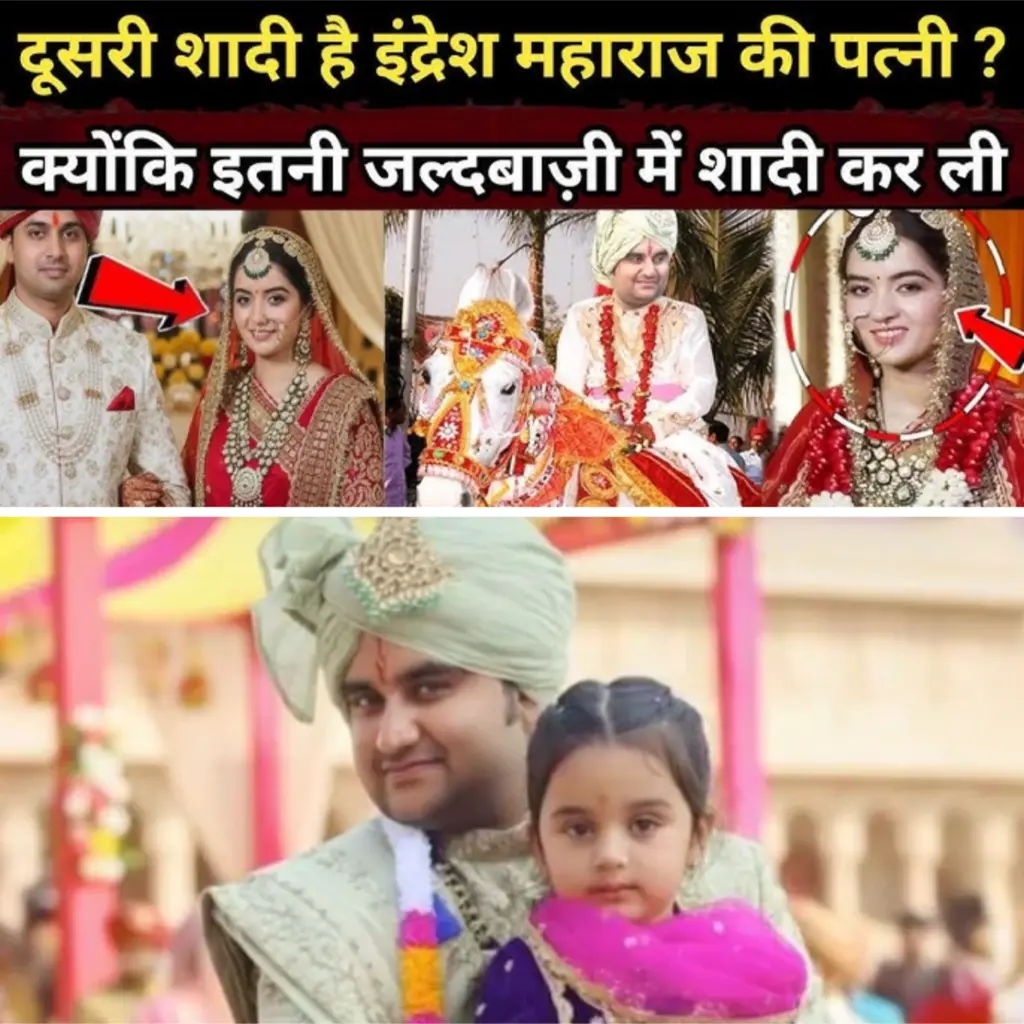
Indresh Upadhyay, the renowned Kathavachak known for his spiritual discourses and devotion to Hindu traditions, recently surprised his followers and the wider public by marrying Shipra Sharma in what many are calling a “sudden” or “quick” wedding. While fans have long admired him for his spiritual guidance and compelling storytelling, this unexpected turn in his personal life created a wave of curiosity, discussions, and speculation across social media. The announcement came as a surprise because the public had only recently become aware of their relationship, and the wedding seemed to take place with remarkable speed, blending traditional rituals with a sense of urgency.
The wedding, held on 5 December 2025, was a grand yet intimate affair, conducted across two sacred cities—Vrindavan and Jaipur. Sources indicate that the couple began their relationship through mutual participation in spiritual events and community activities. While the exact timeline of their acquaintance remains private, insiders describe the bond as deep and spiritually aligned, which ultimately led to the decision to formalize their union. The news of their marriage spread rapidly, with fans expressing a mix of excitement, surprise, and curiosity about what prompted the quick decision.
Preparations for the wedding were conducted discreetly, ensuring that the ceremony remained a personal affair despite the couple’s public profiles. In Vrindavan, the pre-wedding rituals included haldi, mehendi, and intimate bhajan sessions, attended by close family and spiritual disciples. The atmosphere was vibrant yet reverent, blending devotion with celebration. Every detail—from floral arrangements to seating for participants—was carefully planned to honor Hindu traditions, ensuring that the wedding remained spiritually meaningful despite its accelerated timeline. Observers noted that the rituals, though conducted swiftly, did not compromise on tradition, reflecting the couple’s commitment to their faith and cultural heritage.
Shipra Sharma, hailing from a disciplined family with a background in law enforcement—her father being a former DSP—brought a sense of elegance and grace to the ceremony. Her demeanor reflected both excitement and respect for the spiritual significance of the event. Throughout the pre-wedding rituals, she actively participated in the bhajan sessions, engaging with family members and disciples alike. Her integration into the event highlighted a seamless blending of personal and spiritual values, which many guests noted as a distinctive feature of the wedding.
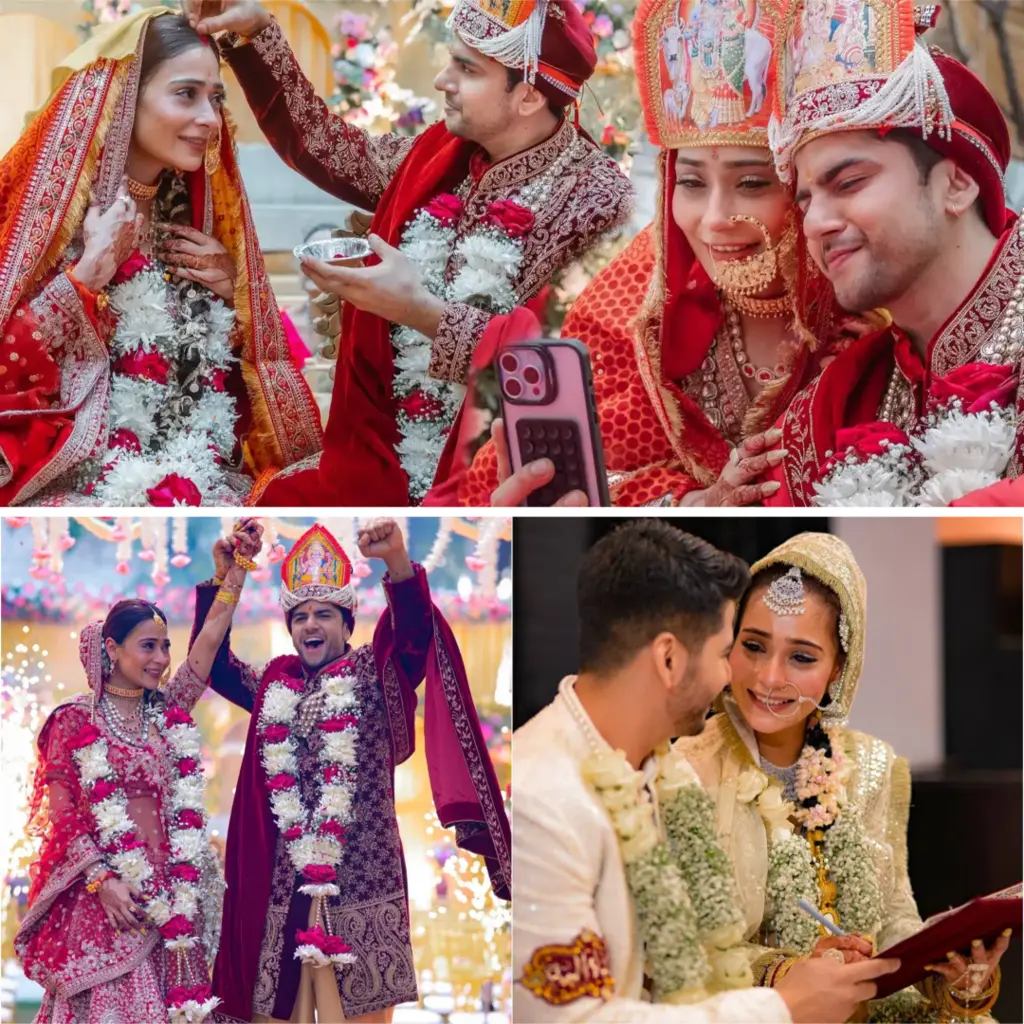
The actual wedding ceremony in Jaipur was conducted with traditional Vedic rites, involving barat processions, ghodi-chadhai (riding a horse for the groom’s arrival), and mangal phere around the sacred fire. The transition from Vrindavan to Jaipur itself required careful logistical planning, given the limited timeframe. Family members and close friends played an integral role in coordinating these details, ensuring that the rituals proceeded smoothly. The ceremony captured both grandeur and intimacy, demonstrating that a wedding can be swift without losing its emotional and cultural depth.
For many followers of Indresh Upadhyay, the “quick” nature of the wedding initially created a sense of intrigue. Social media platforms buzzed with questions: Why did Indresh decide to marry so soon? Was this an arranged decision between families, or a choice made spontaneously? While speculation ran high, insiders clarified that the wedding was neither rushed without consideration nor a spontaneous whim. On the contrary, both families had thoughtfully reviewed the match, ensuring compatibility and alignment of values before moving forward. The perceived speed was largely a result of public visibility and the accelerated timeline from relationship disclosure to marriage announcement.
Family reactions during the wedding added a layer of emotional depth. Close relatives described a mix of joy, relief, and excitement. Safer and immediate arrangements were made to ensure that elders could witness all rituals, participate in blessings, and impart their guidance to the couple. In many moments, laughter intertwined with emotional reflections, as family members shared anecdotes about spiritual lessons, past experiences, and hopes for the couple’s future. Even minor mishaps, like children sneaking sweets or guests adjusting to the fast-moving schedule, became cherished memories that were candidly captured in photographs.
The ceremony was also a unique showcase of spirituality meeting personal celebration. Indresh, known for his articulate discourses on devotion and morality, took time during the rituals to recite shlokas and impart teachings, blending his spiritual persona seamlessly with his role as a groom. Shipra participated actively, echoing chants and offering blessings for the assembled guests. These moments were especially poignant for devotees, who witnessed the convergence of devotion, tradition, and personal happiness in real-time. Several attendees later remarked that the event felt less like a conventional wedding and more like a sacred festival of love and spirituality.
One of the most memorable aspects of the day was the quiet, behind-the-scenes preparation. While public attention often focuses on the ceremonial aspects, much of the effort involved meticulous planning—coordinating guest lists, arranging accommodations, and ensuring rituals adhered to Vedic customs. Despite the compressed timeline, the family demonstrated remarkable organization and respect for every detail, from ceremonial seating to dietary considerations, ensuring that the celebration honored both cultural norms and personal preferences.
Fans were quick to notice and comment on social media, sparking a blend of humor, admiration, and curiosity. Many expressed delight at seeing Indresh, who had been viewed predominantly in his spiritual role, embracing a personal milestone with such authenticity. Posts ranged from congratulatory messages to playful commentary about the “speed” of the wedding. Importantly, the reaction highlighted the public’s fascination not only with the event itself but also with the merging of spirituality, tradition, and modern family dynamics in real life.
The couple’s decision to hold the wedding in two sacred cities reinforced the spiritual significance of the occasion. Vrindavan, known for its association with Krishna, provided a backdrop for devotional rituals, while Jaipur, with its grandeur, offered space for familial gatherings and traditional ceremonies. This dual-city approach allowed the wedding to honor both intimate spiritual practices and larger community involvement, creating a balance that satisfied both personal and public expectations.
Amidst the festivities, several subtle gestures stood out as particularly telling. Handwritten notes of blessing from family elders, carefully chosen attire, and personalized rituals indicated a thoughtful approach to what some perceived as a “quick” wedding. These details suggested that while the timeline may have seemed accelerated from an outsider’s perspective, the couple and their families were deliberate in their planning, seeking to ensure that the marriage was spiritually, culturally, and emotionally complete.
The day concluded with heartfelt exchanges between the bride and groom, family blessings, and a sense of accomplishment among organizers. For many guests, the celebration provided a unique insight into how modern Hindu weddings can integrate devotion, family involvement, and a personal touch without adhering strictly to lengthy or conventional timelines. Indresh and Shipra’s approach demonstrated that thoughtful planning, respect for tradition, and family cohesion can create a meaningful and memorable wedding even under time constraints.
Ultimately, the first part of Indresh Upadhyay and Shipra Sharma’s wedding story underscores a central theme: appearances can be deceiving. While the public may view the wedding as “quick” or “hurried,” the reality reflects deliberate decisions, spiritual alignment, and family support. It is a testament to the couple’s commitment to both their personal bond and the cultural values they hold dear, demonstrating that meaningful celebrations can occur even in compressed timelines when love, respect, and tradition guide the process.
As the wedding celebrations of Indresh Upadhyay and Shipra Sharma unfolded, the initial surprise over the “sudden” nuptials gave way to a more profound appreciation for the care, tradition, and emotional depth behind the event. While the public had perceived the marriage as quick, those present observed an intricate orchestration of rituals, family dynamics, and spiritual observances that reflected meticulous planning. Behind the apparent speed was a sequence of heartfelt moments that underscored the couple’s commitment to each other and their shared spiritual values.
The pre-wedding rituals in Vrindavan provided a glimpse into the more intimate side of the celebration. Early mornings were dedicated to haldi ceremonies, where turmeric paste was applied to both Indresh and Shipra in separate gatherings, a symbolic purification and blessing ritual. Friends, disciples, and family members actively participated, singing bhajans and offering their good wishes. Despite the compressed timeline, the ritual was conducted with care, allowing meaningful interaction between the bride, groom, and close family. Small gestures, such as an elder tying a sacred thread around Indresh’s wrist or a playful interruption from a young cousin, created moments that were tender, humorous, and deeply memorable.
Following the haldi, the mehendi ceremony showcased Shipra Sharma in her vibrant best, adorned with intricate henna designs that symbolized love, prosperity, and fertility. Indresh, though less visually elaborate, participated in light-hearted festivities, engaging with family members, and blessing guests. The mehendi celebrations were a lively mix of devotion and joy, blending song, laughter, and heartfelt interactions. Observers noted that the joy in the room was not diminished by the accelerated schedule; rather, the compressed nature seemed to intensify the emotional resonance, making every moment feel precious.
One of the most remarkable aspects of the wedding was the bhajan and spiritual sessions conducted before the actual ceremony. Indresh, being a Kathavachak, led sessions that combined storytelling with devotional music. Shipra joined in, participating actively and demonstrating her familiarity with the spiritual environment that had shaped Indresh’s life. These sessions were more than just pre-wedding rituals; they symbolized the couple’s shared values, spiritual alignment, and commitment to honoring tradition even amid the excitement of personal celebration. Family members, disciples, and select followers attended these sessions, offering blessings, singing, and sharing in the spiritual experience.
The journey from Vrindavan to Jaipur for the main wedding ceremony added logistical complexity but also a sense of grandeur. The barat procession was conducted with traditional flair, featuring horses, music, and dancing. Close family members escorted Indresh to the venue, ensuring that all rituals proceeded smoothly. Despite the tight schedule, every step adhered to Vedic customs, including the ceremonial ghodi-chadhai, where Indresh arrived on horseback, a symbol of dignity and readiness to begin married life. Photographs and video clips captured both the excitement of the procession and the reverent gestures of family elders, who offered blessings at every stage.
Upon arrival in Jaipur, the wedding ceremony reached its emotional apex with the mangal phere around the sacred fire. Shipra and Indresh, guided by family elders and priests, circled the fire, reciting sacred vows and performing rituals that have been passed down through generations. The intensity of devotion in these moments was palpable; even as photographers and guests observed, the couple remained deeply engaged in their vows, reflecting genuine respect for the spiritual significance of the ceremony. Tears, smiles, and subtle gestures of reassurance between the couple highlighted their emotional connection, revealing layers of intimacy that extended beyond public perception.
Family members played a critical role in these proceedings. Safer and immediate relatives, especially those closest to the couple, were actively involved in ensuring that rituals were performed correctly, blessings were delivered at the appropriate moments, and every participant felt included. Emotional exchanges were frequent—elders offered advice, siblings shared playful banter, and cousins whispered supportive words. Observers noted that these interactions created a balance of formality and warmth, reminding everyone that even in the midst of religious observances, human connection remained at the heart of the celebration.
One of the unique aspects of this wedding was the blending of tradition with subtle modern touches. While all rituals adhered to Vedic customs, the couple also incorporated moments of personal significance—handwritten vows, small blessings exchanged privately, and intimate conversations before and after ceremonies. These elements, though not part of the standard ceremonial script, demonstrated the couple’s desire to make the wedding both meaningful and reflective of their personalities. Such details allowed guests to witness a celebration that was both authentic and contemporary, bridging the gap between cultural expectations and individual expression.
Fan engagement and public reactions added another layer of excitement. Social media quickly filled with comments, images, and videos from those lucky enough to attend, as well as reactions from followers online. Many were surprised at the pace of the wedding, while others appreciated the thorough planning and spiritual authenticity. Comments ranged from congratulatory messages to humorous takes on the “sudden” nature of the nuptials, but the overall sentiment highlighted admiration for the couple’s devotion to both tradition and family values.
Behind the scenes, the couple’s emotional depth was evident in quieter moments. Indresh took brief pauses to offer blessings to disciples and family members, reflecting on the significance of marriage in his spiritual and personal journey. Shipra, though navigating a whirlwind of rituals and attention, demonstrated composure and grace, engaging in personal conversations with elders, receiving advice, and quietly observing the unfolding ceremonies. These moments, away from the public gaze, offered a rare glimpse into the inner emotional landscape of a couple navigating both personal joy and public attention.
A particularly moving moment occurred during the exchange of gifts and blessings between the families. Small, symbolic presents, coupled with handwritten notes of encouragement and prayer, highlighted the thoughtful preparation that had gone into the event. These exchanges were not just formalities; they reflected the merging of two families, the acknowledgment of shared values, and the creation of bonds that would endure beyond the wedding day. Many guests noted that despite the accelerated schedule, these gestures added significant emotional depth and meaning.
Throughout the day, photography and videography captured both the grandeur and intimacy of the wedding. Images of Indresh reciting shlokas, Shipra smiling amid her relatives, and elders offering heartfelt blessings were widely shared online. These visuals provided fans and followers a window into the celebrations, balancing the public spectacle with private emotion. Observers were struck by the authenticity of the moments captured, where even in a compressed timeline, the emotional resonance remained intact.
Food, music, and celebration played complementary roles in the wedding. Traditional Indian cuisine was served alongside lighter fare, allowing attendees to enjoy the cultural richness of the occasion. Music, including devotional songs and bhajans, punctuated the rituals, creating an atmosphere of both solemnity and joy. Laughter, storytelling, and shared anecdotes filled moments between rituals, reinforcing the sense of community and family cohesion that characterized the day.
As the celebrations concluded, Indresh and Shipra spent time reflecting quietly with close family members. The accelerated pace of the wedding had created a whirlwind of activity, yet the couple’s demeanor suggested a deep appreciation for the meaningful experiences they had shared. Emotional goodbyes, blessings for the future, and moments of gratitude marked the final stages of the day. For the families involved, the wedding was not just a union of two individuals, but a coming together of values, traditions, and generations, creating memories that would be cherished for years to come.
In essence, the second part of Indresh Upadhyay and Shipra Sharma’s wedding story highlights the emotional richness and spiritual depth behind what may appear to outsiders as a “quick” marriage. Behind the compressed timeline were carefully orchestrated rituals, meaningful family interactions, and heartfelt participation from the couple, reflecting their commitment to each other, their faith, and their families. The wedding demonstrated that even in a seemingly accelerated setting, love, devotion, and cultural authenticity can flourish, leaving both participants and observers with memories of a deeply moving and spiritually significant celebration.
https://youtu.be/1m1LEEb_vKk
In the days following the wedding of Indresh Upadhyay and Shipra Sharma, the buzz surrounding the “sudden” nuptials continued to captivate fans, followers, and the media alike. Social media platforms were flooded with images, video snippets, and heartfelt congratulations, highlighting not only the public’s fascination with the couple but also the broader conversation about the blending of tradition, spirituality, and modernity in contemporary Indian weddings. Many followers, who had only recently become aware of Shipra Sharma’s presence in Indresh’s life, were eager to understand the story behind the quick marriage, speculating about the reasons, planning, and personal dynamics that had led to the event.
Indresh and Shipra themselves took time after the wedding to reflect on the significance of their union. In candid interviews and social media messages, they expressed gratitude toward family members, disciples, and friends who had supported and guided them throughout the process. They emphasized that while the wedding may have seemed sudden from an outsider’s perspective, it was the culmination of thoughtful consideration, shared spiritual values, and mutual respect. Shipra, in particular, highlighted the importance of aligning personal and spiritual compatibility, noting that their relationship was rooted in shared devotion, understanding, and a commitment to uphold the traditions and responsibilities associated with marriage.
The family’s response to the marriage was overwhelmingly positive, with elders expressing pride, joy, and emotional satisfaction. Close relatives spoke about the sense of harmony and preparation that characterized the wedding, emphasizing that every ritual had been conducted with sincerity and care. Younger family members, meanwhile, highlighted the excitement and entertainment of the celebrations—from playful moments during the haldi and mehendi to the grandeur of the barat procession. The juxtaposition of emotional reverence and celebratory energy reflected the multifaceted nature of Indian weddings, where personal, cultural, and spiritual dimensions coexist.
Public reaction, however, remained a topic of fascination. Fans of Indresh Upadhyay were initially surprised by the accelerated timeline, leading to speculation and discussion online. Some expressed concern about the perceived haste, while others celebrated the spiritual and cultural authenticity of the ceremonies. Memes, lighthearted jokes, and congratulatory posts circulated widely, illustrating how public perception often diverges from the private reality of personal decisions. Despite differing opinions, the overall sentiment reflected admiration for the couple’s ability to honor tradition while navigating the complexities of modern life.
A central theme emerging from post-wedding discussions was the spiritual dimension of the marriage. For Indresh, who has spent decades delivering Kathas and guiding followers on moral and devotional paths, the wedding was not merely a personal milestone but also an extension of his spiritual philosophy. By incorporating Vedic rituals, bhajan sessions, and prayers into the celebrations, the couple underscored their belief that marriage is both a sacred bond and a commitment to shared values. Shipra’s active participation in these rituals reinforced the message that mutual respect, devotion, and understanding form the foundation of a lasting relationship.
One of the most talked-about aspects of the post-wedding period was the couple’s decision to engage directly with followers, sharing glimpses of private reflections and heartfelt messages. Indresh spoke about the importance of balancing public responsibilities with personal happiness, noting that while his spiritual role requires dedication to the community, marriage provides a complementary source of joy, support, and personal growth. Shipra echoed these sentiments, expressing that the marriage offered an opportunity to cultivate a shared life guided by compassion, patience, and devotion. Their statements resonated deeply with followers, who appreciated the transparency, sincerity, and spiritual grounding of the couple’s reflections.
The wedding also sparked conversations about the modern interpretation of traditional ceremonies. By conducting a full suite of Vedic rituals within a compressed timeline, the couple demonstrated that cultural fidelity and spiritual significance do not require lengthy preparation or extended public spectacle. Observers noted that this approach could serve as a model for contemporary couples seeking to honor tradition while accommodating the practicalities of modern life. From the choice of Vrindavan and Jaipur as ceremonial venues to the inclusion of personal touches in the rituals, every element reflected a thoughtful balance between authenticity and pragmatism.
Family dynamics post-wedding continued to reflect warmth and cohesion. Elders offered ongoing guidance, sharing lessons from their own experiences and emphasizing the importance of communication, respect, and shared responsibility. Younger family members, including nieces and nephews, took on the role of documenting and celebrating the union, capturing candid moments, and ensuring that memories were preserved for future generations. These interactions highlighted the enduring importance of family in shaping the couple’s early married life, reinforcing bonds that extend beyond the ceremonial day.
The couple’s future plans were also shared with some discretion, reflecting a desire to balance public curiosity with private life. Indresh and Shipra expressed intentions to continue their spiritual work while building a nurturing household, emphasizing education, community engagement, and moral guidance as central themes. They also discussed plans for travel related to spiritual and cultural events, suggesting that their married life would integrate personal fulfillment with ongoing service and devotion. Fans and family members alike found inspiration in this vision, recognizing the couple’s commitment to harmonizing personal growth with social and spiritual responsibilities.
An interesting development in the post-wedding period was the role of media and fan engagement. Interviews, social media posts, and coverage in news outlets provided both real-time updates and reflective commentary on the couple’s union. This engagement allowed followers to experience the celebrations indirectly, reinforcing a sense of community and connection. Importantly, the couple’s measured sharing of private moments underscored a commitment to authenticity, demonstrating that public attention could be balanced with respect for personal space and intimacy.
The post-wedding period also offered opportunities for reflection on life lessons. Indresh emphasized that marriage, while a personal celebration, carries broader significance as a spiritual and social institution. He highlighted values such as mutual respect, patience, and devotion, encouraging followers to view marriage as a partnership built on shared principles rather than mere social expectation. Shipra similarly discussed the importance of emotional intelligence, empathy, and cultural awareness, offering insights into how couples can navigate complex relationships while maintaining harmony and spiritual alignment.
Ultimately, the story of Indresh Upadhyay and Shipra Sharma’s wedding demonstrates that apparent haste or external perception does not diminish the depth, authenticity, or significance of an event. Behind the public impression of a “quick” marriage lay careful planning, spiritual alignment, family support, and meaningful rituals. Every element—from Vrindavan’s pre-wedding ceremonies to Jaipur’s grand Vedic rituals—reflected intention, devotion, and emotional resonance. The couple’s reflections, both private and public, offered lessons in balance, authenticity, and the importance of integrating personal joy with spiritual and cultural responsibility.
As the initial excitement settles, the lasting impact of the wedding can be seen in the broader narrative it creates: a modern Indian couple successfully harmonizing tradition, spiritual devotion, and personal happiness within the framework of family and community. Fans, followers, and family members alike now view the marriage not merely as an event but as a symbol of commitment, thoughtful preparation, and alignment of values. The “sudden” wedding, in hindsight, is better understood as a carefully orchestrated celebration that honors love, spirituality, and family bonds.
In conclusion, Indresh Upadhyay and Shipra Sharma’s post-wedding story highlights the multifaceted significance of their union. It is a tale of love, devotion, spiritual alignment, and family cohesion, demonstrating that true celebration is measured not by the speed of the event but by the depth of preparation, authenticity of emotion, and the meaningful integration of tradition into contemporary life. For followers, the wedding offers inspiration; for family, it is a source of pride; and for the couple, it marks the beginning of a shared journey rooted in respect, devotion, and love.