Grieving Husband Blocks Forensic Examination and Demands Immediate Release of Remains After High-Profile Official is Found in Ravine, Insisting Tragedy Was a Heartbreaking Accident
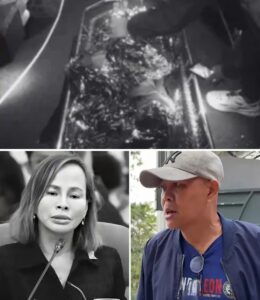
In the chilling aftermath of a tragedy that has unfolded along the winding and perilous stretches of Kennon Road, a new layer of emotional intensity has been added to an already heartbreaking narrative. The sudden passing of former Department of Public Works and Highways (DPWH) Undersecretary Catalina Cabral has not only shocked the nation but has also ignited a tense and deeply personal struggle between a grieving family and the procedural mandates of the law. At the center of this storm is Cesar Cabral, the husband of the late official, who has broken his silence to express profound frustration and anguish over the authorities’ handling of his wife’s remains. In a move that has drawn significant attention, the family has officially signed a waiver declining an autopsy, standing firm in their conviction that the loss of their matriarch was the result of a devastating accident and nothing more sinister.
The incident, which occurred on a Thursday night in the rugged terrain of Tuba, Benguet, began as a confusing report of a fall and ended in the confirmation of a high-profile loss. The former Undersecretary was discovered in a ravine, a location known for its treacherous drops and unforgiving landscape. Given her former stature in the government, the local police force immediately initiated a standard investigation. In cases involving public figures or unattended incidents in remote areas, protocol dictates a thorough examination to rule out any possibility of foul play. However, for the family left behind, these procedures have felt less like a quest for justice and more like an intrusion into their private sorrow. The delay in releasing her body has become a source of immense pain for Cesar, who is desperate to bring his wife back to Manila for a proper farewell.
Speaking with a voice heavy with the weight of the last twenty-four hours, Cesar Cabral issued an emotional plea that resonated with anyone who has ever lost a loved one. He questioned the necessity of further forensic probing, asking authorities what else they needed to prove when the family themselves had already accepted the reality of the accident. For Cesar, the narrative is painfully clear: his wife is gone, and no amount of investigation will change that outcome or bring her back. His frustration stems from the feeling that the bureaucracy is holding his wife hostage in a morgue when she should be resting in the care of her family. The signing of the waiver was a definitive act, a legal declaration that the family does not seek a criminal investigation and wishes to opt out of the invasive procedures that come with it.
The decision to refuse an autopsy is a significant one. In the eyes of the law, an autopsy provides the scientific certainty of the cause of passing, documenting injuries and ruling out external factors. However, for a grieving spouse, it can be viewed as a desecration of the beloved, a final indignity imposed by the state. The Cabral family’s stance is that the circumstances, while tragic, are straightforward. They believe she fell, and the fall was fatal. By signing the waiver, they are attempting to close the book on the investigative chapter and open the door to the grieving process. They want to shift the focus from police tape and reports to prayers and remembrance.
The tension highlights a common conflict in high-profile incidents: the public’s curiosity versus the family’s privacy. Because of Catalina Cabral’s former role in the DPWH, her passing naturally invites scrutiny. The public, often fueled by speculation on social media, looks for patterns or conspiracies where there may be none. The police, aware of this scrutiny, are under pressure to ensure their report is watertight. If they release the body without a full examination and questions arise later, they could be accused of negligence. Yet, amidst this swirl of public interest and police duty, there is a husband who simply wants to see his wife one last time without the interference of the state.
Cesar’s statement regarding the waiver was not just a legal formality but a cry for compassion. “That’s my wife. That’s their mother,” he emphasized, reminding the public and the authorities that behind the titles and the news headlines is a human being who was deeply loved. The family’s singular focus now is the logistics of grief—the heartbreaking task of transporting her remains from the cold mountains of the Cordilleras back to the warmth of their home in Manila. They wish to provide her with a dignified wake, surrounded by the faces of those who knew her not as an Undersecretary, but as a wife, a mother, and a friend. They want to mourn in peace, away from the flashing lights of the media and the cold instruments of forensic pathologists.
The tragedy serves as a grim reminder of the fragility of life. One moment, a person is a figure of authority and influence; the next, they are the subject of a police report. The steep cliffs of Kennon Road do not distinguish between the powerful and the ordinary. The accident has cut short a life that was dedicated to public service, leaving a void that will be felt by her colleagues and, most acutely, by her family. The narrative of the “accident” is one that the family clings to, perhaps because it is the only one that makes sense in a senseless situation. To entertain other possibilities would only prolong the agony and delay the healing.
As the authorities review the waiver and the circumstances of the fall, the clock ticks for the Cabral family. Every hour of delay is an hour stolen from their time to say goodbye. The standoff between the family’s wishes and the police’s protocols is a delicate dance of ethics and emotion. While the police have a job to do, the moral weight of a husband’s plea is difficult to ignore. The family is not asking for special treatment because of her former position; rather, they seem to be asking for the basic human right to bury their dead without unnecessary delay. They are asking the system to recognize that at the heart of this “case” is a family that is hurting.
The coming days will likely see the resolution of this conflict, as the authorities balance their findings at the scene with the family’s legal waiver. If the police are satisfied that there is no evidence of foul play based on the scene investigation and witness accounts, they will likely grant the family’s request. For Cesar Cabral, that moment cannot come soon enough. The drive back to Manila will be the longest of his life, but it will be a journey of closure. The tragic fall in Tuba, Benguet, will forever be etched in their family history, but they hope that the memory of Catalina will not be defined by how she left, but by how she lived and how she was brought home with love. The nation watches and waits, offering sympathy to a family fighting for the peace of their beloved matriarch in her final journey.